

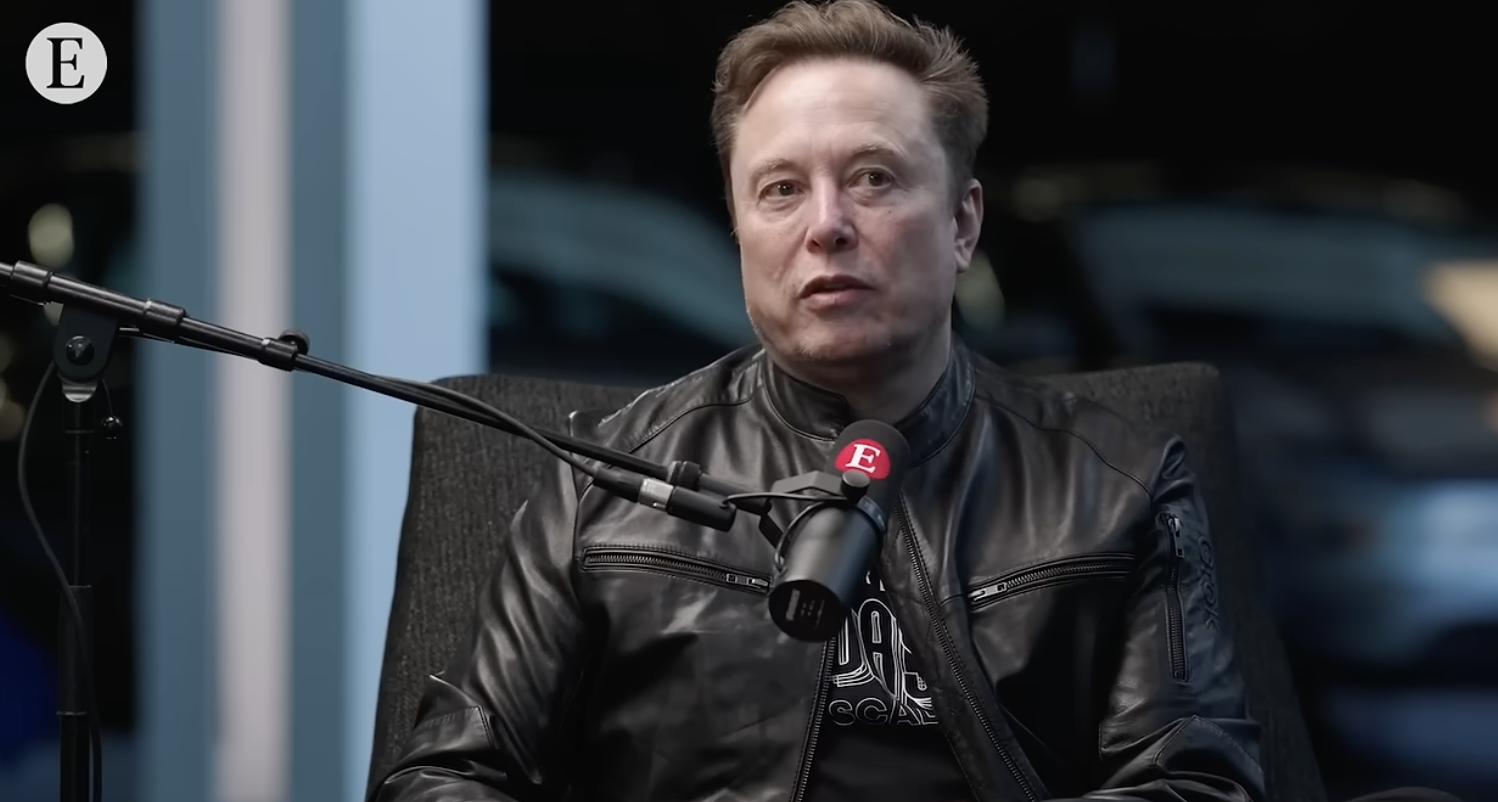
To be clear from the outset, this is precisely not what we believe constitutes healthy AI governance. Instead, it represents the most dangerous concentration of power in the hands of a few individuals – most of whom display the maturity of a defiant child and embrace a trash culture “style & grace”.
The statements made during the interview1 with Zanny Minton Beddoes (The Economist’s editor-in-chief) at his Texas Gigafactory, his behaviour, and the attitudes displayed by Mr. Musk are nothing short of shocking and disturbing from a humanistic and democratic perspective. Yet he seems to remain utterly convinced that he is “Anakin Skywalker” – or perhaps even “Obi-Wan Kenobi” – rather than “Darth Vader“.2
I am driving a Tesla car since 2014 and could not be more disappointed – Mr. Musk clearly drifted to the dark side of “The Force“.
The core question is: “Who do we want to govern “artificial intelligence” (AI)? – a technology, where experts are telling us, the technology will (1) outsmart us humans, (2) has the potential to develop without any human oversight or control, and (3) can be used to operate a robot (e.g., Tesla’s “Optimus“), car, drone, rocket, et al. – machines with the strength and intelligence to kill us humans.3
In my view, there are basically three different options available:
- The “Silicon Valley buddies”, backed by the United States of America (USA) “Trump administration”, deal out what kind of global AI governance is “good” for us – the people.4
- The “United Nations” (UN) develops a global binding AI governance framework based on the “Global Dialogue on AI Governance“5 and the “Universal Declaration of Human Rights” (UDHR).
- We establish global direct democratic voting processes, allowing up to 5.5 billion people to decide on a healthy global AI governance.6
Hans Gersbach outlined already in 2019 a roadmap on how to democratise the new technological developments.7 Within his text, he clearly points out the “self-strengthening monopolies”, their dangerous implications for democratic societies, and the strong need for e.g, votings and/or user councils.
We already have very good governance structures and product assessments in the health sector, particularly for medicines, vaccinations, and drugs. I already clearly outlined that in my view the “World Health Organization” (WHO) leads the way towards healthy new technology by applying their standards to “Social Media”, “Pornography”, and “AI”.8
This approach can be aligned with global (direct) democratic decision-making processes, similar to those we design for mitigating global warming, climate disruption, and the loss of biodiversity.
Sources
- The Economist (2026): “The full-length interview with Elon Musk“, published on “YouTube” July 29 ↩︎
- cf. Lucas, G. (1977): “Star Wars“, Lucasfilm Ltd. ↩︎
- cf. Kubrick, S.; Clarke, A.C. (1968): “2001: A Space Odyssey“, Metro-Goldwyn-Mayer ↩︎
- cf. The Economist (2026): “The full-length interview with Elon Musk“, published on “YouTube” July 29, 12:10 to 15:20min. ↩︎
- cf. United Nations (2026): “UN Global Dialogue opens with urgent call for safe and inclusive AI that benefits all“, Geneva, July 6, 2026 ↩︎
- cf. IDGR (2024): “A first official global direct democratic vote (global referendum) on ‘climate action’ now!” ↩︎
- Gersbach, H. (2020): “Democratizing Tech Giants! A roadmap“, Springer Nature – Economics of Governance (2020) 21:351–361 ↩︎
- Baumann, K. (2026): “WHO starts leading the way towards a healthy global governance for “social media”, “AI”, and “pornography”“, IDGR.org ( ↩︎
picture shows screenshot from Elon Musk sat down with Zanny Minton Beddoes, The Economist’s editor-in-chief, at his Texas Gigafactory to talk about what he thinks this future holds, published on YouTube July 29, 2026;
(c) 2026 The Economist.
This text was edited by “ECOSIA.org AI”.
our latest publications:
-

Three CEOs just agreed AI needs to be slowed down. None of them explained who gets to decide.
-
2026 state elections in Saxony-Anhalt show significant demand for global democracy
-

UN officially admits: Reducing burning fossil fuels (coal, oil, gas), meat production (beef, pork) and deforestation failed. It is time to vote.
-

Democracy Innovation – David Campbell extends our latest understanding on democracy
-

2026 OPEC "World Oil Outlook" projects 20% increase in global oil demand alongside $17.7 trillion in fossil fuel investments by 2050
-

A future without "externalities" – the new way into a healthy global economy
-

Current wildfires, et al. are just the beginning
-
2026 "NATO" summit shows significant demand for global democracy
