On September 23, 2026, I was excited to participate in the reception hosted at the Ford Foundation Center for Social Justice during the 81st United Nations General Assembly (UNGA) High-Level Week in New York City (NYC). The event focused on renewing multilateralism, specifically exploring “Charter Review as a Pathway to Security Council Reform.”
The reform gathering and roundtable discussion – excellently organised by the Article 109 Coalition (of which IDGR is a member), Oxfam International, The Quincy Institute for Responsible Statecraft, and Trust Africa – had a clear objective: to advance the process of renewing the UN Charter.
The reform round table discussion – excellently organised by the Article 109 Coalition (of which IDGR is a member)1, Oxfam International, Quincy Institute for Responsible Statecraft, and TrustAfrica – had a very clear objective: to advance the process of renewing the UN Charter2. The event attracted based on my estimation 200+ leaders and decision-makers from governments and organisations around the globe.
Here are some key-statements3:
- The Gambia’s Minister for Communications and Digital Economy, Lamin Jabbi, delivered remarks on his country’s behalf. His main point was the urgency of a changed UN Charter.
- Helen Clark, former Prime Minister of New Zealand and Administrator of the UN Development Program stated:
“Everyone will come up with reasons why we shouldn’t try and do it. And there’s a perception that you could end up with something worse. I don’t agree with that. I think there’s a persuasive argument that, just as it can be hard to get two-thirds to change the Charter, it can also be hard to get two-thirds to change it for the worse.”
- Kumi Naidoo, South African anti-apartheid activist and former head of Amnesty and Greenpeace, and president of the Fossil Fuel Non-Proliferation Treaty initiative:
“It is time to move beyond 1945; time to choose solidarity over supremacy; time to build institutions equal to the challenges we face.”
- Laura Chinchilla Miranda, the former President of Costa Rica, and current President of the Club de Madrid, the world’s largest forum of former democratically elected leaders, said:
“The Club de Madrid joined this coalition more than a year ago, because we believe that defending multilateralism cannot mean defending the status quo (…) Civil society organisations, policy institutions, foundations, and democratic networks all have a role to play. I therefore encourage the organisations represented here tonight to join Club de Madrid as members of the Article 109 Coalition. Our task is not to weaken the United Nations, but to renew it, not to discard the Charter, but to fulfil its promise and not to wait for easier times, but to begin building the multilateral system that this difficult time demands.”
After the key speakers, the following framing remarks were given within a very well-moderated discussion. Here are some of my key perceptions:
- Zachary Paitkin (Better Order Project – The Quincy Institute):
He outlined the importance and possibilities of a renewed UN Security Council (UNSC) and presented different options for how the Security Council can be reformed. - Amina Hersi (Oxfam International):
She presented her key findings from forthcoming research and highlighted the need to change the option where one nation can block everything with its veto, a key point in the Intergovernmental Negotiations (IGN) on UN Security Council reform. - Briggs Bomba (Trust Africa):
He highlighted the needs of African countries regarding the UN Security Council and questioned the number of nations on both the permanent and non-permanent councils. - Sofía García García (Article 109 Coalition):4
She explained a pathway for progress and action and expressed concern about the five-year timeframe and the urgency of the matter. Furthermore, she argued that Article 109 was a concession to those who opposed the veto and was included on the condition that a review conference would take place within ten years of the Charter’s adoption. In the face of UN Security Council reform gridlock and paralysis in its decision-making, she pointed out that it is time to deliver on the promise to review the UN Charter.
The final Q&A discussion demonstrated that this theme meets the interest of UNGA visitors. One of the difficulties I identified, however, is the timeframe and the enormous complexity of this change and development process.
My clear summary: After 81 years, it is urgent to adapt the UN Charter to address today’s realities. Our initiatives with the IDGR — to develop global democracy by transforming the United Nations into what we call a “Global Democratic Republic” — align most excellent with the views expressed by all the speakers.
References and Sources
- cf. “IDGR becomes a member of the ‘Article 109 Coalition’“, July 5, 2026. ↩︎
- United Nations Charter (full text), accessed October 8, 2026. ↩︎
- cf. Article 109 Coalition: “‘It is time now’: Momentum for meaningful change at annual UN gathering“, October 7, 2026. ↩︎
- ibid. ↩︎
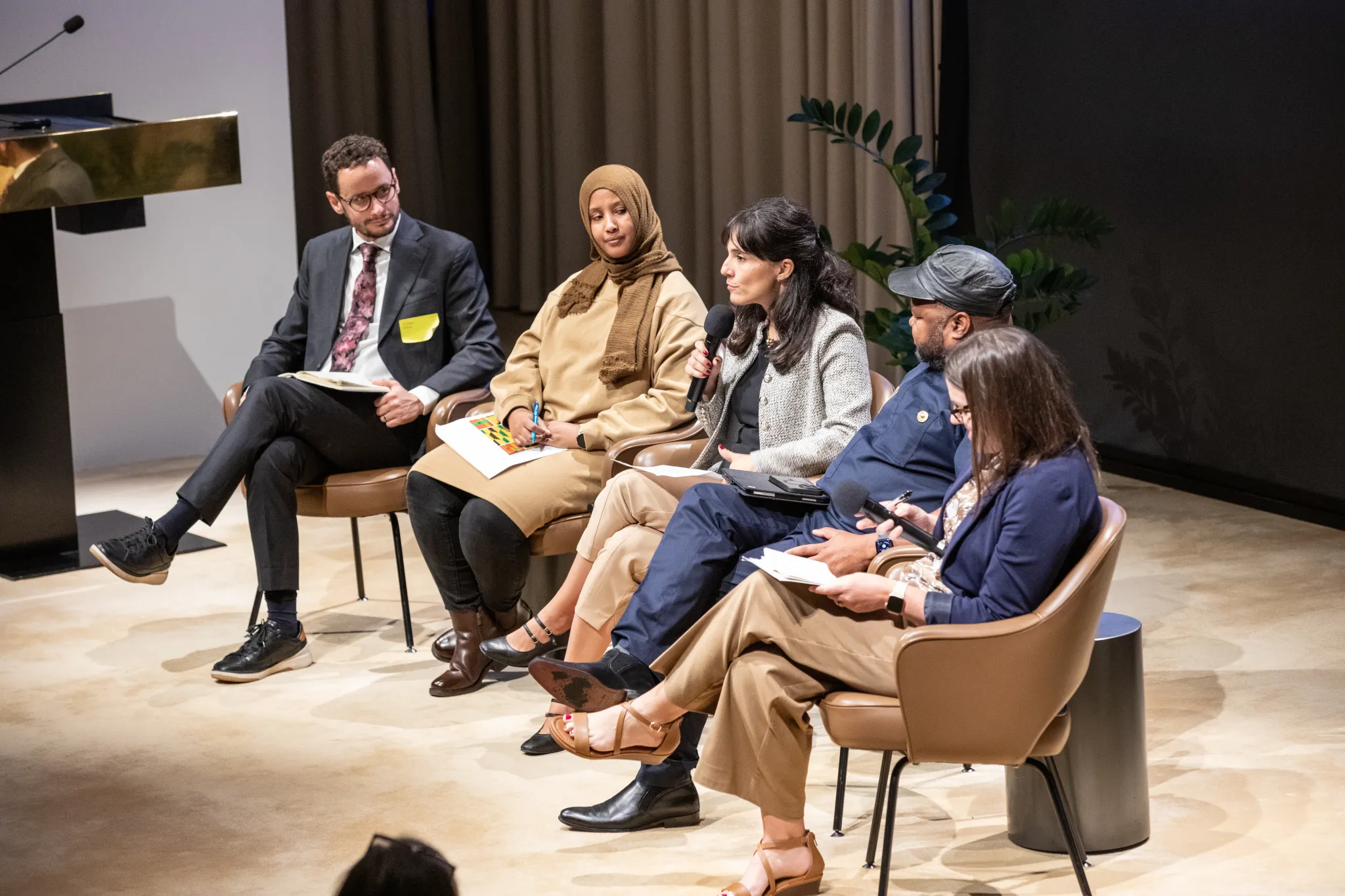
picture shows photo from scene at the United Nations reform round table discussion with Zachary Paitkin (first person left), Amina Hersi (second person from left), Briggs Bomba (second person from right), and Sofía García García (the person in the center);
(c) 2026 Article 109 Coalition – A public discussion on how to deliver UN Security Council reform.
our latest publications:
-

2026 Global Democracy Coalition (GDC) Forum shows strong interest in developing global democracy
-
Horizon Europe "GoGlobalClimate" project proposal submitted
-
Three CEOs just agreed AI needs to be slowed down. None of them explained who gets to decide.
-
2026 state elections in Saxony-Anhalt show significant demand for global democracy
-

UN officially admits: Reducing burning fossil fuels (coal, oil, gas), meat production (beef, pork) and deforestation failed. It is time to vote.
-
Democracy Innovation – David Campbell extends our latest understanding on democracy
-

Elon Musk wants to "deal out" the global AI governance with his "buddies" from Silicon Valley in a bi-weekly call
-

2026 OPEC "World Oil Outlook" projects 20% increase in global oil demand alongside $17.7 trillion in fossil fuel investments by 2050