

The successful mitigation of global warming, climate change, and the loss of biodiversity is theoretically “simple”. We need for that a working global “greenhouse gas” (GHG) market based on “science based targets”.
There is so much noise around how to actually mitigate global warming, so we want to clarify. Most important is to keep “it” (the admittable very complex correlations) as simple as possible.
We need at least minus 10% GHG emissions every year
To stop global warming, climate change, and the loss of biodiversity, we have to reduce the global annual GHG emissions according to IPCC by minus ca. 10% every year within the upcoming 25 years, minus ca. 40% till 2030, minus ca. 75% till 2050 (cf. e.g. the following graph).
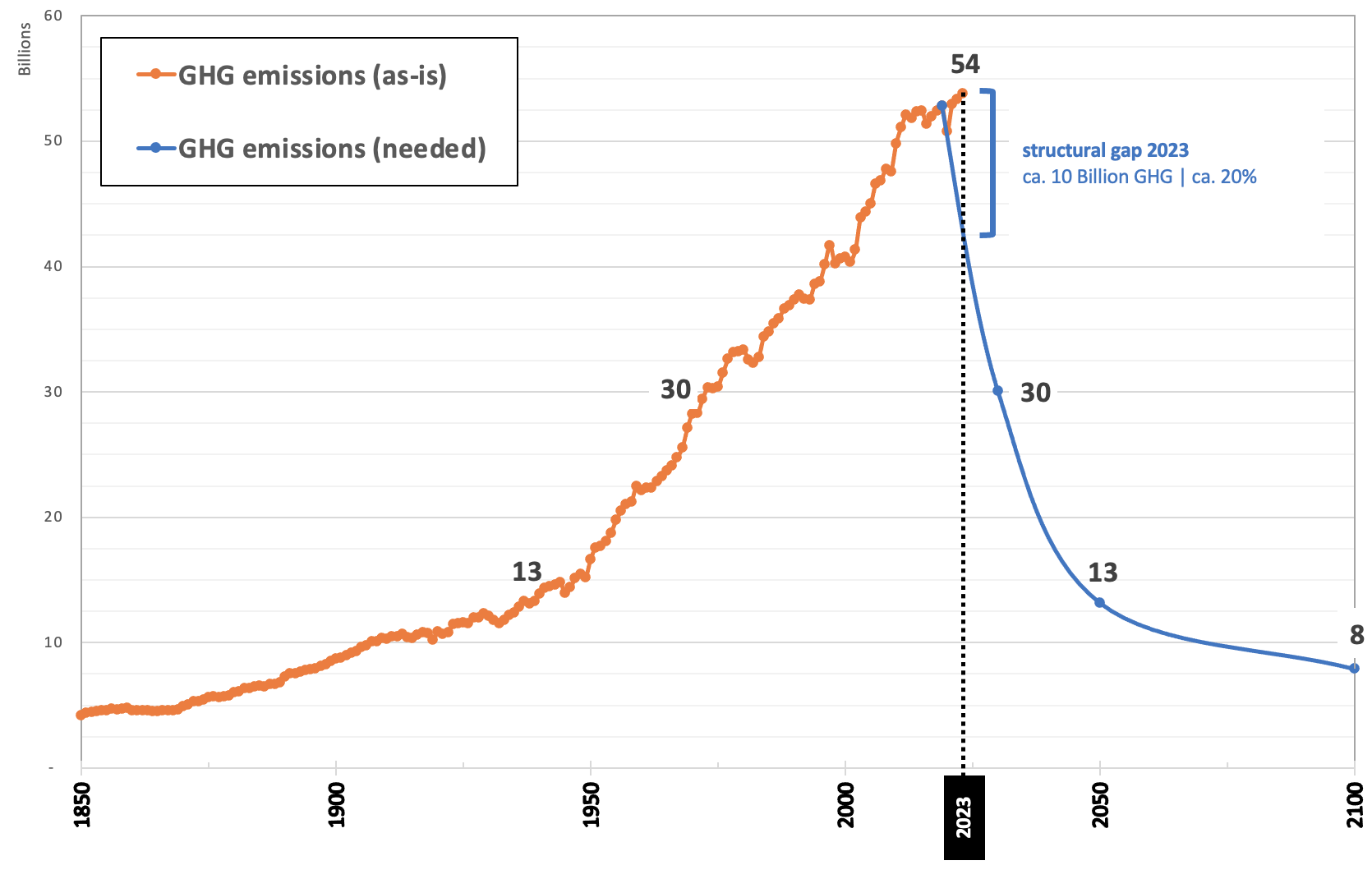
This might sound easy. But with a still growing energy demand, energy supply and transportation heavily powered by fossil fuels, meat being a kind of “status symbol” when it comes to food, and the time span for the needed reductions being very short, the necessary change seems very difficult or even impossible.
Reducing the annual GHG emissions is clearly within the responsibility of (global) politics. The best political method to reach the necessary reductions is a binding global GHG emissions market. Such a market includes the three most important GHGs: “Carbon Dioxide” (CO2), “Methane” (CH4), and “Nitrous Oxide” (N2O).
Current solutions show significant gaps
The “World Bank Group” shows the developments for a (global) “Carbon Dioxide” (CO2) market – “Methane” (MH4), and “Nitrous Oxide” (N2O) are not included – from 1990 till today (cf. “State and Trends of Carbon Pricing Dashboard“). The map shows significant gaps and weaknesses and is only for “Carbon” (see the following map).
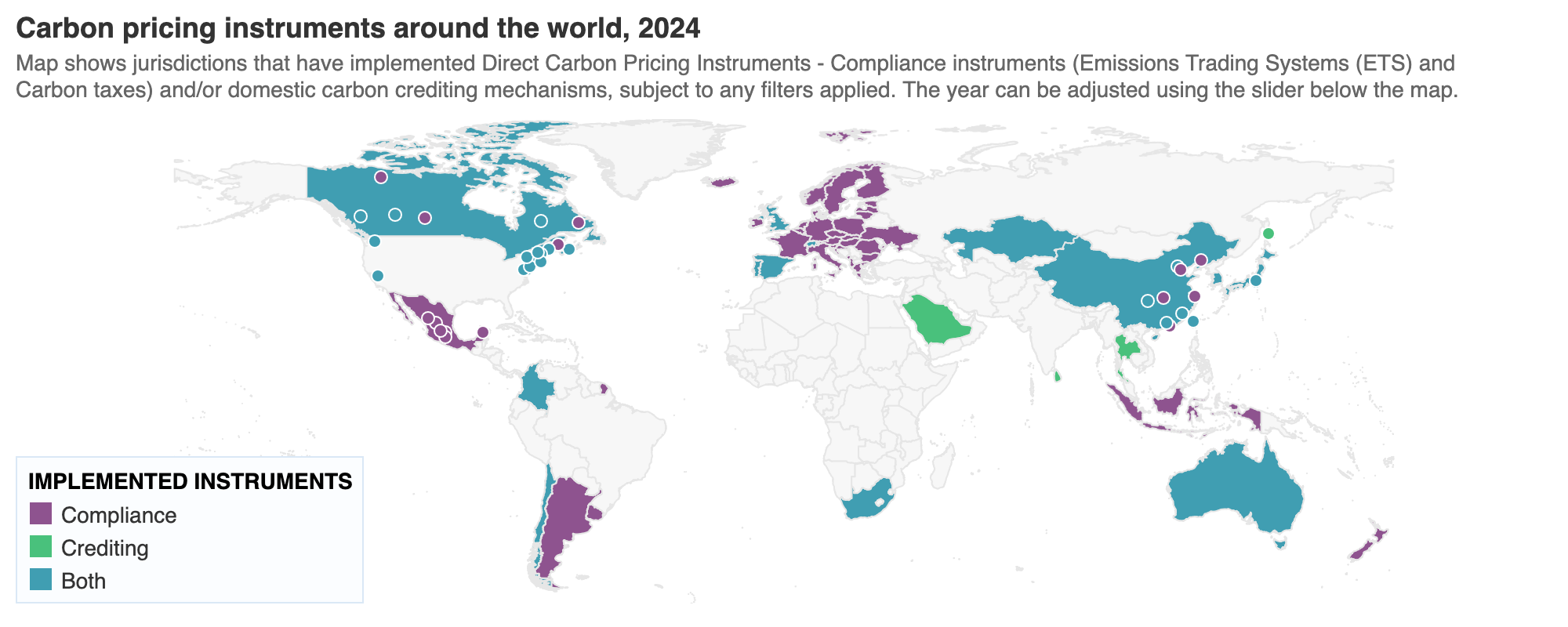
(carbonpricingdashboard.worldbank.org)
Nevertheless, in our view, the best solution to bring down GHG emissions and actually mitigating global warming is a global binding GHG emissions market based on “science based targets” (cf. sciencebasedtargets.org). There is no further regulation necessary. It demands the accounting of GHG emissions.
The “planetary boundaries” define the volume of GHG emissions traded
The concept of “Planetary Boundaries” (cf. and see graph from the “Stockholm Resilience Centre“) explains the volumes of “common goods” possible for a sustainable production and delivery of (global) products & services. Globally working markets for these “common goods” are necessary. Most important, a global market on GHG emissions mostly from burning fossil fuels (coal, gas, oil) and meat production.

Such a market for GHG emissions would define and manage the global emission volumes from “Carbon Dioxide” (CO2), “Methane” (MH4), and “Nitrous Oxide” (N2O). Such a market is in our view most important and urgently needed to prevent a humanitarian catastrophe from global warming, climate change, and the loss of biodiversity (cf. e.g. “Trans- & interdisciplinary global warming scenario“).
see graph with global “greenhouse gas” emissions including Carbon dioxide (CO2), Methane (CH4), and Nitrous oxide (N2O) (klick to enlarge):

see graph with “greenhouse gas” emissions per major regions or countries (klick to enlarge):

see Ed Hawkins “Global Warming Stripes 1850-2024” (showyourstripes.info):

read about our actions:
global democracy
A first official global vote on “climate action” now!
global governance
A first global binding “greenhouse gas” market now!
event
“Supranational Democracy Dialogue” (SDD)
documentary
Our world with global democracy
movie
the library
concert
the crystal
architecture
the design space
related research
- The new way to successful mitigation of global warming
- The new healthy global economy
- Trans- & interdisciplinary global warming scenario