


The success of the last decades with Economic Globalisation has produced significant, dangerous side-effects. To rebalance this success into a healthy society, we better develop and equally performative Political Globalisation. The core of this re-balancing process is the reform of the current United Nations Organisations towards a Global Democratic Republic by reforming the current United Nations charter.
According to our mission, we are committed to transforming the current United Nations organisations into a new and significantly more impactful, high-performance United Nations (UN). From an organisational development perspective, this will be a highly intense change process from the old to the new and will take several decades of development. The success story of the European Union (EU) development serves as a potential role model for this transformation.
Here is our most concrete concept for a first, realistic, and successful UN charter development, which includes 5 concrete steps:
(1) Renew the Financial System
old
- The current UN financing system is highly fragmented, and contributions vary significantly in terms of the percentage of Gross National Income (GNI).
- More than 80% of the UN budget currently consists of earmarked funds.
- Voluntary contributions (which are often earmarked) make up the vast majority of funding for many UN agencies and funds (like UNICEF, UNHCR, WFP).
- …
new
- The new financing is based on a fix percentage of Gross National Income (GNI).
- A global binding market for “greenhouse gas” (GHG) emissions is included.
- A global financial transaction tax (tobin-tax) finances all peace-keeping, peace-building, and disarmament activities.
(2) Renew the United Nations Security Council (UNSC)
old
- The current UNSC is dominated by the 5 veto countries.
- The UNSC has not obligation whatsoever to the UN General Assembly (UNGA).
- The UNSC is very weakly/not democratically legitimised.
- …
new
- The voting power within the UNSC is based on the represented population.
- There are only representatives from regions (e.g., North America) and/or supra-national (e.g., European Union, African Union) organisations within the UNSC.
- The UN General Assembly (UNGA) has to approve the UNSC decisions by a simple majority.
- The UNSC can carry out global referenda on specific topics.
(3) Renew the United Nations General Assembly (UNGA)
old
- The current UNGA is based on “one country, one vote.
- The UNGA decisions hold no obligation for the UNSC.
- The UNGA is very weakly/not democratically legitimised.
- …
new
- The voting power within the UNGA is based on the Gross National Income (GNI).
- The UNSC has the obligatory to discuss votings with a 2/3 majority in the UNGA.
- The UNGA can carry out global referenda on specific topics.
(4) Develop the new United Nations Global Democracy (UNGD) entity
This entity will carry out global direct democracy by global e-voting on specific questions – starting with a first official global referendum on ‘climate action’.
(5) Consolidate the United Nations organisations
The currently 60+ UN organisations will be integrated into the UN governance and budgeting system, all redundancies eliminated, and clear organisational mission statements developed.
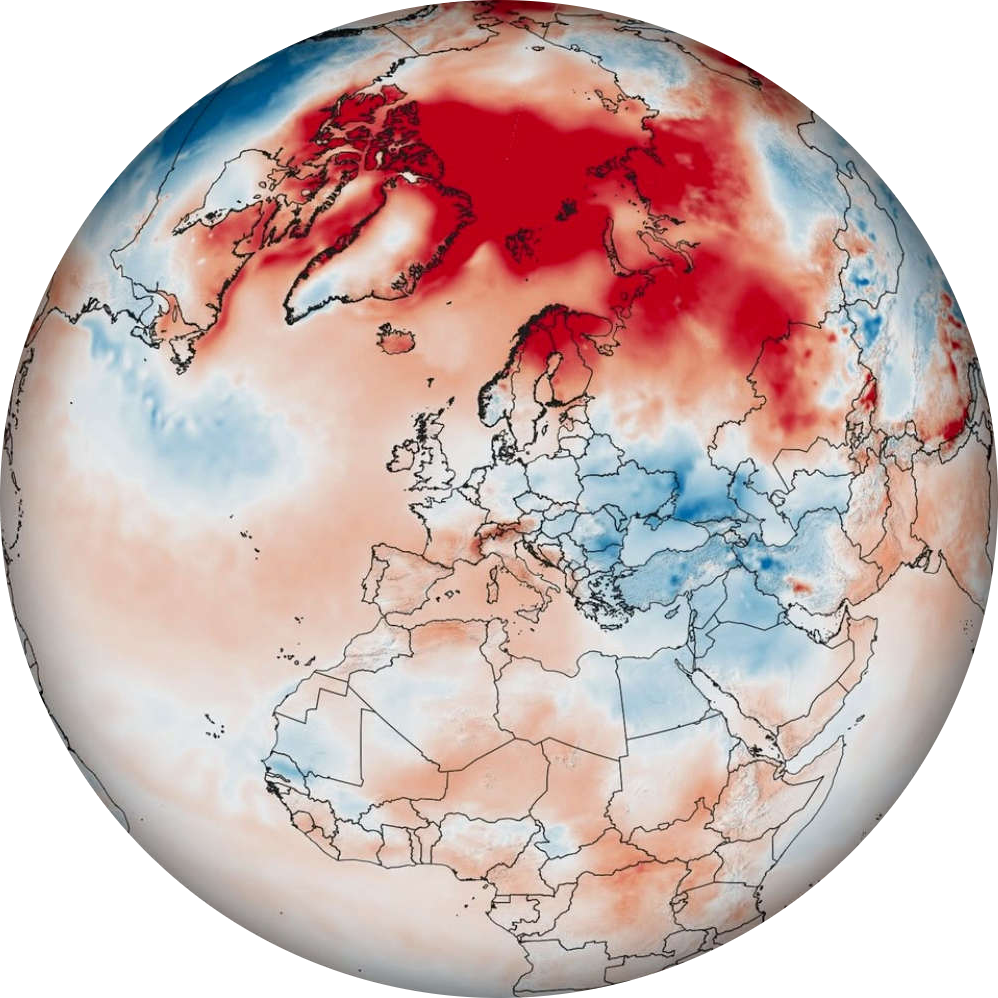
our actions focus – mitigate global warming:

our actions focus – develop political globalisation:
global governance
A new United Nations charter now!

global collaboration
Global Democracy Forum
(GDF)
our actions focus – develop global democracy:

documentary
Our new world with global democracy

concert
the crystal

architecture
Decision spaces
movie
the library

conference
Supranational Democracy Dialogue
(SDD)
webinars
GLOBAL DEMOCRATIC FUTURES