


Putting health at the centre of society is a political choice. Deciding why health should guide public and private action is a collective decision, which should be grounded in scientific authority, ethical responsibility, and the will of people.
Yet history shows that health becomes a shared societal priority only in moments of extreme crisis. A few examples stand out: the Japanese smallpox epidemic in the 8th century, the Black Death in the 14th century, and – most recently – COVID-19 in the 21st century. Many other episodes could be mentioned, across continents and centuries. Still, humanity continues to repeat the same mistake: once a pandemic ends, health is rapidly de-prioritised. Other issues reclaim the spotlight: militarisation, productivity, and short-term growth.
This recurring pattern reveals a structural flaw in how societies conceive health. We act almost exclusively through emergency response, rather than investing in holistic well-being and proactive health promotion (cf. “Salugnonese“). Health is treated as a cost to be managed in times of crisis, not as a foundational condition for prosperity, stability, and human flourishing.
Human health cannot be separated from our environment
A widespread misconception lies at the root of this fatal cognitive pattern: the idea, that human health can be separated from the environment in which life unfolds. As Robert M. Sapolsky repeatedly reminds us in “Behave“, environment shapes genetics, biology, behaviour, and social dynamics. No organism can be understood in isolation from its habitat, ecosystem, and the external forces acting upon it. Any environmental change produces both immediate and long-term consequences for life.
My father comes from a humble rural family in the Venetian countryside. His parents worked the land, cultivating fruits and vegetables. Even today, he nostalgically complains that land products of his childhood had far more flavour than those we eat now. At first glance, this may sound like a simple generational lament. But it is also a subtle indicator of deeper transformations: soil depletion, industrial agriculture, chemical inputs, biodiversity loss.
And this nostalgia pales in comparison to the devastating realities we now face. In 2025 alone, extreme monsoon rainfall, floods, and landslides in Pakistan and India cost thousands of lives. Similar climate-related emergencies occur across the globe with increasing frequency. These are not natural disasters in the traditional sense. They are symptoms of a systemic imbalance between human activity, environmental degradation, and public health neglect.
This is where approaches like “One Health” become essential
Health promotion cannot be confined to hospitals, medicines, or individual lifestyle choices. “One Health” recognises that human health, animal health, and ecosystem health are inseparable. Zoonotic diseases, air and water pollution, food system collapse, and climate instability all demonstrate that neglecting one dimension inevitably harms the others. Investing in active health promotion is not an optional luxury. It is the most rational, cost-effective, and ethical health policy available.
At the same time, health promotion works best being paired with a holistic understanding of health. This means integrating contemporary medical science with traditional knowledge, community-based practices, and emerging innovations. Health is not merely the “absence of disease” (cf. the constitution of the “World Health Organization” (WHO)). It includes mental well-being, social cohesion, cultural identity, and even consciousness. Chronic stress, social isolation, and environmental anxiety are now among the most significant public health challenges of our time. Addressing them requires approaches that go beyond pharmaceuticals. They include education, awareness, participation, and care for both inner and outer ecosystems.
Health promotion demands long-term political thinking and acting
Ultimately, placing health at the centre of society is a responsibility toward life itself. Political leaders bear a profound duty toward human life. A duty that cannot be reduced to casualty statistics, electoral calculations, or geopolitical strategies. Human beings should never be treated as expendable resources: neither as cannon fodder in wars nor as abstract numbers used to justify harmful policies. Every life lost due to neglect, ignorance, or short-sighted policies represents a collective failure. It is a loss not only for families and communities, but for humanity’s broader aspiration toward health and well-being.
I would love to return to a time when apples still had a taste. But the past cannot be changed. The future, however, remains open. Putting health first is not only a political decision, it is a responsibility toward human existence and all life on Earth.
picture shows photo (c) 2025 by Karl Baumann: “market hall”, Innsbruck;
shot with iPhone 13 mini.
our latest publications:
-

Three CEOs just agreed AI needs to be slowed down. None of them explained who gets to decide.
-
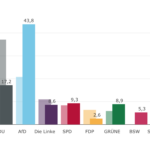
2026 state elections in Saxony-Anhalt show significant demand for global democracy
-

UN officially admits: Reducing burning fossil fuels (coal, oil, gas), meat production (beef, pork) and deforestation failed. It is time to vote.
-

Democracy Innovation – David Campbell extends our latest understanding on democracy
-

Elon Musk wants to "deal out" the global AI governance with his "buddies" from Silicon Valley in a bi-weekly call
-

2026 OPEC "World Oil Outlook" projects 20% increase in global oil demand alongside $17.7 trillion in fossil fuel investments by 2050
-

A future without "externalities" – the new way into a healthy global economy
-

Current wildfires, et al. are just the beginning
