

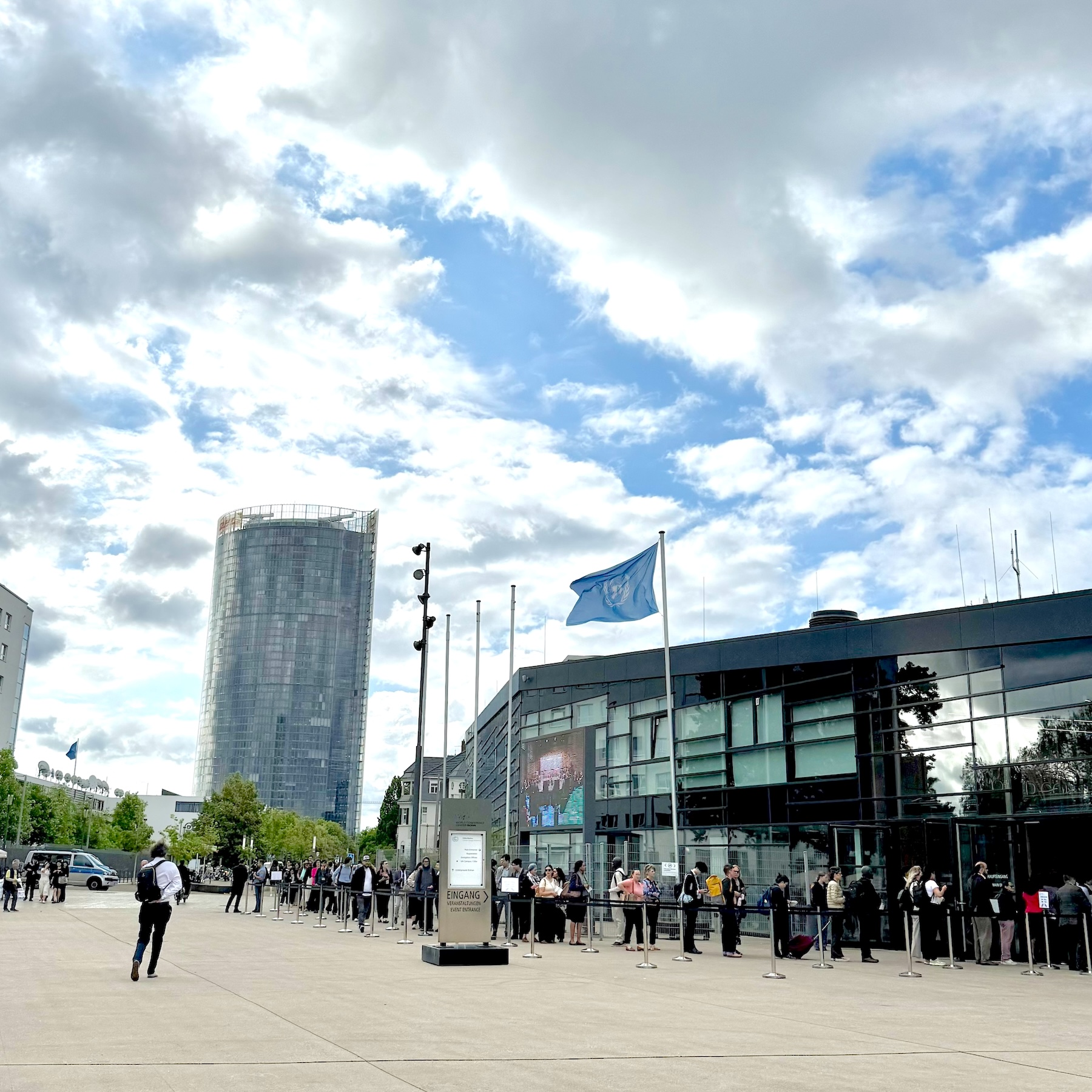
Over 140 country delegations, thousands of civil society representatives, and more than nine thousand registrations marked this year’s “June Climate Meeting” (SB64) in Bonn, organised by “United Nations Climate Change” (UNFCCC).
The “United Nations Climate Change” body follows an annual cycle of conferences that culminates in the “Climate Change Conference of the Parties” (CC COP), the most significant international gathering on climate-related issues.
Every June, at the “UN Bonn Campus“, governments and stakeholders engage in highly technical discussions and negotiations on key climate topics. These conversations aim to prepare the ground for the higher-level political negotiations that take place during COPs, which often result in new agreements, commitments, targets, and reviews of progress made under existing international frameworks (this year’s COP31 will take place in Antalya from November 9–20, 2026).
Are these conferences and agreements helping to restore the balance of our environment for the benefit of humanity and all living beings?
In my perception, we often try to simplify how nature works by creating models replicating reality to study, understand, and eventually influence complex systems. Yet, the reality of nature is far more intricate than the models we create. There is very strong evidence, that we are still far from fully understanding ecosystems in their entirety – with all their interconnected dynamics and complexity.
The “idea” that we can solve global crises such as global warming, climate change, biodiversity loss, and environmental degradation by relying on these reductive models and policies, agreements, and technical solutions based on them, assumes a level of understanding and control that we simply do not yet possess. My experiences at the 2026 UN “June Climate Meeting” (SB64) reinforced this view: these challenges go far beyond the capacity of governments alone, especially when we consider that governments themselves are ultimately composed of people without specific scientific backgrounds.
I strongly believe that leadership, vision, and “good governance” comes from institutions and decision-makers. However, I also firmly believe that we do good by acknowledging that meaningful change demands the involvement of all people — and, in the best case, their active participation. Individual actions and public engagement are most powerful in driving transformations.
During the 2026 UN “June Climate Meeting” (SB64), I advocated on behalf of the IDGR for the first official global direct democratic vote on ‘climate action’, carried out by the “United Nations” (UN) (cf. global referendum).
If governments have repeatedly struggled to commit to sufficiently ambitious targets, and if consensus remains difficult even around fundamental principles – such as reducing “greenhouse gas” (GHG) emissions by e.g., limiting fossil fuel extraction and consumption – then why not involve every person on Earth in shaping the global conversation on the climate crisis?
This vote should not be seen as the solution itself. A vote is merely a vote. However, what we choose to do with its outcome – or what we choose not to do – can serve as a catalyst for reflection, accountability, and action.
The first official global democratic vote on climate action would mark a historic development: a truly global democratic exercise that gives every person the opportunity to voice their perspective on one of humanity’s greatest challenges.
At the 2026 UN “June Climate Meeting”, I presented this idea to policymakers, civil society representatives, and observers. The response was largely supportive, although many raised questions about its feasibility.
Yet in project design and management, the “how” has rarely been the greatest challenge. The most difficult question is the “why”.
Why should we do this?
Climate action cannot remain confined to negotiations between governments alone. In my view – and based on my experiences from SB64 – it better evolves into a global democratic process, fostering broad political debate and public conversation.
After SB64 I am even more convinced, bringing people to the table is the only way forward if we aim to build a truly collective response to the climate crisis.
picture shows photo (c) 2026 by Edoardo Montin: “SB64”, Bonn:
People queue to enter the conference area in Bonn, with the “Deutsche Post DHL” corporate headquarters tower in the background.
our actions focus:

global democracy
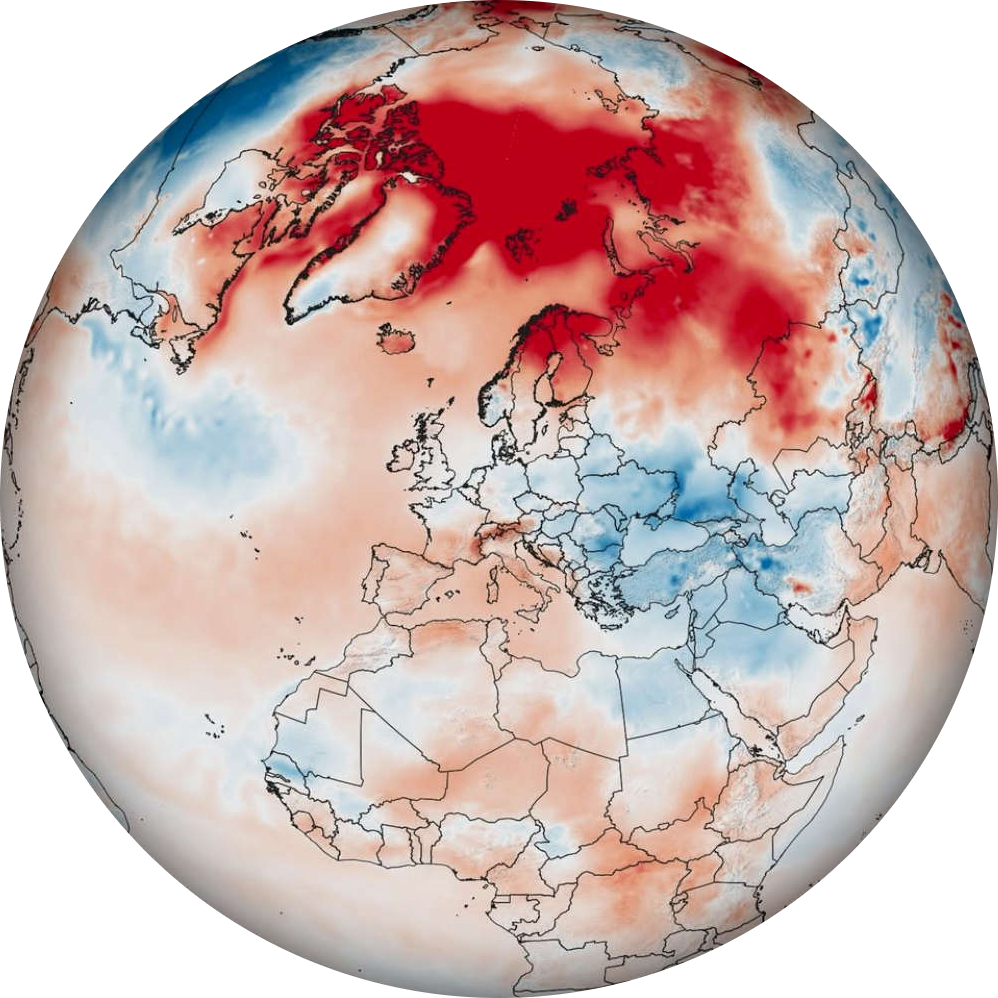
A first official global vote on “climate action” now!
global governance
A first global binding market for “greenhouse gas” emissions now!

global collaboration
Global Democracy Forum
(GDF)

documentary
Our new world with global democracy

concert
the crystal

architecture
Decision spaces
movie
the library

conference
Supranational Democracy Dialogue
(SDD)

webinars
GLOBAL DEMOCRATIC FUTURES
