

Nothing justifies the killing of another human being, nothing justifies the attack on an another state (e.g. the attack from the “Russian Federation” and its helping countries on “Ukraine”), and nothing justifies in our view the suppression of different cultures within a country, as long as there is a peaceful coexistence possible (e.g. “Tibet” from the “People’s Republic of China”).
“The BRICS is a group formed by eleven countries: Brasil, Russia, India, China, South Africa, Saudi Arabia, Egypt, United Arab Emirates, Ethiopia, Indonesia, and Iran. It serves as a political and diplomatic coordination forum for countries from the Global South and for coordination in the most diverse areas.”
What is BRICS?, brics.br/en/about-the-brics, 2025/07/17
From 06 to 07 of July 2025 the “17th BRICS Leaders’ Summit” was held in Rio de Janeiro, Brazil and the “Rio de Janeiro Declaration” was signed and published.
Over centuries, the “western countries” dominated by the “United States of America” (USA) leaded the global order. This is now about to change and we think, this is basically a very welcomed development. It is a development towards a more just global society, a more just political power structure and shows the potential towards global democracy.
Reading the “Rio de Janerio Declaration: Strengthening Global South Cooperation for a More Inclusive and Sustainable Governance“, there are loads of promising statements towards a new global governance and there is a clear commitment for the “United Nations” (UN).
“Bearing in mind the need to adapt the current architecture of international relations to
Rio de Janeiro Declaration: Strengthening Global South Cooperation for a More Inclusive and Sustainable Governance, 2025/07/06, p. 2
better reflect the contemporary realities, we reaffirm our commitment to multilateralism
and upholding the international law, including the Purposes and Principles enshrined in
the Charter of the United Nations (UN), in their entirety and interconnectedness as its
indispensable cornerstone, and the central role of the UN in the international system, in
which sovereign states cooperate to maintain international peace and security, advance
sustainable development, ensure the promotion and protection of democracy, human
rights and fundamental freedoms for all as well as cooperation based on solidarity, mutual
respect, justice and equality.”
Within the declaration, there is also the support for “(…) a comprehensive reform of the United Nations, including its Security Council, with a view to making it more democratic, representative, effective and efficient, (…)”. And not surprisingly, the BRICS countries want to strengthen the “Global South”.
Global democracy supports the strengthening of the “Global South”
The global order and the global governance in our view needs to be radically changed and reformed, the “United Nations General Assembly” transformed into a “Global Parliament” and the “United Nations Security Council” integrated into a “Global Government”, all based on a “Global Constitution” (see our mission).
Such a transformation is certainly shifting the power within global politics away from the economically strong countries (G7: Canada, France, Germany, Italy, Japan, the United Kingdom and the United States; additionally, the European Union as a “non-enumerated member”) towards the most populous countries.
The G7 countries account for ca. 10% and BIRCS countries account for ca. 50% of the global population. (see the following graph from “OurWorldinData“)


Furthermore, the global population structured into 4 income groups shows a significant development towards the “Global South”, especially towards Asia and Africa. The “High-income countries” (G7+) account for ca. 18%, while Asia (ca. 59%) and Africa (ca. 18%) account together for ca. 77% of global population. (see the following graph from “OurWorldinData“)


Without becoming technical about specific democratic concepts (we prefer the development of global political parties and global elections based out of these global political parties), currently global governance, especially the “United Nations” (UN), are dominated by “economic value” rather than “per vote value”. Shortened, the current global political power and the decision making processes within global governance, especially within the UN, depends mostly on the “Gross Domestic Product” (GDP) and the amount of money payed for the UN. This would radically change with a democratically elected “General Assembly”, a “Global Parliament“. It would shift the power significantly away from USA towards China & India. (see the following graph from “OurWorldinData“)


Global democracy supports the thinking in “sustainable global trade”
The declaration also highlights the demand to reform the “Bretton Woods Institutions” (BWI) towards a stronger multilateral trading system and highlights the importance of the “World Trade Organization” (WTO) in coordinating the “rules of global trade”.
This shows, it is time to overcome the old fashioned thinking, which divides our world into “capitalist” and “socialist” countries. Within a “globalised economy” all countries contribute to a global market and we are in great favour of that. This makes our world plural and interconnected and the competition should be organised on global level. The WTO in our view should have a central part within the “global constitution” and within the “global government”. The WTO would be integrated into the “Global Democratic Republic”.
The declaration shows strong parts in terms of entrepreneurship, investment thinking, global markets & trade, and sustainable economic thinking.
To assure a global market based on the “global boundaries”, common goods have to be controlled by trading the according amounts within binding global markets (e.g. global binding market for “greenhouse gas” emissions).
Furthermore, a global tax system (e.g. global “Tobin Tax”) assures a healthy “Gini-Coefficient” within the global population. This will develop a sustainable (socially balanced, ecologically durable, and economically efficient) global market system based strong global governance.
Global democracy supports peace, security, and international stability
The “Rio de Janeiro Declaration” also shows, the thinking and harmful distinction between “Western” and “Easter”, between “North” and “South”, or between “Liberal” and “Socialist” countries is not applicable anymore.
BRICS countries are committed to global peace and want to strengthen international peace and security and want to work against increased global military spending. This is very welcomed an in strong contrast to the latest developments within the “North Atlantic Treaty Organization” (NATO), which just agreed on a significant increase in military spending up to 5% of the GDPs within their member states (cf. e.g. “NATO concludes historic Summit in The Hague“).
BRICS countries put their focus on the in our view much more pressing topics like mitigating global warming, hunger and poverty.
“We advocate for a multilateral approach that respects diverse national viewpoints and positions on crucial global issues, including sustainable development, the eradication of hunger and poverty and contributing to the global response to climate change, while expressing deep concern over attempts to link security with the climate change agenda.”
Rio de Janeiro Declaration: Strengthening Global South Cooperation for a More Inclusive and Sustainable Governance, 2025/07/06, p. 5
With “Russia” being part of the BRICS countries and attacking “Ukraine”, certainly this statement comes within some very difficult context. Nevertheless, we support the approach and the BRICS approach can be a fundament towards a “Global Democratic Republic” with a global deterrence and defence system.
The BRICS countries are committed to the “Universal Declaration of Human Rights” (cf. ibid. p. 25f.) and work towards a plural cultural development and towards “Planetary Health”. (cf. ibid. p. 27f.)
The BRICS declaration is powerful and promising but also doubtful
So, while looking at the official BRICS declaration, there is some great perspective towards global democracy. Still, the declaration comes with some taste of misunderstanding or some doubts about the actual commitment of the BRICS countries to global democracy, global sustainable trade, global peace and security, a global society with plural cultures, and a globally united fight to mitigate global warming, climate change, and the loss of biodiversity.
It is the “simple” insight, that most of the BRICS countries first have to become “plural, vivid and sustainable democracies” on their own before they can contribute to all the promises, intentions, and declarations.
Focussing on one topic, democracy, there is certainly a variety of ways, how to evaluate the democratic intensity of a country (cf. Bastian Herre: “Democracy data: how sources differ and when to use which one”, https://ourworldindata.org/democracies-measurement, 2022) and (direct) democracy is “just a possibility”. Historically speaking the best to develop peace and prosperity (cf. “2024 Nobel Prize supports (global) democracy“). Nevertheless, the future might develop (even) better forms.
“Democracy is the best of all the bad solutions.”
Karl Popper
Based on that perspective and certainly shortened, there are significant weaknesses within the BRICS countries to be overcome when it comes to democracy. (cf. the following graph from “OurWorldinData“)

To finish, one example for such an approach: The best way to mitigate and stop the aggression from “Russia” against “Ukraine” would be to first democratise the “Russian Federation”.
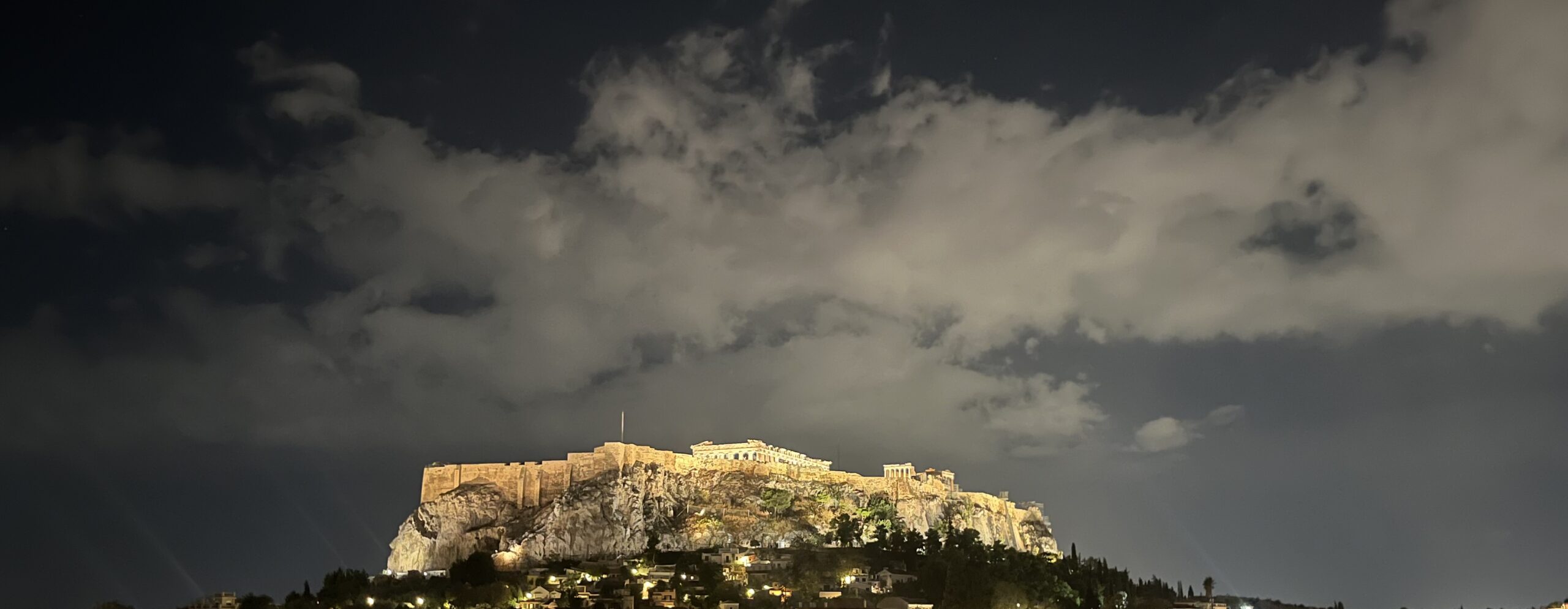
picture taken from flickr.com/people/bricsbrasil (2025/07/17).
our latest publications:
-
The Way into a first official Global Referendum on 'Climate Action' with potentially 5.5 billion People in the age 16+
-
Article 109 Coalition, et al. UNGA81 reception underscores support for building global democracy
-
2026 Global Democracy Coalition (GDC) Forum shows strong interest in developing global democracy
-
Horizon Europe "GoGlobalClimate" project proposal submitted
-
Three CEOs just agreed AI needs to be slowed down. None of them explained who gets to decide.
-
2026 state elections in Saxony-Anhalt show significant demand for global democracy
-

UN officially admits: Reducing burning fossil fuels (coal, oil, gas), meat production (beef, pork) and deforestation failed. It is time to vote.
-
Democracy Innovation – David Campbell extends our latest understanding on democracy
