
Abstract
We are confronting societal collapse – driven by global warming, climate disruption, and biodiversity loss – at a speed and scale most still struggle to grasp and very hard to imagine. The relentless push of commercialisation and competition within a globalised world has cultivated a trash culture – one ill-equipped to address slow, complex, and deeply interconnected challenges. Global warming unfolds gradually – with the climate system’s built-in inertia causing a 30-year delay between emissions and their impact. Traditional politics has struggled to respond to such dynamics, leaving a void that demands new thinking and approaches – even as billions face profound suffering. This moment – however painful – presents the strong possibility for a new way. It is time to vote. It is time for every person on Earth to have a voice in shaping our shared future. Yet, as the saying goes – truth is the invention of a liar – and the future is decided here and now, in the choices we make today. Every action we take is, in itself, a political act. History shows that democratic structures are the most prosperous way to organise this collective agency. The path forward? Global democracy – where one person, one vote transcends borders and nationality. Global warming will, tragically, force the change we need. Global democracy can be the framework to not only mitigate the crisis but to build a healthier, sustainable future for all. A first official global referendum on climate action – involving up to 5.5 billion people aged 16 and older – is the concrete and realistic first step toward this future.
Keywords: economic globalisation, political globalisation, global democracy, global referendum, global warming, commercialisation, competition, populism, trash culture, healthy society
The outline of this paper was first presented at the VIII edition of the Supranational Democracy Dialogue – Rethinking Democracy: Culture, Education, and Well-Being for Europe and the World, in Brindisi, Italy on April 23, 2026.
Introduction
Breaking news: a societal collapse is imminent, yet people have “better things” to do. What a paradox. Following the 2025 Conference of the Parties (COP) to the United Nations Framework Convention on Climate Change (UNFCCC COP30)1, this prediction carries very high certainty.
In light of such a scenario, the following core questions come to my mind:
- What are the root causes of this societal collapse?
Why will it happen, and what has brought us to this point? - When will the collapse occur?
How will it unfold, and Who will be affected – along with How? - What can we do about it?
What would be the best theoretical response, and What is the most realistic course of action? - How can we establish a new and actually effective path to mitigate this collapse?
and specifically, How can we mitigate global warming2 and climate disruption3 – the drivers of this collapse? - Does this societal collapse, rooted in global warming, serve as a catalyst for global democracy?
- What are the possible outcomes of such a transformative shift?
and, What would a healthy society look like in this new paradigm?
With this text, I aim to pave the way for a bright future for humanity – fully aware, however, that significant hardship and suffering will be part of the journey. This suffering falls 100%4 within the responsibility of political decision-making.
Our cognitive framework is shaped in such a way that suffering translates into pain, without foresightful, reflected, and insightful thinking and acting and it is only when this pain becomes unbearable that meaningful change occurs.
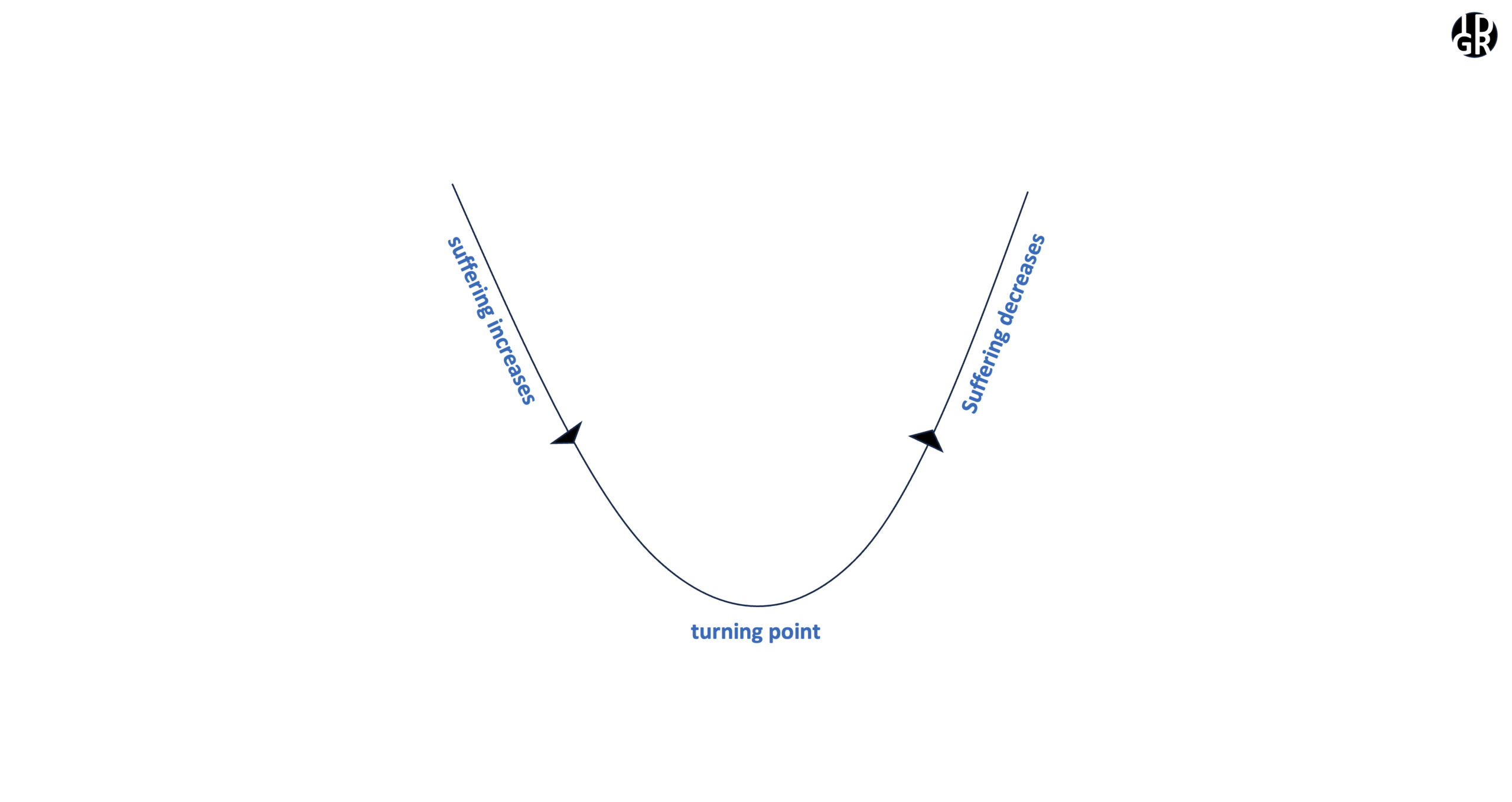
Figure 1: the correlation between suffering and change
1 The Current Situation
In this chapter, I will outline the societal context we currently inhabit. I want to uncover the hidden or unconscious patterns driving the emerging societal collapse – providing deeper insight into why severe hardship and suffering is likely to unfold in the 21st Century. This is not a comprehensive overview. It aims to serve as an introduction.
1.1 The Drifting apart Systems
To grasp the current situation, it is, in my view, essential to examine the interconnected roles of the three most influential governing systems in our societies: (1) science, (2) art, and (3) politics – as explored in the works of Niklas Luhmann (e.g., 1995).
While science’s primary responsibility is to explore and explain the world, art’s role is to provide reflection, critique, and social intervention. Politics, in turn, is tasked with day-to-day decision-making – an interaction process between science, art, and politics that operates through subtle, rather than overtly formalised, structures and processes.
For any of these systems to work effectively, integration is vital. I claim, only when these three domains work integrated, a healthy and prosperous society can be realised. This kind of “invisible collaboration” often proves most effective during times of collapse – such as in the aftermath of World War II.
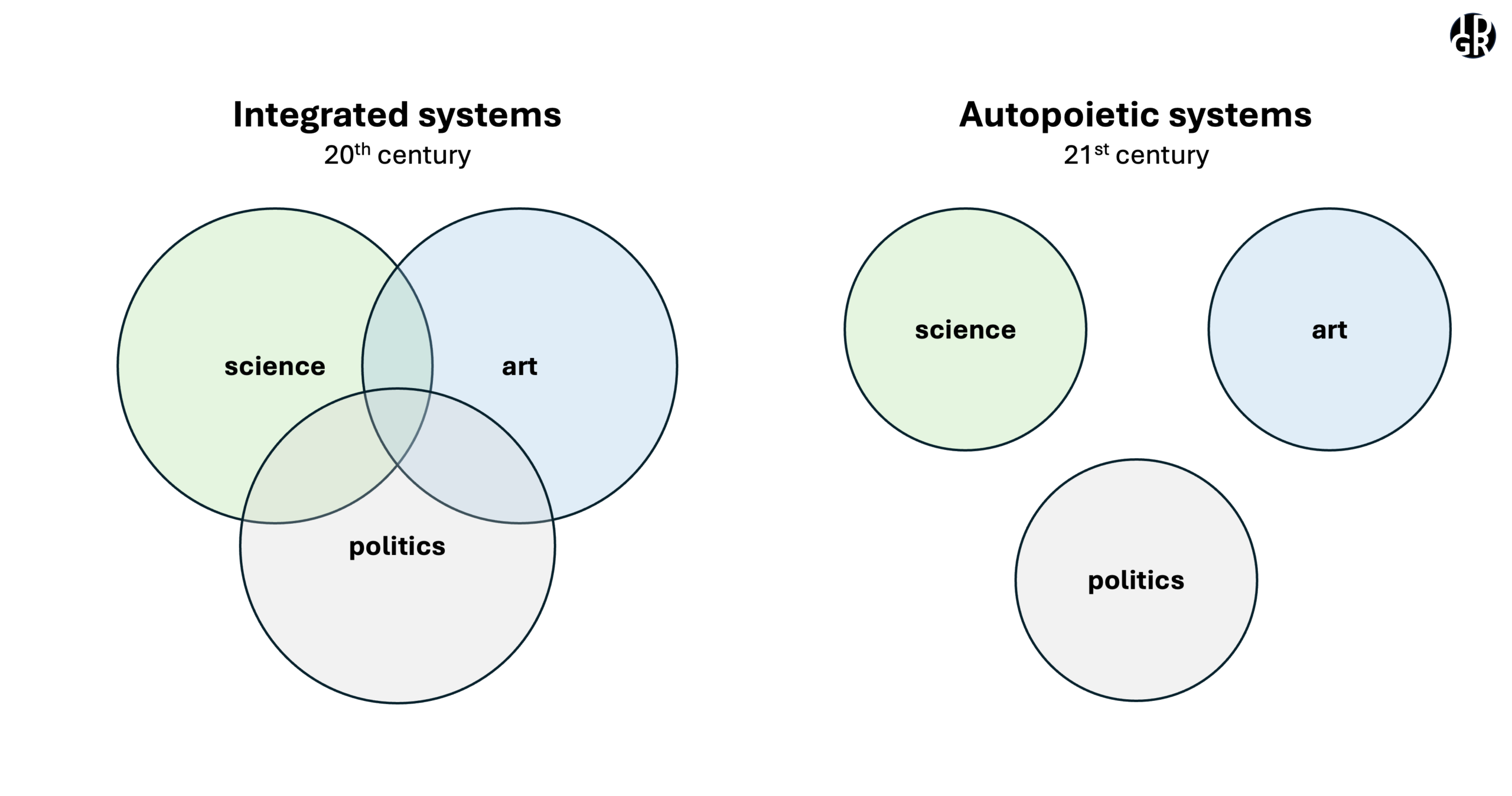
Figure 2: drifting apart systems (1) science, (2) art, and (3) politics
Over the past centuries – and particularly at the dawn of the 21st Century – humanity experienced unprecedented population expansion aligned with productivity gains, wealth creation, and improvements in quality of life (cf. World Bank Group, 2025). The primary drivers behind these gains were (a) scientific advancements – such as the penetration of the World Wide Web into business and daily life – and (b) increased specialisation. However, these very forces of technological progress and specialisation have also led to a fragmentation of systems and drifting away systems.
Science has undergone a quantitative shift, dominated by positivism – where only measurable research is considered valid (cf. e.g., Baumann, 2002). Today, scientific institutions are often infiltrated by highly specialised, metrics-driven management systems. For instance, academic journals are ranked, and publications are scored, incentivising researchers to publish as many papers as possible in top-tier journals to maximise career points. The result is a concentration of scientific output in a small number of “A-level journals” – publications so highly specialised that they require years of expertise to decipher, rendering them irrelevant to art or politics. This creates an autopoietic system, operating in isolation. Worse still, collaboration between science, art, and politics is either non-existent or actively discouraged within this framework.
Historically, art was deemed “good” when it challenged society – when it upset, annoyed, or shocked people (cf. e.g., Riemschneider & Grosenick, 2001). Today, however, this criterion has ceased to matter in the context of art evaluation. Instead, the art world has also become highly specialised and metrics-driven. Museums are now ranked and rated, and art’s value is determined by these quantitative assessments. As a result, art has undergone a profound transformation. Artists, operating in an intensely competitive environment, need to “strategically tailor” their work for maximum exposure. Success now hinges on getting into one of the leading institutions for contemporary art.5 Achieving this can lead to a lucrative career with substantial income for artists. Yet, the interaction between art, politics, and science has become either superficial or overly formalised, creating distance. Museums have been commercialised6, and art has largely been privatised7. Increasingly, art is treated as an investment, where profitability takes precedence over societal impact. Ultimately, this has created an also autopoietic art system – one with minimal connection to science and politics.
Historically, politics viewed science as a supportive framework for sound policymaking. A rare exception occurred in July 2026, when the German government announced it would reform the pension system precisely in line with recommendations from its Pensions Commission – a move that came as a surprise. Yet, criticism emerged swiftly, with senior politicians soon calling for adaptations to the proposals. My own experience during one of the most significant political reform projects in the Second Austrian Republic revealed a stark reality: there was almost no engagement with science, and no intention whatsoever to integrate art into decision-making. Today, politics operates under two dominant models: (a) science-based target setting, or (b) popularity-driven decision-making, shaped by poll ratings and expected voting gains. Like science and art, politics has become highly specialised and metrics-driven, prioritising short-term popularity over long-term substance. This has led to a decoupling from both science and art, reducing politics to yet another autopoietic system – one that operates in isolation.
“Lytle medleth grete matters,
John Heywood’s Proverbes (1546)
whyle they can not se the wood for the trees.”
These three developments at the start of the 21st Century have given rise to three autopoietic systems, each fixated on short-term internal optimisation. Operating within an intensely competitive environment, self-reinforcing cycles accelerate their drift away from broader societal needs.
Taking a step back to see the bigger picture – rather than getting lost in the details – the result is a system-wide failure to address humanity’s most pressing current global threats, above all global warming, climate disruption, and biodiversity loss.
1.2 The vicious Self-reinforcing Cycles
From the perspective of system dynamics, complex systems operate through two fundamental types of cycles: (a) balancing cycles and (b) self-reinforcing cycles.
- (a) Balancing cycles promote continuity and stability, while
- (b) self-reinforcing cycles drive change, innovation, or disruption
(cf. e.g., Luhmann, 2002).
Neither is inherently “good” or “bad” – each fulfils a distinct demand, though both can become pathological if taken to extremes. Balancing cycles, if overemphasised, may lead to frustration, stagnation, or a sense of being trapped – a standstill that feels oppressive or limiting. Self-reinforcing cycles, by contrast, can lead into escalation and collapse. In this article, I focus exclusively on (b) the self-reinforcing cycles as the driver behind the impending societal collapse, fuelled by global warming and the resulting climate disruption.
Let me begin with what I see as the most critical drift in business – and, by extension, society: the push toward ever-greater commercialisation. Sustained economic growth – typically 1 to 3% of GDP8 per year – requires a corresponding rise in consumption. This can be achieved in several ways:
- Gaining new people purchasing your products or services – so called new markets.
- Inventing new goods and services that people are persuaded to buy – such as tablets, fashion, or betting apps.
- Commercialising previously shared or public goods – for example, water or public toilets.
- Privatising and monetising private goods and services – for example, renting out your cat to strangers for a fee.
- Pushing legal boundaries to enable the sale of goods and services that were previously restricted – such as pornography on the internet, devoid of age verification.
From Strategic Management, we understand the “strategy of differentiation” (among others, Porter, 1980 and 1985). This can be achieved through either “quality leadership” or “price leadership” (Baumann, 2005, p. 54ff.). If an organisation opts for “price leadership”, it needs to maximise Economies of Scale – meaning it aims to grow as large as possible to produce goods and services at the lowest possible cost. To succeed, it has to (radically) commercialise its offerings. This relentless pursuit of maximum consumer appeal mirrors the same pattern seen in politics – where the drive for maximum voter appeal is known as populism.9
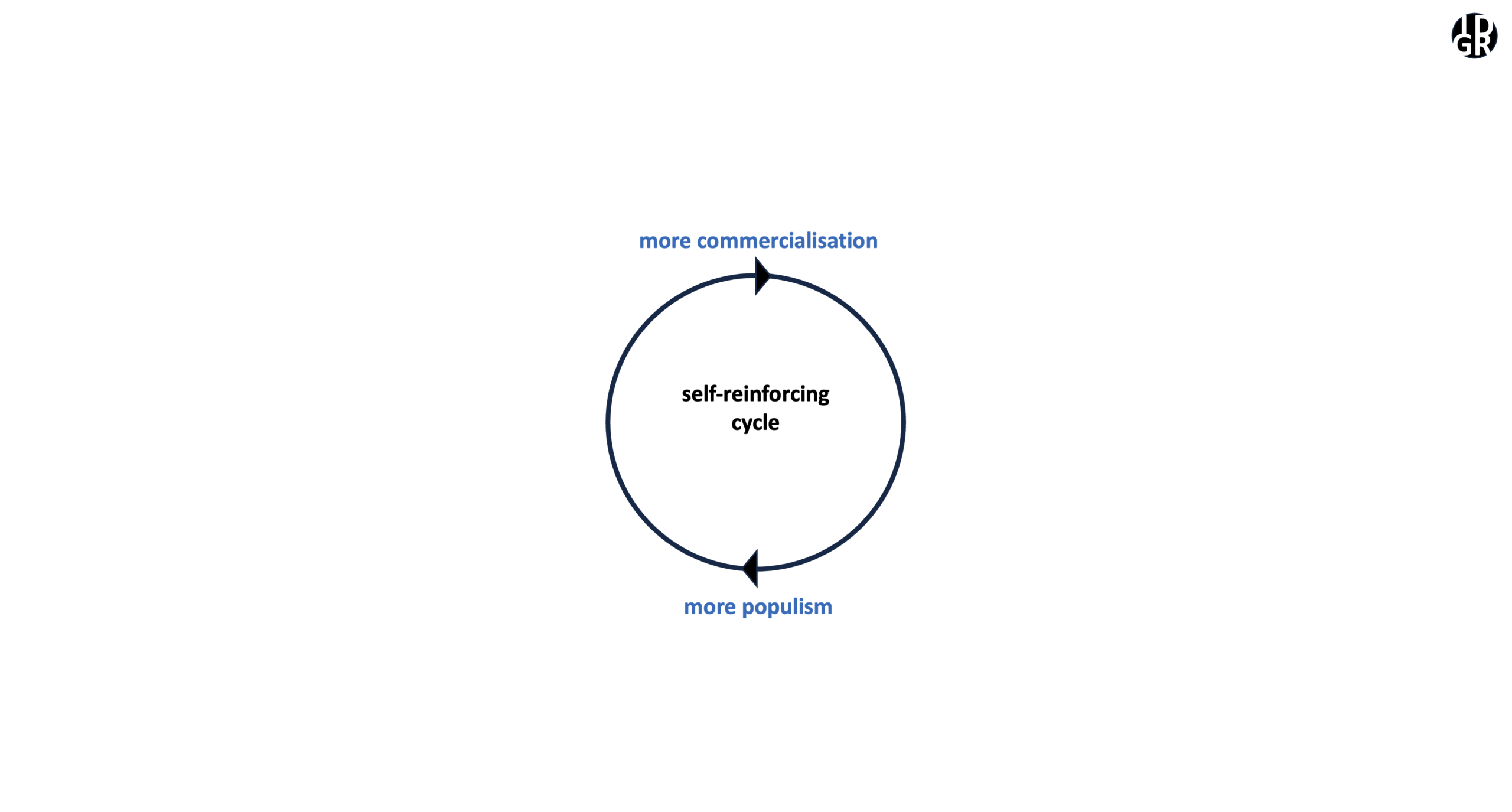
Figure 3: self-reinforcing cycle between commercialisation and populism
The economy, economic growth, and entrepreneurial success hinge on a seemingly simple principle: sell as many units of a product or service as possible at the best possible price (and by producing or delivering with the lowest cost). This leaves businesses with two core strategies to boost revenues: (a) selling more – or – (b) selling at a higher price. Option (b) is usually the harder path – it demands improvements in perceived quality, innovation, or added value. That leaves option (a) as the primary lever for most companies. To achieve this, a product or service needs to succeed in the market – but what does that really mean? A closer look reveals a critical insight: market is not a monolithic entity. It encompasses everyone on Earth – a group as diverse as humanity itself. This means a product can be “the best ever” to one person and “utterly useless” to another. Classical marketing addresses this by focusing on target groups and tailoring approaches to specific segments of the market – in other words, us.
Anyone aiming to sell large volumes of products or services is effectively forced to focus on the largest consumer group. Since most phenomena in life follow a normal distribution (cf. the Gaussian normal distribution), decision-makers need to prioritise the biggest segment accordingly – the so-called mainstream. As stark as it sounds – this segment typically consists of the relatively less educated and lower-earning population. To achieve mass-market success, businesses need to target this group – the majority whose purchasing power and consumption habits drive large-scale sales.10
What criteria does this group of less educated and less affluent use when consuming – that is, when buying products or services? Is it primarily quality or price – with the mantra “cheap is chic”? The answer, in my view, is unequivocal – price. Amazon, Primark, Microsoft, et al. did not achieve their success – nor did their founders become billionaires – because they developed the best online shop, the best clothes, or the best software. Their dominance stems from offering cheap products and marketing them as “cool” to their target audience.
Take the Neue Zürcher Zeitung (NZZ) versus the Bild newspaper – the latter has significantly more readers. Does this make Bild the better product? No – it simply means it has more customers. Selling in large volumes is therefore not synonymous with “good” but rather with “less educated” and “cheap”. Providers in this segment – such as Zalando in Germany – compete by using openly populist advertising that exploits the most primitive mimetic forces of their audience – greed, vanity, envy, jealousy, and group-think – leading into a herd mentality (cf. Girard, 1999).
This form of commercialisation exerts immense pressure on alternatives. Why? Because mimetic forces – such as group pressure and herd behaviour – are extraordinarily difficult for individuals to resist. Meanwhile, the overwhelming “market clamour” drowns out quieter, more nuanced voices – especially those with smaller budgets. Whoever controls the media – or commands a large public relations and marketing budget – effectively dictates consumption patterns and shapes the purchase decisions of the people who make up the market. The mainstream is relentlessly bombarded with messages like “cheap is chic” and “scream with joy” – a cacophony of marketing populism that drowns out other perspectives. In this environment, being heard for the other has become rather difficult.
As the fields of science, journalism, art, and culture become increasingly commercialised, they too get pressure to cater to the masses of the “less educated and poorly paid” to survive. This creates a self-destructive mechanism of sophistication – a self-reinforcing cycle of commercialisation and populism – where nuanced voices are systematically drowned out, and a mainstream of simplistic opinions – what we call populism – quickly takes hold. This suits entrepreneurs and corporations – they thrive on selling more of the same cheap products. A diversity of opinions complicates targeted communication, making it far easier – and cheaper – if everyone thinks alike. Ultimately, what matters is that the product sells quickly and repeatedly and the means are adjusted accordingly. This is the essence of commercialisation in the pursuit of (short-term) profit maximisation.
The rise of commercialisation – and its amplification of populism in both business and politics – has fuelled the growth of what we call trash culture. Trash culture is low-price, low-quality consumption habits, often driven by a craving for sensation rather than substance – think fast food, fast fashion, quick money, or fleeting pleasures. In Strategic Management theory, this is known as the “no-frills strategy” (among others, Johnson & Scholes, 2002).
These habits trigger dopamine spikes – providing a brief, artificial sense of happiness. But the effect fades quickly, leaving the individual craving another stimulus to replenish that dopamine high. People chase “the thrill”, “the buzz”, “the fun”, or “the excitement” – always seeking the next fleeting rush and this stimulates consumption. Exactly what mass marketer want to achieve.
A very good example in my view of this trend is the rise of “short-message news” providers. The terms “short message” and “news” seem contradictory – after all, news typically conveys complexity, which cannot be reduced to e.g., 280 characters. Yet these services thrive because they cater to the addictive dopamine-driven patterns of trash culture. Users aren’t seeking informed decision-making – they want instant sensations, a quick dopamine hit, and a fleeting sense of fun. This trash culture fuels the fun society – a concept diametrically opposed to a healthy, balanced society (cf. Fromm, 2019). This shift has inspired books like Michael J. Sandel’s “What Money Can’t Buy: The Moral Limits of Markets” (2012), which highlights the non-commercialisable elements of life – love and respect. Already in the 1980s, Erich Fromm (2019) warned about the unhealthy pattern of self-marketing and self-commercialisation – the very last level of commercialisation – widely seen today as common-sense and “normal” for instance with the context of Social Media and eDating platforms.
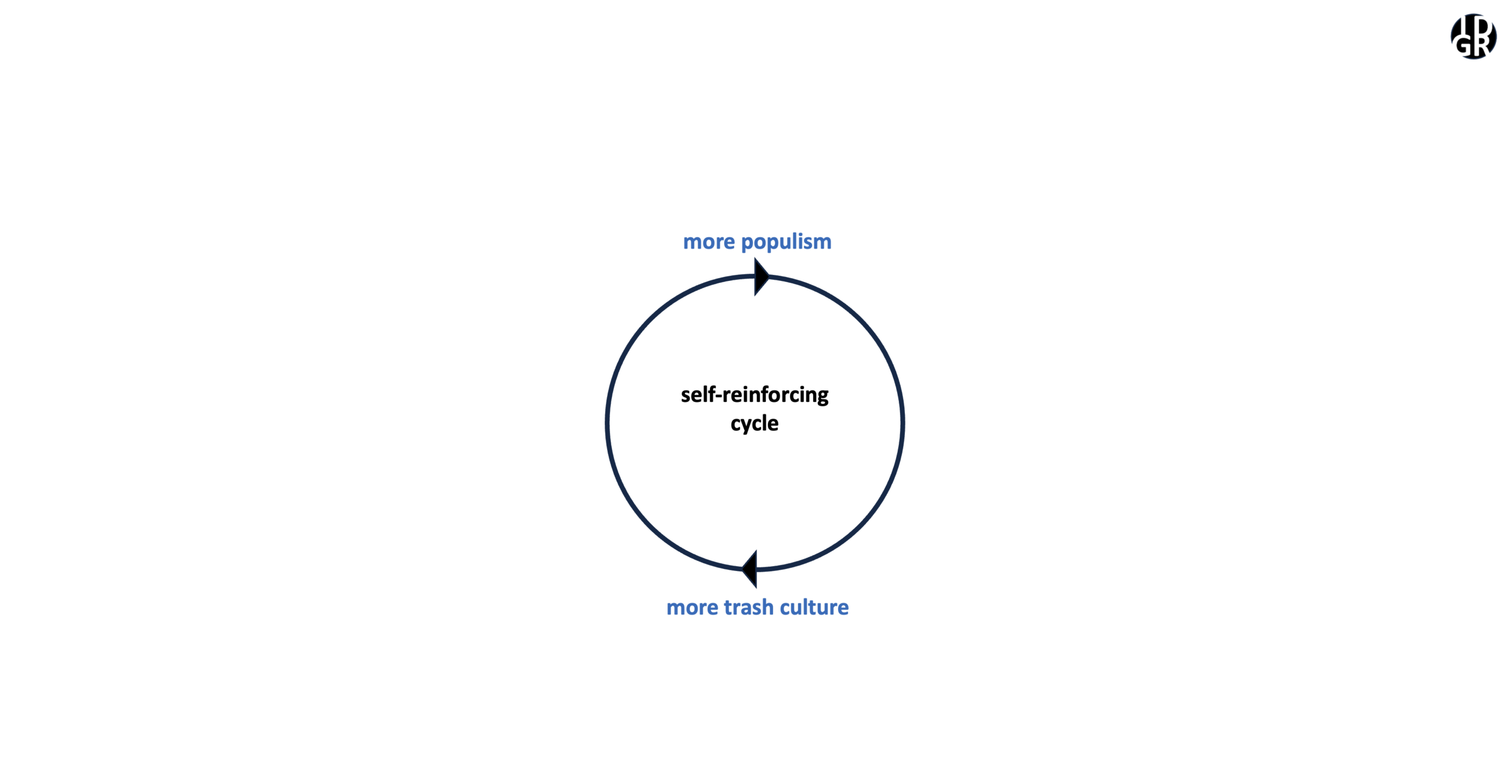
Figure 4: self-reinforcing cycle between populism and trash culture
Alongside the vicious cycle of commercialisation, I want to highlight the equally destructive cycle of competition.
Interestingly, competition is today overwhelmingly praised and e.g., championed by sports heroes who excel in competitive arenas and politics does a lot to exactly stimulate that kind of attitudes and behaviour with these events. Originally, competition was designed to boost economic output and enhance the quality of products and services (cf. Porter, 1985). The logic is straightforward – competition enforces “survival of the fittest” (Spencer, 1864 – Darwin, 1869). In theory, this means the strongest corporations – those producing the best products and delivering the best services – will thrive. Competition, it is argued, drives an upward spiral toward quality leadership and consumer satisfaction. Innovative entrepreneurs would lead the way – fostering a prosperous economy and society (cf. Schumpeter, 1942).
Within this framework, competition is closely tied to the concept of performance. In a competitive environment, success depends on performing better than others – creating a cycle of competition – performance – success. What has been overlooked in this neoliberal perspective, however, is the fundamental question: Why do we need competition in the first place? And more importantly – What are the unintended side-effects of competition?
Economic globalisation – which has significantly enhanced our quality of life – proved remarkably resilient, even during the COVID-19 pandemic.11 Yet it has also fuelled competition to unprecedented levels. Economic globalisation reshaped predominantly national markets into one vast global marketplace. Where corporations once competed mainly against local or domestic rivals, they now face competition from the entire world (cf. Porter, 1990). Combined with the “network effect”, this has led to a concentration of wealth and power in the hands of a small number of “global players” – corporations operating across nearly every national market. By maximising Economies of Scale and leveraging “price leadership” as a key differentiator, these “global players” exert immense competitive pressure on others. As a result, businesses need to constantly improve performance just to survive.
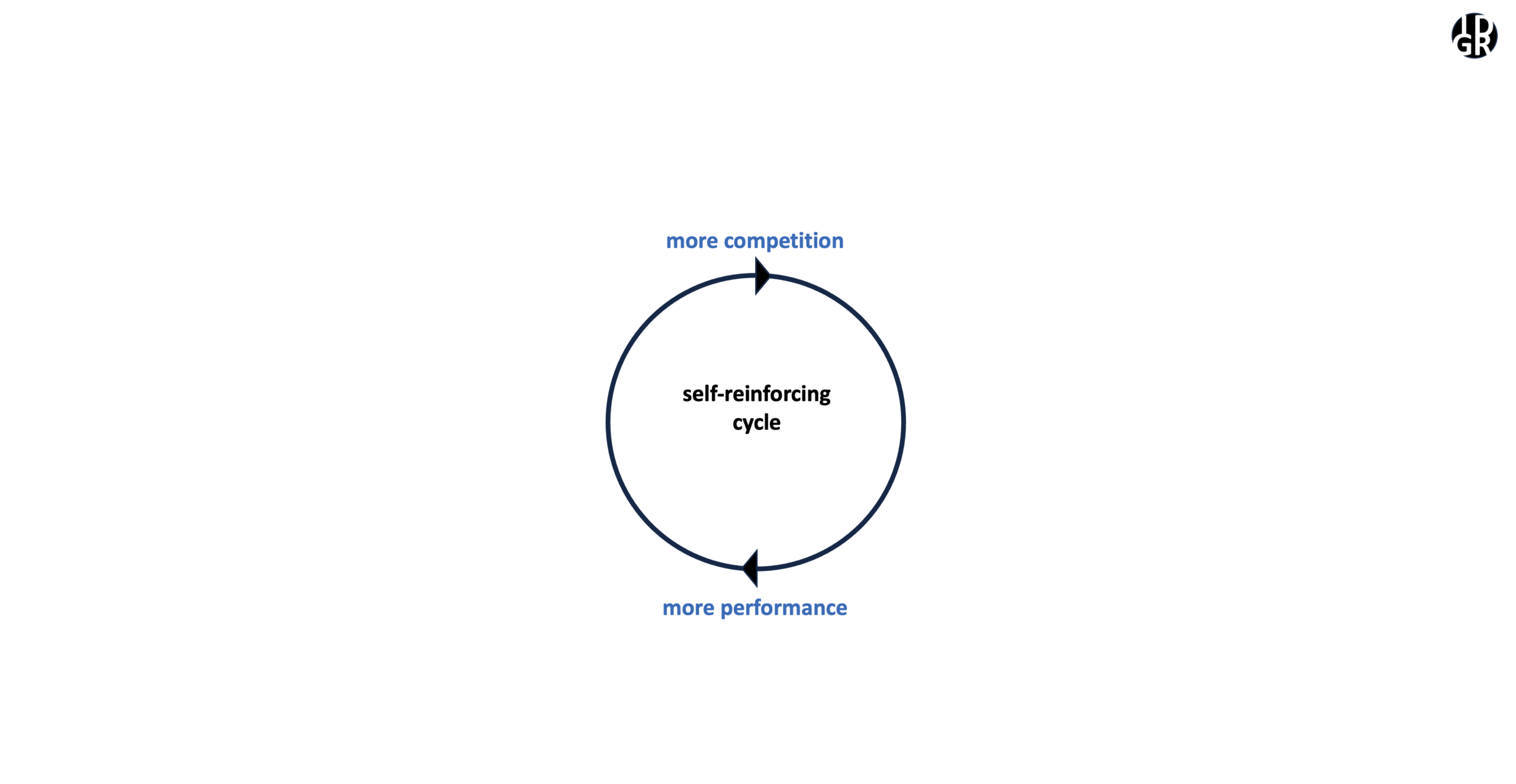
Figure 5: self-reinforcing cycle between competition and performance
This surge in economic globalisation – and the resulting spike in competition – has intensified the demand for peak performance. In turn, this has escalated rivalry among competing entities.
As early as the late 20th Century, the term “business warrior” emerged – and the concept of “strategy” itself is rooted in warfare – or, more precisely, in how to operate in hostile conditions (cf. von Clausewitz, 1996 – On War, first published in 1832).
Rivalry stands in stark contrast to solidarity and fosters a distinct set of behaviours. The “solution” proposed by neoliberalists is the concept of fairness12 – a framework built on rules and adherence to them. Yet fairness leaves critical questions unanswered: How are these rules created? Who decides them? How are they enforced? Justice and democracy, by contrast, encompasses these very questions.
To understand this vicious cycle, consider this: in harsh competition – where extraordinary performance is demanded to succeed – the temptation arises to reshape the rules in one’s own favour.13 The destructive core of this pattern lies in acting solely for self-interest – with the explicit goal of defeating rivals or even kill the enemy. In its core, it is a hostile pattern.
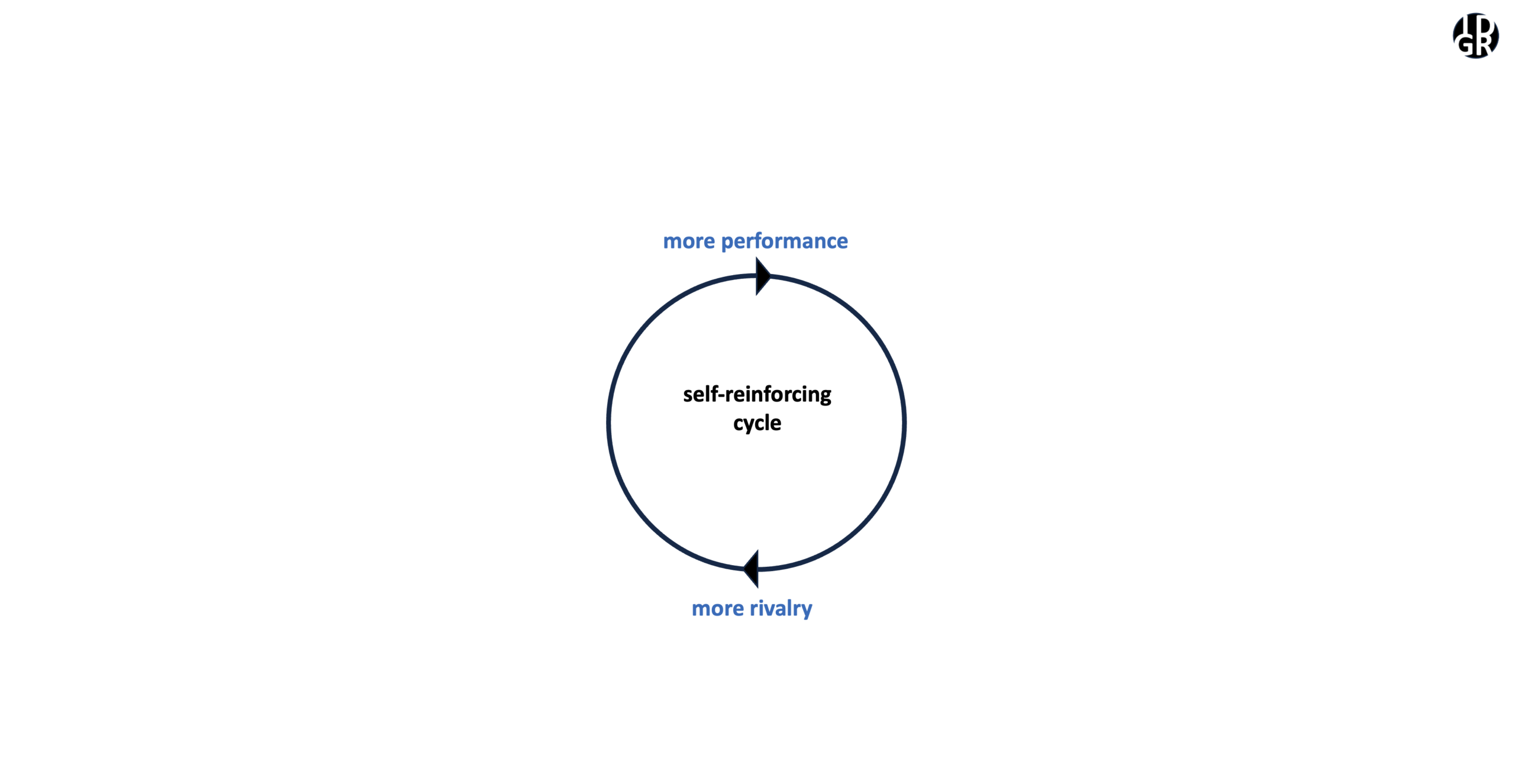
Figure 6: self-reinforcing cycle between performance and rivalry
There may well be a threshold at which competition, performance, and success benefit society – remaining a healthy stimulus. However, when the demand for performance becomes existential – and rivalry escalates into a fight for survival – it triggers one of the deepest root causes of illness: negative stress – or distress (Antonovsky, 1987).14
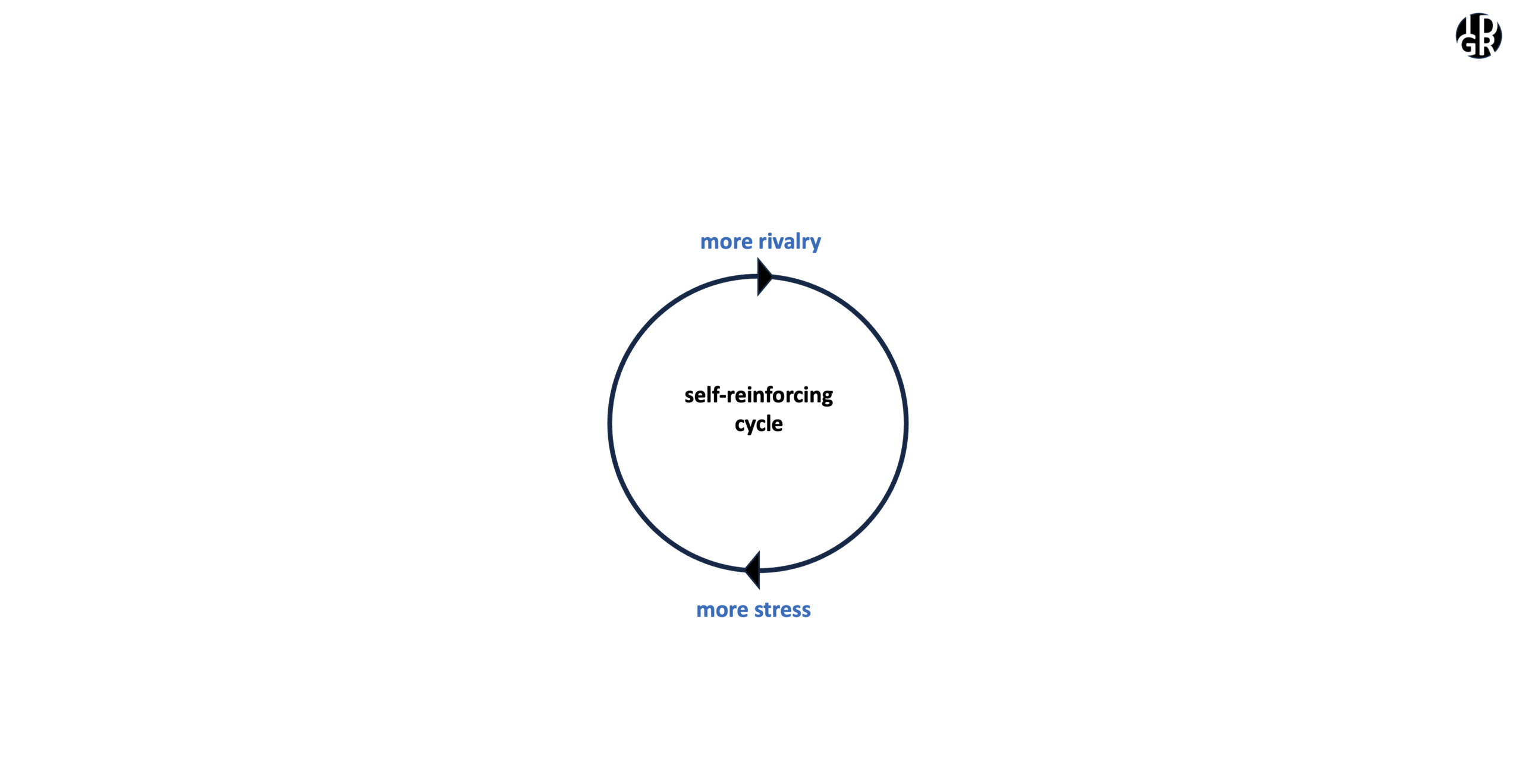
Figure 7: self-reinforcing cycle between rivalry and stress
Since we humans are fundamentally shaped by solidarity and cooperation, rivalry inherently introduces stress. When rivalry escalates to the point of existential threats, this stress can manifest as a wide range of illnesses and diseases.
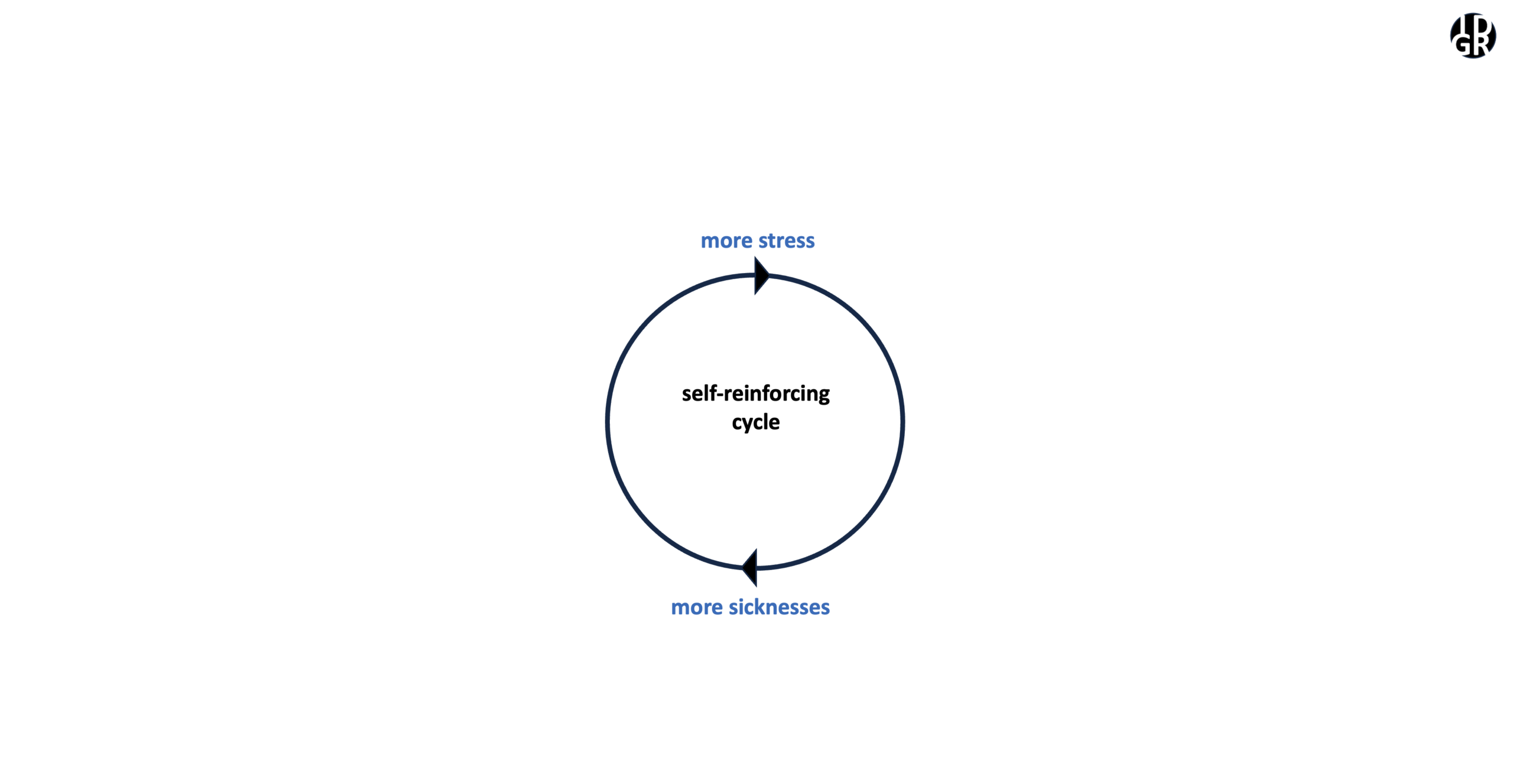
Figure 8: self-reinforcing cycle between stress and sicknesses
While exact figures vary, the precise numbers are not critical to understanding this vicious cycle. What is clear is that we face a near-global health epidemic driven by stress – for example, 50 to 70% of mental health disorders – including depression, anxiety, and burnout – are stress-related. Recent data indicates that at least 1 billion people worldwide are affected by mental health conditions (WHO, 10/2025).
These dynamics collectively produce an increasingly unhealthy society – one that places an unsustainable burden on our healthcare systems through rising costs for treating conditions like burnout, depression, strokes, and heart attacks. In this context, it is crucial to remember that competition is not a “natural law” – it is a human invention. Ultimately, it is political decision-making that determines how much and what kind of competition we allow in our society.
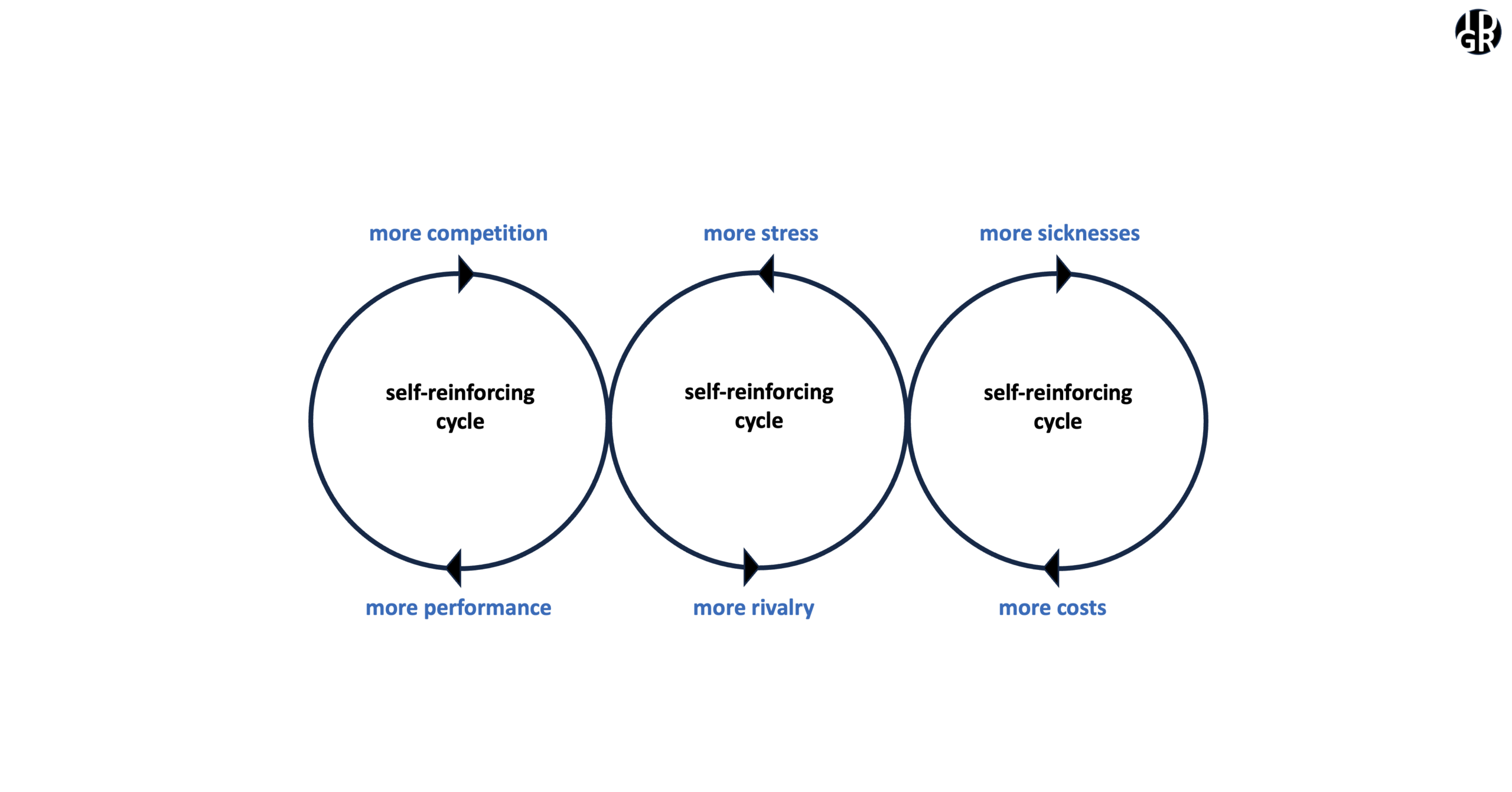
Figure 9: the unhealthy self-reinforcing cycles of a competition system
Understanding these vicious cycles is key to grasping why modern society remains paralysed in the face of obvious societal collapse – particularly from global warming. Commercialisation keeps people trapped in short-term dopamine-driven consumption patterns, while competition leaves little energy for anything beyond mere survival. Meanwhile, governing elites are driven by unchecked greed, fuelled by soaring profits. Politicians are ensnared in short-term populist cycles, unable to act decisively. Science is bogged down by cycles of repetitive journal publications, and art has retreated into private or elite spheres.
1.3 The Eroding Values
The rise of trash culture – driven largely by commercialisation and populism – has another critical consequence I want to highlight: the erosion of values. When everything seems purchasable and quality is reduced to mere quantity, traditional values come under immense pressure. The core value at stake is taking on responsibility. In a healthy society, people naturally assume responsibility for their actions. Ideally, this value would eliminate the need for legal enforcement entirely. However, in a system built on “fairness” – yet with vague structures and processes – the very notion of responsibility fades away.
Within Management, there was once a strong push for Corporate Social Responsibility (CSR). Yet when framed against realities like OPEC’s 2026 announcement of $17.7 trillion in fossil fuel investments by 2050 – alongside their claims of responsibility for energy security – the level of hypocrisy and corruption in today’s business systems becomes glaringly apparent (cf. OPEC, 2026). CSR as a concept has failed, replaced by unchecked greed – now framed as “good” because it drives consumption, commercialisation, and short-term profit maximisation.
The same applies for Sustainability Management and corporate initiatives like the Global Reporting Initiative (GRI). Companies engage in these efforts only when forced to – not out of genuine commitment – and very few see them as beneficial. Instead, Sustainability Management is often viewed as a burdensome obligation that hinders the pursuit of competitive advantage and short-term profit maximisation.
Attitudes rooted in ruthless money-grubbing, avarice, and greed fuel further the mimetic forces – vanity, envy, jealousy, and group-think. These forces not only drive commercialisation and consumption but also corrode society, leaving it tainted, depraved, spoiled, or even rotten.15 This decline is vividly reflected in the rise of commercialisation, populism, and trash culture – alongside the erosion of healthy and sustainable values.
This is particularly critical within the context of this discussion, because mitigating global warming requires nothing short of long-term thinking – a conscious and selective use of resources, alongside willingness to renounce and make sacrifices. Yet what we see instead is greedy short-term exploitation – encapsulated in the cynical motto “Après moi, le déluge” (“After me, the flood”) – attributed to King Louis XV of France, a phrase that foreshadowed the French Revolution.
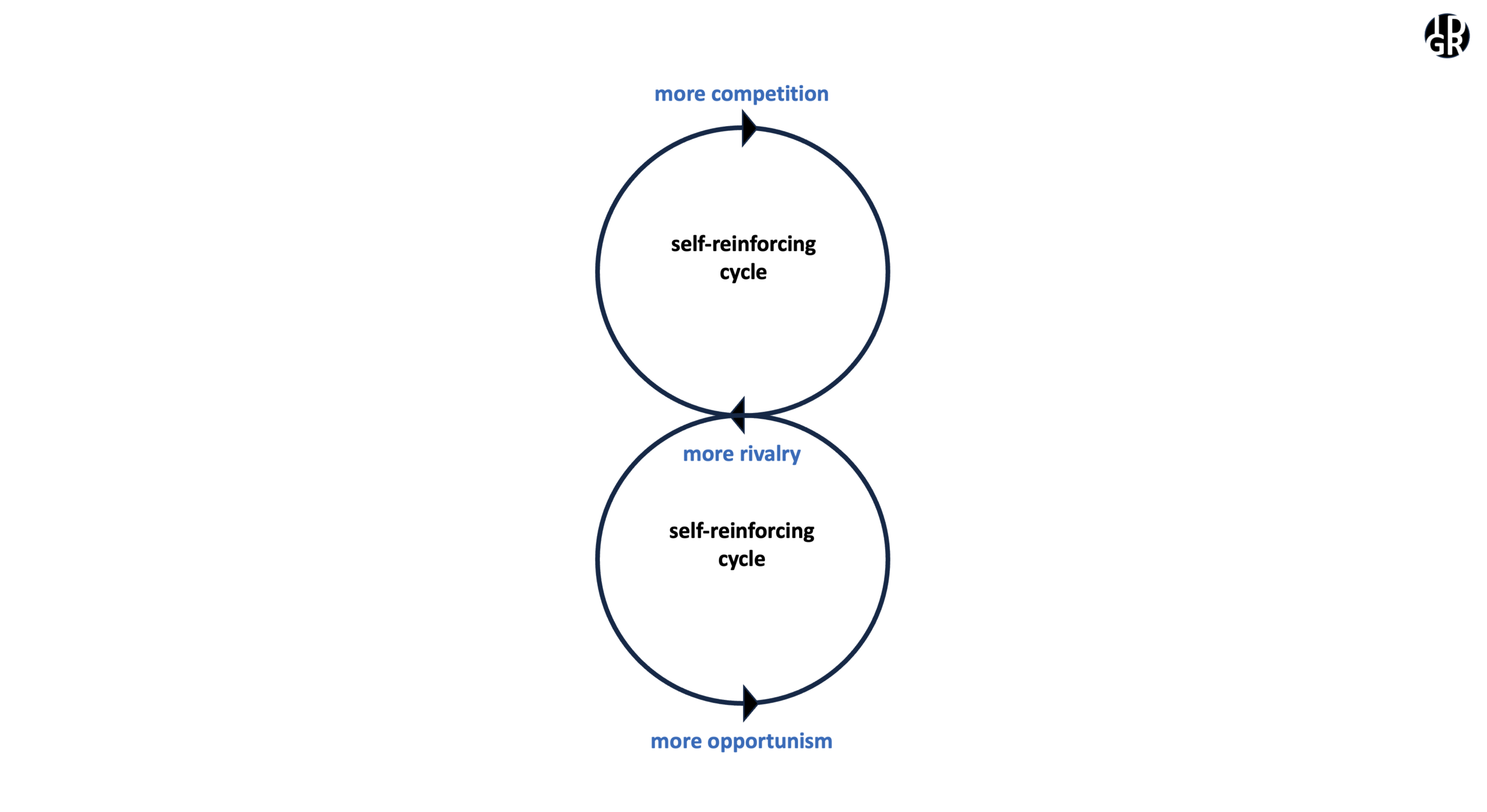
Figure 10: the self-reinforcing cycles of management and economy driven by “competitive advantage”
To summarise: More competition fuels more rivalry – which in turn breeds opportunistic thinking and behaviour – primarily selfish actions. This erosion of values extends to personal responsibility – undermining our collective ability to address complex but urgent and most dangerous long-term developments like global warming.
1.4 The Eroding Legal Situation
Given the drifting apart systems, the vicious self-reinforcing cycles driven by commercialisation and competition, and the erosion of values, it should come as no surprise that also the concept of a rules-based society – upheld by strong, independent legal institutions – is now under severe threat. In this context, neoliberalism does not lead to order – it paves the way for anarchy.16
Freedom was never a healthy concept – because it is inherently linear and oppositional. At its core, freedom demands a “freedom from” – and this “from” carries an implicit hostility toward whatever it seeks to escape. “Freedom from” is, in itself, a form of unfreedom – even a hostile act. Freedom, by its very nature, becomes a struggle against something or someone. This is why so many wars – if not all of them – are rooted in the “fight for freedom” and the accompanying ideology of liberalism.
Beyond this broader drift, the most critical gaps within today’s legal systems – and most relevant to the context of global warming and global democracy – are the following:
- Is there justice for a system with a 30-year delay possible?
There is a time gap of 30-years between GHG emissions and actual global warming (Baumann, 2024 and Figure 13). The damages we are seeing today from global warming like wildfires, draughts, heatwaves, storms, floodings are basically caused by the GHG emissions from 30-years ago – from around 1995. The current legal system has a very hard time dealing with such long-time gaps between the committed crime and the actual impact of the crime. - Is there political accountability possible?
The responsibility for global warming is 100% within politics. But politics has also the legislation power. So, politics can change the legal system in the way, they cannot be convicted for any crimes related to failed global warming mitigation. If they fail to reach the targets, they have the power to change the targets.17 - Is the execution of international law possible?
The Paris Agreement is basically a binding international law. The International Court of Justice (ICJ) confirmed in 2025, that the national states have a legal obligation to protect the climate system and to meet the Paris Agreement’s 1.5°C target. This strengthens the legal basis. Nevertheless, the question what happens if a national state comes short with his obligation, remains unanswered. Due to the eroding values, the moral weight is rather weak and national states, who don’t want to come up to the Paris Agreement obligation, just exit the agreement.18
The effectiveness of a legal system hinges on three basic pillars: democratic legitimacy, cultural integration, and institutional independence – the foundations that enable it to develop and enforce the law. Yet the globalised economy and technology have also globalised crime.
INTERPOL’s 2023 reports, for instance, highlight an epidemic of transnational crime – one that undermines societies and businesses alike (INTERPOL, 2023). Law enforcement struggles against the anonymity of the World Wide Web – including the Dark Web – as well as internationally organised corruption and scams. The result? The legal system is partially beyond national control, while international law remains “soft law” – devoid of binding execution structures or processes.19
1.5 The Power Shift
As the legal framework erodes from liberalism towards anarchy, power consolidates in the hands of those with greater resources – be it money or property. Success – and even survival – becomes increasingly tied to the “survival of the fittest”.20
Today, formal legal education or academic credentials – such as a title – no longer determine success (cf. Sandel, 2012 & 2020). As long as you have money – or know how to get it – you can access all the resources you need, rendering formalities irrelevant. This “money nobility” operates differently from traditional elites. Their priority is maximising wealth, shaped by a worldview where almost anything – including a “good” life – can be purchased. For them, the old establishment is an obstacle. Academic achievements hinder business careers, seen as complicated and unnecessary. They seek simple solutions, quick profits, and fame or material status – all fuelled by mimetic forces they embrace as the engine of commercialisation and wealth. This evolution has given rise to a new form of governance – one that mirrors the self-reinforcing cycles of traditional nobility. The key difference? Noble blood is no longer required – only money. Everything else can be bought.21
This represents a profound shift in how society is governed – and it is central to the context of this discussion. The “money nobility” amassed wealth through exploitation of resources, making it highly unlikely they would embrace long-term, system-integrated thinking – one rooted in strong legal systems and personal responsibility for the public good.
1.6 The Decoupling of Business, Industry and Economy from Ecology
Economic theory includes the concept of “externalities” – a placeholder for everything current theory cannot adequately explain. Think of it like the side effects of a drug or medicine.
Yet there is a crucial difference between economics and medicine: While a new drug needs to undergo rigorous testing and assurance processes before reaching the public – economic theories are “implemented” in society through political decisions – without any prior testing.
Currently, share prices are rising – stocks are gaining value. All major stock exchange indices – such as the Dow Jones, FTSE, DAX, HIS, et al. – are reaching record highs. This may seem surprising – even contradictory – given that we are simultaneously experiencing record global temperatures from global warming – with clear evidence that climate change is already beyond human control (Baumann, 2025).
From an economic standpoint, the reality looks radically different. Corporations still see enormous market potential – particularly in the Global South, where demand is growing for the same lifestyles enjoyed in the Global North. OPEC’s 2026 projections underscore this optimism: oil deliveries – driven largely by India and other non-OECD countries – are expected to increase 20% by 2050 (OPEC, 2026). They even describe this as a “golden age” for fossil fuels. Meanwhile, Artificial Intelligence (AI) is accelerating Economies of Scale and Economies of Scope – driving further cost efficiencies and, ultimately, higher profitability.
Speaking to climate scientists, however, the reality could not be more different. At this year’s Copernicus Climate Change Service (C3S) General Assembly in Budapest, scientists shared a stark warning with me: Even when signing the Paris Agreement in 2015 – about 10 years ago, they were already certain that the 1.5°C global warming limit would not be achievable anymore – and worse, no one knows what happens to the climate system once we breach it. From a management perspective, this is the worst-case scenario: a “risk” that cannot be quantified – let alone clearly understood. Any C-level executive facing such uncertainty would demand immediate clarification followed by swift, decisive mitigation. Yet with global warming we see the opposite: insights are suppressed, cognitive dissonance thrives, and a “constructed reality” (cf. Watzlawick, 1998) supporting a “Nothing will happen” or “It won’t be that bad” attitude dominates – so the party and share price rally prevails.
Today, insurance companies are among the few businesses that genuinely grasp the climate science. This is hardly surprising – they are also the hardest hit by global warming. The escalating damages from wildfires, floods, droughts, and storms are driving up insurance claims – yet for years, insurers downplayed, ignored, and denied the dangers, suffering from the same cognitive dissonance as others. Now, their underestimation of global warming’s financial impact is catching up with them. I expect the first insurance corporations to collapse within the next 3 to 5 years – triggering a domino effect across the entire financial system. This will mark the first major episode of the upcoming societal collapse.22
1.7 The Blind Spot of Measurements
Faced with this reality, the question arises: Why is so little being done – despite the obvious threats? The steps needed are clear: stop burning fossil fuels (coal, oil, gas), drastically reduce meat production, shift to a healthy, plant-based diet, and halt deforestation.
Yet people remain distracted by other priorities – as if they have better things to do. It sounds paradoxical, doesn’t it?
This ties into managerialism – the idea that only what can be measured can be managed. The populist mindset isn’t confined to politics – it has infected business and management too (cf. Power, 1999). Take the rise of “elevator pitches”: If you can’t explain your business idea convincingly in the time it takes to ride an elevator – mere seconds – it’s deemed unworthy of attention. If your idea can’t be distilled that quickly, it lacks profit potential.23
Will such “ideas”24 born within that kind of investment circumstance and attitude be able to mitigate something that complex like global warming? No. It is highly superficial and reductive and based on sensation – business populism. It lacks elaborated conception, long-term innovation, and divers development (cf. Hinterhuber, 1977 – Senge, 1994).
- The “strategic question” asks: Are we doing the right things?
- The “operational question” asks: Are we doing things right?
Both perspectives are essential for a healthy society. Yet over the past 20 years, I’ve observed a disturbing shift toward managerial fixation, operational frenzy, measurable outcomes, and empty activism – all lacking long-term vision or planning. This reflects a broad populist trend in management – one that prioritises short-term gains over sustainable progress. We are hurtling toward societal collapse – with “Eys Wide Shut” (Kubrick, 1999) – having lost the ability to see clearly complex and subtle correlations and act accordingly.
People are overwhelmed and stressed in the question: Are we doing things right? – buried in measurement, accounting, and evaluation – while the bigger picture reveals an inescapable drift toward societal collapse driven by rising GHG emissions and deforestation. The paradox? You only see what you measure – but when faced with complex, non-linear correlations – such as those in the climate system – you default to simple, linear, short-term metrics. Global warming and climate disruption are anything but simple: they are complex, slow-moving, dynamic, and with very long-term impacts and consequences – dimensions managerialism not only ignores but is structurally incapable of addressing (Baumann, 2005, p. 179ff.).25
Management, politics – and increasingly, even art – remain trapped in the mantra: “You can only manage what you measure” (among others, Drucker, 1954). Yet what we need to cope with global warming is a shift in perspective: “You can easily manage what you can measure – and you have to actively manage what you cannot measure” (among others, Baumann, 2002, p. 79ff.). Are we doing the right things? Based on the current status with mitigating global warming – clearly no.
“Whether or not you can observe a thing
Albert Einstein
depends upon the theory you use.
It is the theory which decides
what can be observed.”
2 The Global Warming Scenario
According to the C3S Global Temperature Trend Monitor26, we are on track to cross the +1.5°C global warming threshold – the limit for a stable climate on Earth – by 2029. Yet annual global GHG emissions continue to rise. Due to the inertia of the climate system, we already have enough greenhouse gases in the atmosphere to push warming to at least +2.5°C (Baumann, 2024). Worse still, the “1.5°C limit” was always a rough estimate – and we already have clear evidence of accelerating temperature increase, most likely driven by self-reinforcing cycles. The so-called GHG sinks – oceans, plants, forests, and soil – which have buffered warming until now – appear to be saturated (among others, Curran & Curran, 2025, pp. 85–87).
2.1 The Complex and Dynamic Global Climate System
The Intergovernmental Panel on Climate Change (IPCC) relied on linear projections of GHG emissions and global warming – a cognitive pattern we describe as “trivialisation” (Baumann, 2005, p. 117f.). This reflects a deep-rooted cognitive bias: humans tend to assume that developments follow linear paths. The IPCC, too, fell into this trap – treating global warming as if it would progress in a straightforward, predictable manner.
In a complex – and inherently dynamic – system, reality rarely unfolds in neat, linear patterns. Nowhere is this more relevant than in Earth’s weather and climate system – one of the most intricate and volatile systems humans inhabit, study, and attempt to grasp. I have no doubt about this. Nor do I doubt that even the most advanced climate models are merely fragments – approximations or simplified representations of our planet’s full complexity. Much remains beyond our current understanding – and thus beyond our ability to predict with certainty.
Paradoxically, long-term climate is easier to predict than short-term weather – because its patterns remain within a stable framework.27 This principle underpins William Nordhaus’s (1975) “1.5°C limit” for global warming. Nordhaus argued that humanity has evolved within a “corridor of human life” – a stable climate zone that has endured for over 10,000+ years, during the Holocene epoch. The Holocene has maintained a global average temperature variation of roughly ±1.5°C around pre-industrial levels. Yet this is not a physical or scientific certainty – it is an estimate derived from historical data, subject to significant uncertainty.
Therefore, Nordhaus’s “1.5°C limit” for global warming is best understood as a tentative benchmark – proposed in 1975 – for preserving Earth’s climatic stability.
2.2 The System Dynamics with global warming
While I explained the main societal self-reinforcing cycles in chapter 1.2 The vicious Self-reinforcing Cycles, I will now briefly explain the dynamics within the climate system. There are several self-reinforcing cycles within the climate system – the most straightforward is the self-reinforcing cycle between wildfires and GHG emissions.
More wildfires produce more GHG emissions and deforestation, main drivers for global warming. Increased GHG emissions and deforestation produces more temperature increase. This increased global warming will cause more wildfires which produces more GHG emissions and more deforestation.
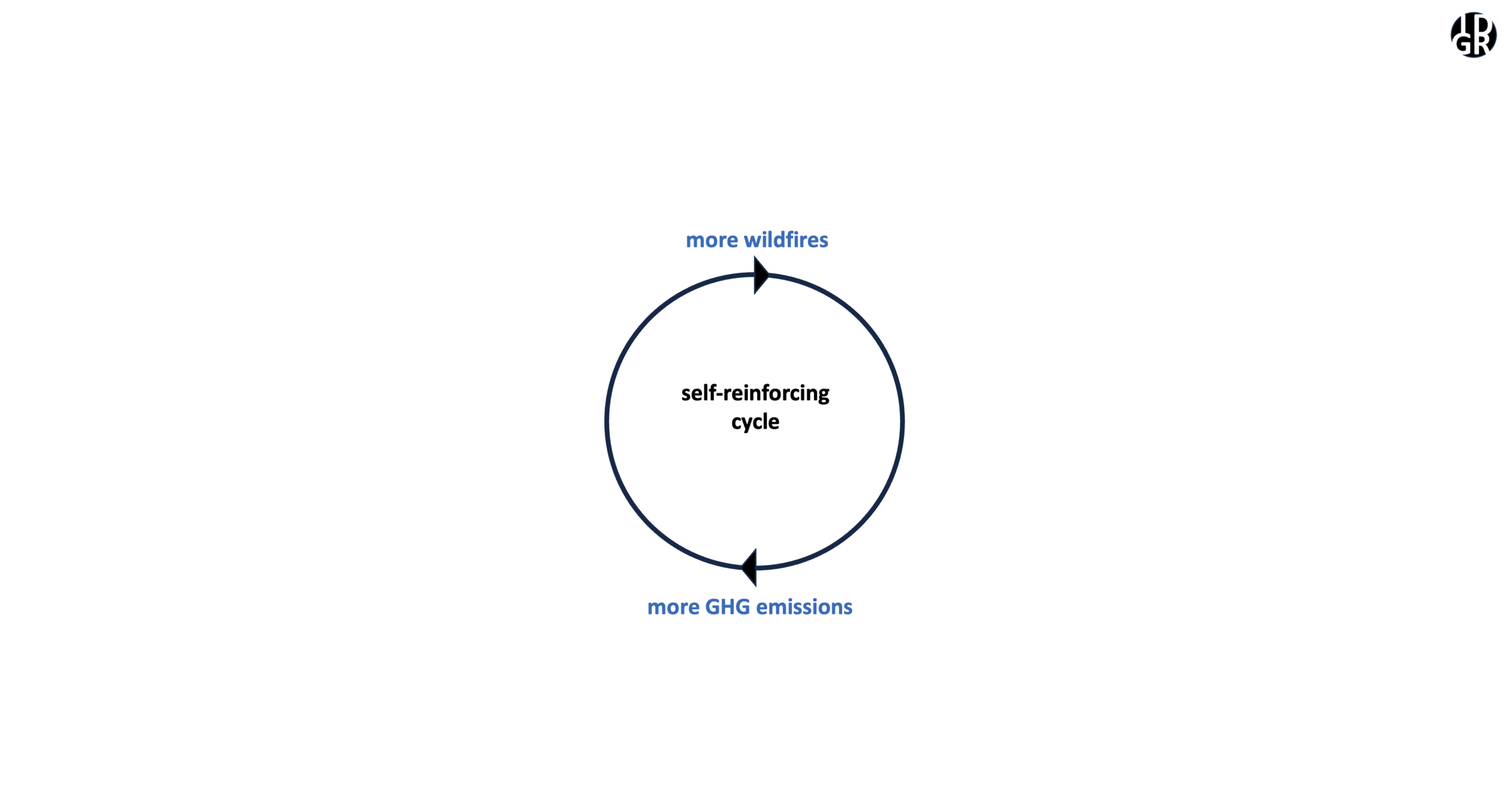
Figure 11: Example for a self-reinforcing cycle within the climate system of planet Earth
A self-reinforcing cycle starts with a “tipping point” and ends with a “tipping point”.28 With current significantly increasing wildfires29, there is strong evidence and a high chance, the “starting tipping point” for this self-reinforcing cycle may already be reached. The “ending tipping point“ would be the complete devastation of all the burnable vegetation on planet Earth. Then the process stops and a new stable climate system can emerge.30
The pressing question, however, is: Does time remain to avoid reaching the “starting tipping point”? And if we fail – What forms of life, livelihoods, and quality of life will still be possible on Earth within the new stable climate pattern that emerges after reaching the “end tipping point” of climate disruption? Current climate models cannot answer this – largely because they assume linear temperature trends, thereby ignoring self-reinforcing cycles and non-linear developments and dynamics.
Furthermore, so far climate science has focused heavily on the correlation between GHG emissions and global warming. However, the impacts of global warming – often referred to as climate change – remain poorly understood and vaguely documented.
2.3 The Cognitive Limitations – Linear Projection and Suppression
Our cognitive patterns lean toward linear extrapolations due to the “trivialisation” of complex developments (cf. Dörner, 2002). The COVID-19 pandemic proved this point: we rarely trigger linear progressions – instead, we often set off exponential ones within complex, dynamic systems like our society – driven by self-reinforcing cycles. Catastrophic events are best understood as activated, irreversible, self-reinforcing – and thus exponential – developments. These are largely unexpected, leaving societies unprepared and ill-equipped to mitigate or adapt.
I am seeing exactly this kind of pattern with global warming. There is strong evidence that the IPCC’s current global warming scenarios are grossly underestimating the pace of warming. In discussions with two leading climate scientists31, I confirmed this concern: self-reinforcing cycles are either neglected or insufficiently incorporated into today’s global warming scenarios. Their response? “We simply didn’t know how to include them.” The complexity exceeded the limits of trivial system thinking.32
Science has, in essence, fulfilled its role – at least by establishing the “1.5°C limit” as the threshold for a stable climate on Earth (Nordhaus, 1975). Yet mainstream climate science today still clings to the idea of mitigation potential – even entertaining the notion of a temperature “overshoot” (among others, Reisinger, et al., 2025). Johan Rockström (2026) – one of the world’s foremost climate scientists – has similarly adopted this concept, suggesting we could temporarily exceed the “1.5°C limit” – his graphs imply a period of 30 to 70 years33 – before eventually returning to the stable current climate. This directly contradicts the “1.5°C limit” or “1.5°C threshold” and the “tipping point” concept within the climate systems he also developed earlier (Rockström, et al., 2009). One plausible explanation for this contradiction? Political pressure, whitewashing, suppression, and unfounded hope.34
As I see it, no computer or AI-driven global warming scenario currently exists that adequately incorporates system dynamics – particularly self-reinforcing cycles. In collaboration with Ugo Bardi, I co-developed a theoretical model projecting potential trajectories to the end of the 21st Century. This model integrates system dynamics, tipping points, and self-reinforcing cycles. Our findings suggest that current political decision-making will likely result in approximately +6.5°C of global warming by 2100 (Baumann, 03/2026).
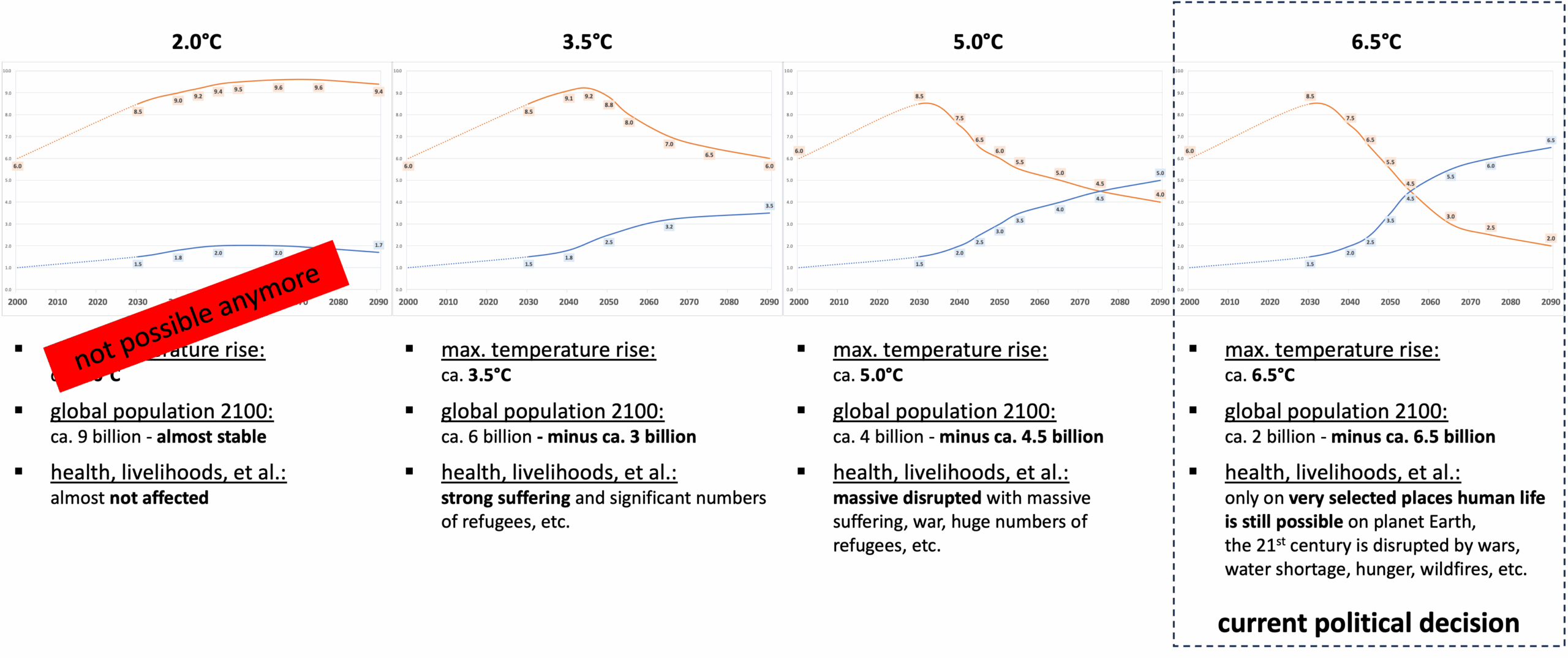
Figure 12: Trans- and interdisciplinary global warming scenario for planet Earth – a first theory
2.4 The Greatest Political Failure in Human History
Given the trajectory of current political decisions, we are heading toward approximately +6.5°C of global warming – a shift that could drive the global population down to around 2 billion – a decline of roughly 6.5 billion people, or about -80% of the current population – within 75 years.35
I’ve already outlined some of the vicious patterns shaping our current situation in earlier chapters. Yet the most critical underlying pattern – the most important reason of this dramatic failure – lies beyond the lethal linear projection, the trivialisation and the suppression already discussed in Chapter 2.2. There are two further decisive and profoundly dangerous patterns – specific to global warming – standing out:
(1) The slow development
We humans with our cognitive abilities are very good with direct action-reaction relations, where the cause-and-effect chain is clear, obvious, or logic (cf. Popper, 1997).
We acted on the Ozon layer depletion gases (CFCs, et al.)36 because there was a simple and direct correlation between the Ozone layer depletion and fatal skin cancer (Melanoma).
We acted within the COVID-19 pandemics, because there was a simple and direct correlation between SARS-COV-2 infection, COVID-19, and fatal Corona diseases.
With GHG emissions and deforestation, global warming and climate disruption, the correlation is (a) rather complex and (b) rather slow in terms of human perception. It takes years till global warming results into climate disruption.37 Such a slow development with slow change most likely results into too late reactions.
(2) The inert development
We humans struggle profoundly with inert, complex systems that evolve dynamically. A prime example is smoking. Despite overwhelming evidence of its harm, 1.2 billion people worldwide still smoked in 2024 – roughly 15% of the global population (WHO, 09/2025). The reason? The human body’s health system is not reactive – it is inert. There is no direct cause-and-effect link. The damage unfolds slowly. It can take 20+ years38 for the health impacts of smoking to become apparent.
Similarly, with global warming – we face a 30-year delay between the cause (GHG emissions and deforestation) and the result (global warming).39 The full effects (climate disruption) are even further delayed.
This inertia is disastrous for human cognition – and even worse for our short-term, populist governance systems. Politics operates on 4 to 5-year election cycles (businesses focus on 2 to 3-year shareholder value optimisation). Such a 30+-year inert development and change of the system most likely results in too late reactions.
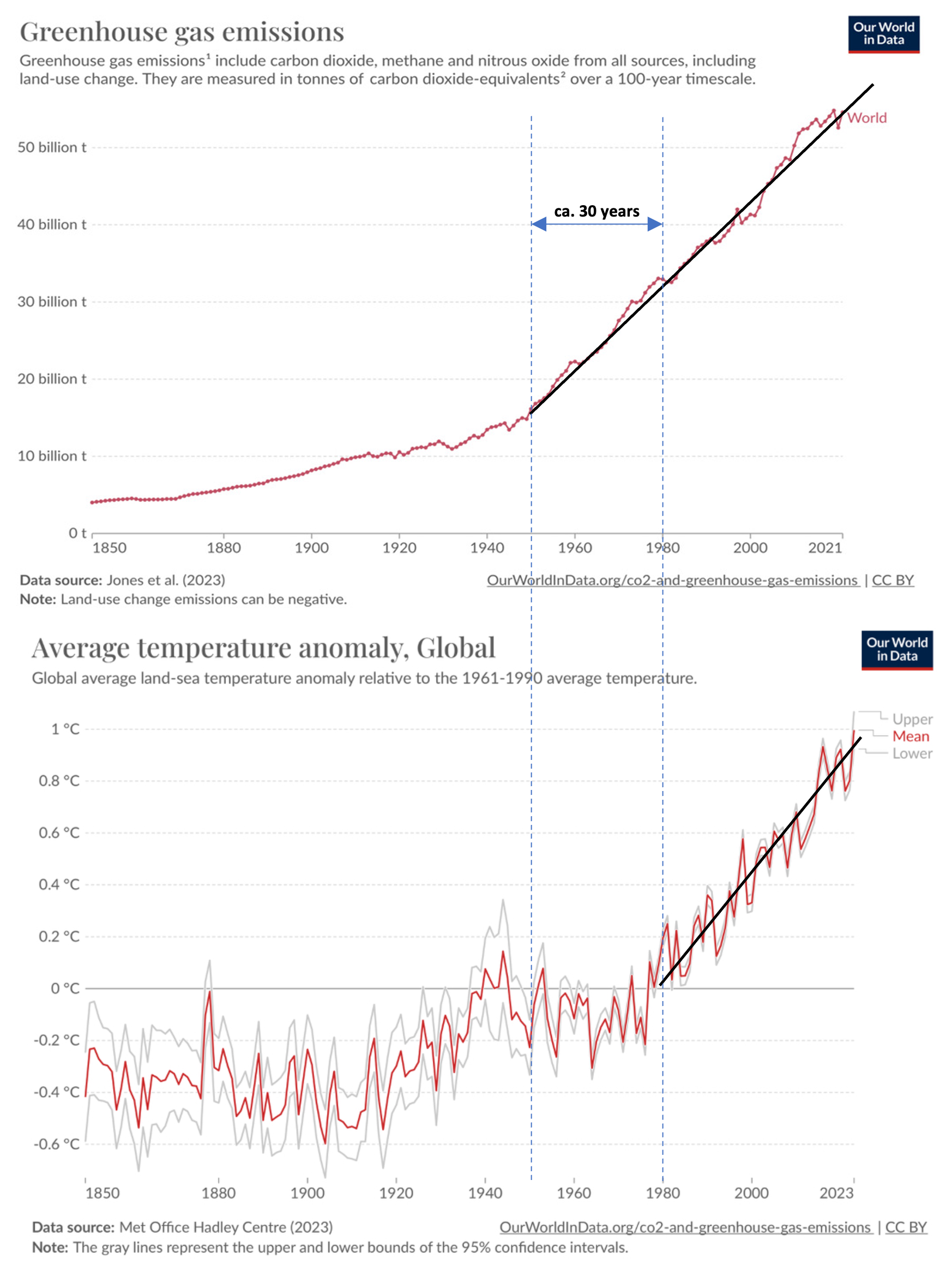
Figure 13: 30-year time gap between GHG emissions and global warming
Adam Smith – so called father of capitalism – wrote two essential books:
- An Inquiry into the Nature and Causes of the Wealth of Nations (Smith, 1776)
- The Theory of Moral Sentiments (Smith, 1759)
While the one from 1776 became famous for “the invisible hand of the market”, the one from 1759 almost vanished. Adam Smith (1759) made one thing abundantly clear: “The invisible hand of the market” cannot work healthy and thus sustainable without according political governance. Neoliberalism, however, has reduced this relationship to greed, anarchy, and the maximum of “survival of the fittest”. While short-term profits and economic growth may indeed flourish in the absence of political governance – long-term consequences are catastrophic. Take our current crisis: global warming is driving climate disruption, with projections indicating it could eliminate up to 80% of the global population by 2100.40 Based on Adam Smith, mitigating global warming is 100% within the responsibility of the political governance and the correlating political decision-making.
Corporations – particularly global ones – will exploit legal loopholes to the fullest in pursuit of profit maximisation. Consumers – that is, the market – will not respond to global warming as long as “externalities” remain unpriced.41 Without this accounting, there is no self-healing mechanism akin to Adam Smith’s “invisible hand” within the economic system.
It is 100% the responsibility of politics to design robust legal frameworks that include “externalities” into product and service prices. The next critical step? Translating the Planetary Boundaries (cf. Rockström, et al., 2009) into binding global markets (Baumann, 07/2026 – Rojas Calle, 2026). This could begin with a first globally legal binding market for GHG emissions.
2.5 There are no Technological Solutions available
After explaining the social, economic, and the global warming situation, there remains one crucial question unanswered – Is there a technological solution for the rather inconvenient future outlook? or, Can we use technology to get ourselves out of global warming and the correlating societal collapse?42
Based on my research, the straightforward answer is no. Still, let us briefly explore the possibilities if politics were to allocate the necessary funding and resources – a scenario I’ve already described as highly unlikely in the previous Chapter 2.4 The Greatest Political Failure in Human History. For the sake of argument, assume two conditions are met:
- A political decision is made to dedicate roughly 5% of global GDP annually – about $5 trillion per year – to mitigation efforts and technological investments.
- The top priority is (a) to halt temperature rise, followed by (b) reducing GHG emissions and deforestation.
To bring down (a) the temperature increase, there is Geoengineering or Solar Radiation Management (SRM)43 and there is one SRM method available to bring down the temperature globally44 – the so-called Stratospheric Aerosol Injection (SAI). SAI works with injecting tiny reflective particles (e.g., Sulfur dioxide, Calcium carbonate, or Salt) into the stratosphere (10 to 50 km above Earth) – the higher, the more effective. These particles scatter and reflect sunlight, mimicking the cooling effect of volcanic eruptions.45 Sounds promising, right?
Based on talks with scientists from SRM360.org and ECOSIA.org AI, 5 to 10 million tons of Sulfur dioxide (SO2) per year would need to be injected into the stratosphere to cool down planet Earth for 1.5°C – so we would be back to pre-industrial temperatures.46 To inject SO2 in the stratosphere, modified high-altitude aircrafts are necessary. These aircrafts are currently not available but could be theoretically built.47 We would need about 50 to 100 such aircrafts flying multiple missions per day and injecting 1 to 2 tons of SO2 per flight. With NASA’s WB-57 or ER-2 and the Global Hawk drone we have aircrafts available, which can be modified and adapted and go into service within 6+ months. Unfortunately, they are far from enough available – 2 WB-57, 2 ER-2 and about 30 Global Hawk, and not all of them are suitable for SAI. So, we need to design and build new aircrafts, and this takes a least 5+ years.
The overall cost to operate an aircraft fleet of 50 to 100 jets or drones is estimated with about $10+ billion per year (about 0.02+% of annual global GDP).
So, yes, technologically and financially this is feasible but while technically feasible, SAI to offset 1.5°C would require a massive, orchestrated global effort with most unpredictable side effects and centuries of testing to assure the technology is healthy. SO2 is basically a toxic gas and affects the respiratory system of humans and produces acid rain. Scientists and policymakers view it as a last-resort tool rather than a vital solution to global warming. GHG emissions reductions and carbon removal48 remain the primary strategies for addressing global warming.
So, let us look into (b) GHG emissions reduction.49 This means we need to look into reducing burning fossil fuels (coal, oil, gas) and reducing industrial meat production. I want to concentrate on fossil fuels only in the following. To compensate all energy produced by fossil fuel (coal, oil, gas), the technologically best solution (b.1) are Small Modular Reactors (SMRs). These are small nuclear power plants with a power output of 50 to 300 MW (electricity) and thermal output of 150 to 900 MW (heat). Let us assume an average of 200 MW (electric) output with 90% capacity we come up with the need for about 11k+ new SMRs for electricity and another about 7k+ SMRs for heating. Overall, we would need about 19k+ SMRs to fully phase out fossil fuels (coal, oil, gas).50 This means we would have to increase the current number of Nuclear Power Plants about 40+ times. Even with very optimistic numbers, it would take at least 20+ years to construct such an amount of SMRs.
The costs would be about $1+ trillion per year (ca. 1+% of global GDP) for all 19k+ SMRs and the lifespan with 60+ years of an SMR looks also very good. The supply with Uranium is possible.
Nevertheless, the time for deployment would be at least 20+ years and there would also be significant side effects. Even if we think of technological solutions for the radioactive waste in the future, SMRs can only be some part of mitigating GHG emissions. The deployment is just not fast enough available.
The second option (b.2) would be to scale up renewables – solar, wind, hydro power, et al. – with according storage facilities and grid upgrades. Here is a possible scenario by 2050:51
| Renewable Source | Current Capacity (2026) | Capacity Needed (2050) | Growth Factor |
|---|---|---|---|
| Solar PV | ca. 1,400 GW | ca. 35,000 GW | 25x |
| Wind (Onshore/Offshore) | ca. 1,000 GW | ca. 35,000 GW | 35x |
| Hydropower | ca. 1,400 GW | ca. 6,000 GW | 4x |
| Geothermal | ca. 16 GW | ca. 2,500 GW | 150x |
| Biomass | ca. 130 GW | ca. 2,500 GW | 20x |
Solar and wind needs to grow 25 to 35 times by 2050 to replace fossil fuels, storage (batteries, pumped hydro, green hydrogen) is critical for grid stability, and the electrification of transport and industry is essential.
The overall cost of $37 to 65 trillion over 25 years (ca. 2–3% of global GDP/year) is feasible, the land use is minimal (ca. 0.1% of Earth’s surface).
Here is the resumé: A mix out of Stratospheric Aerosol Injection (SAI), Small Modular Reactors (SMRs) and renewables with electrification, storage, and grid development is feasible by 2050 to reduce the global temperature and 100% phase out fossil fuels. But it comes too late and/or shows significant unknown side effects. Based on IPCC (2023)52, to stay within the “1.5%°C global warming limit” for a stable climate, we would need to reduce global GHG emissions of about 40% within 4 years – till 2030. Even with the most optimistic assumptions in terms of resources and political will and according political decision-making, this is technologically not feasible or would bring us “out of the frying pan into the fire”.
3 Why Global (direct) Democracy?
While the preceding chapters have laid bare the social, economic, and climatic realities we face – exposing the inevitable hardship, suffering and societal collapse ahead – this chapter shifts focus. It is dedicated to building a healthy and thus sustainable global society. Yes, this may seem surprising – but it is written from an unwavering conviction: Mitigating global warming is too big to fail.
“Insanity is doing the same thing over and over again
Rita Mae Brown
and expecting different results.”
Failure itself is not the issue. Failures and shortcomings are inherent to action – they are simply stepping stones that can lead to something new and better. The crucial question is: How quickly – and how effectively – do we address and adapt to failure?
Given the insights from previous chapters, one thing is clear: we need a fundamental shift in how we approach mitigating global warming. What has been done so far has been grossly inadequate – and demands nothing short of (radical) questioning based on Are we doing the right things?, rethinking, and a complete overhaul.
From the ruins of World War II, humanity achieved what I consider its greatest accomplishment to date: the creation of the United Nations (UN) and the Universal Declaration of Human Rights (UDHR). Yet meaningful change – shaped by our cognitive limits and social mimetic forces – greed, vanity, envy, jealousy, and group-think (Girard, 1999) – often requires profound hardship and suffering as a catalyst. This suffering, however, can foster the space, understanding and insight for innovation – enabling better concepts and approaches to emerge.
Bold leadership within democracies is characterised by owning its failures and returning power to the people – the true sovereigns.53 In a healthy democracy, this would mean the resignation of current leaders (such as governments) and the opening of new democratic elections.
Since global warming is a shortcoming on global level, such global democratic structures and processes simply do not yet exist. Global democracy remains a distant reality – we currently operate within a democratic vacuum at the global levels. The UN, for all its importance, is weakly – if at all – democratically legitimised.
Nevertheless, in the chapters ahead, I will outline a plausible path to transform the UN into what I call a Global Democratic Republic.
3.1 The Possible Scenario
A +6.5°C global warming scenario will do more than reduce the global population by about 80% – it will radically alter the livelihoods of those who remain.
As the financial system collapses – beginning with insurers within 3 to 5 years – global society will face unprecedented stress. More and more people will recognise that survival in their current environments is impossible – particularly in regions like India, Pakistan, the Arab world, North Africa, and the southern part of North America. Given the speed of this crisis, many will not only lose their livelihoods but die directly from its consequences – whether through thirst, starvation, extreme heat, drowning in floods, or violent storms. This will plunge billions into a war-like struggle for survival, lasting decades. In such a scenario, political governance faces two stark choices:
- A powerful elite seizes control, deciding who lives and who does not, or
- The people reclaim their future through (direct) democratic processes.
History – such as the French Revolution – suggests a likely sequence:
(a) An elite initially takes power, offering short-term solutions and dictating humanity’s fate – until public pressure reaches a social “tipping point”. This occurs when people realise that governments’ promises are empty, as suffering intensifies – even leading to death.54
Then, (b) the masses reclaim power in a kind of Storming of the Bastille 2.0.
Given my expectation that global warming will accelerate rapidly after crossing the “1.5°C threshold” in 2029, this process could begin within 10 to 15 years.55
While this may sound pessimistic – even horrifying56 – my aim remains to explore the best possible and most realistic path toward a healthy future scenario. I am firmly convinced that a global democratic process is unlikely to emerge in the next decade. Current trends reveal a global retreat from democracy at the national level (cf. International IDEA, 2025) – a shift that fuels nationalism and propagandist narratives. Paradoxically, this undermines efforts to mitigate global warming. Yet it is understandable: people crave simple solutions and clear answers, and populist propaganda feeds this demand.57
As the impacts from global warming intensify, scapegoats will be identified – often marginalised groups or migrants – and hostility will rise. The fight for survival exacerbates cultural divides, as tolerance wanes and nationalism takes hold (cf. Hadžidedić, 2025). We will witness escalating aggression and nationalism, with many paying the ultimate price as scapegoats – until suffering becomes universal. At that point, the ruling elite themselves will become the target of public outrage (cf. Girard, 1999).
Currently, the UN is the leading voice advocating for immediate and drastic climate action – but its ability to enforce change is severely limited. The UN lacks strong legislative and executive power for mitigating global warming, relying almost entirely on support from national governments – a support that is rapidly eroding.58 The rise of nationalist parties – driven by demands for quick fixes and simplistic solutions – has intensified populist rhetoric, making long-term global warming mitigation even less of a priority. Instead, short-term gains in living standards, power, and profit dominate, while global warming mitigation takes a backseat. The top global GHG emitters – People’s Republic of China (China) and Republic of India (India) – insist on adopting Western lifestyles before addressing GHG emissions reductions. Meanwhile, the United States of America (USA) has withdrawn from the Paris Agreement.59 Given these dynamics, little can be expected from today’s global or national political leaders in terms of global warming mitigation.
There is also a deep imbalance in global governance – evident in bodies like the UN Security Council (UNSC) – where the Global North holds disproportionate decision-making power. Despite the Global South representing the majority of the world’s population, its influence remains largely marginalised. China, India, and others are pushing for change60 – but not to advance global warming mitigation. Their motivation is power rebalancing, not environmental progress.
The “green movement” has long championed market-driven business transformation through Sustainable Management and CSR. Yet in today’s brutal global competition, short-term survival overshadows long-term sustainability. The “survival of the fittest” dominates corporate decision-making, and regulations are viewed as obstacles to competitive advantage. Businesses chase record share prices, one after another, with little regard for climate action. As a result, expectations for meaningful global warming mitigation from the private sector remain minimal.61
3.2 The Option for Change towards a Healthy Development
The reality looks radically different when we turn to ordinary people. Multiple studies – including UNDP (2024) – show that over 80% of the global population demands stronger – or far stronger – climate action. Yet these voices go unheard on the global stage, and in today’s cutthroat global business environment, organising protests or opposition is nearly impossible.
The resources needed for collective action are lacking, and the pressures of competition – alongside workplace hostility, job insecurity, family obligations, and the drain of social media, gaming, and pornography addictions – have left society exhausted.62 Birth rates are plummeting, and resilience is waning. Still, if we seek the most viable path to mitigate global warming, the answer lies with the people – not governments or corporations.
UNFCCC wants to involve the relevant stakeholders within the global warming mitigation process. Unfortunately, the so far initiatives from UNFCCC show a kind of reversed understanding from the basic Learning Organisations Theory concept “make the affected to participants” (Senge, 1994). There are basically two types of affected with global warming:
- The people, who will suffer, lose their livelihoods or in the worst case will even die from global warming.
- The fossil fuel and industrial meat producing corporations – in many cases closely related to national states (cf. e.g., OPEC) – they are affected, because they lose their business model and their profits.
So far, the UNFCCC’s approach has prioritised the second group as its primary stakeholder – embedding them deeply in climate negotiations and policy-making.63 Unsurprisingly, fossil fuel representatives have – and will continue to – push to prolong their business models, maximising profits through delay tactics, whitewashing, and greenwashing. The active involvement from the perpetrators of global warming in mitigating GHG emissions clearly failed.64
Change requires suffering – and global warming will bring unimaginable suffering, far faster than most can yet imagine. Yet beneath this suffering lies an open, viable path forward: the vast majority of people yearn for a healthy life – one lived in harmony with nature and filled with a healthy perspective for the future. To turn this into action, the UNFCCC needs to shift its focus to the primary stakeholders of global warming: every person on Earth, regardless of nationality. The core principle of organisational learning – “turn the affected into participants” – applies here first and foremost to the affected people. And the most proven method for achieving this? Democracy – the historically most effective way to involve people in political decision-making.65
There’s no reason or need to reinvent the wheel. Democracy already offers the framework to fulfil these requirements. As a concept, it has proven its strength and adaptability throughout history.
3.3 The Strength from Global (direct) Democracy
Since almost every person on Earth is affected by global warming, global democracy could finally deliver the “turn the affected into participants” process on a global scale. The beauty of “one person, one vote” would extend beyond borders – no nationality, no exclusion. This foundational democratic concept carries profound implications. Below, I highlight a few of the most crucial and critical ones.
One of democracy’s greatest strengths – and the “one person, one vote” concept – is equality. A vote’s value is not determined by wealth, income, status, or education. Given today’s staggering wealth disparities, global democracy would level the playing field in a way nothing else can.
Another key advantage of “one person, one vote” is inclusion. Extending voting rights to all people aged 16 and older ensures the youth generation has a direct say in the decisions – a generation that will bear the brunt of global warming due to the 30+-year lag between GHG emissions and impacts. This guarantees they are not just involved. With their vote they can actively shape the response.
Global democracy – and the “one person, one vote” concept – would shift power decisively from the Global North to the Global South, given that most of the world’s population now lives in emerging economies, particularly China and India. This realignment is especially critical in the context of global warming, as the most severe impacts will be felt in the Global South – where the heaviest burdens of climate disruption are expected. Consequently, stronger climate action would likely gain overwhelming support in these regions.
Beyond equality and inclusion, democracy’s most vital advantage lies in its process of opinion-building – and its ability to involve the affected, as the process “turn the affected into participants” demands. The democratic process fosters a “battle of concepts” – where better arguments, solutions, and future visions emerge through open debate and collaboration. Among its many benefits, this approach ensures a broad public discourse – one that would reach an entirely new, global scale through global democracy.
We’ve already glimpsed this potential with movements like “Fridays for Future”66 – likely the first global protest movement in history, where people across countries united for stronger climate action. Now, imagine this elevated to an official global democratic process, backed by national governments and public media. Such a democratic process would not only educate and raise awareness but also dramatically improve global literacy on global warming and climate disruption. Democracy would amplify media coverage of global warming, ensuring that knowledge and know-how on the issue spreads widely – empowering people to demand and drive change.
3.4 The Requirement of Prudent Decision Making
Introducing a global democratic decision-making process inevitably raises a critical question: How can prudent decision-making be ensured?
At the heart of democracy lies the concept that “the majority decides” – but, What if the majority fails to make a sound choice? What if the majority rejects scientific evidence – or even votes against its own survival and wellbeing?67
In today’s media landscape – dominated by populism – prudent decision-making is under severe pressure and advanced technology like Social Media and AI enables the large-scale production of so-called “fake news”, warping public perception. As Paul Watzlawick (1998) noted, reality is shaped by what we perceive – and if the public is fed misinformation, democratic decisions will reflect that distortion. We see this play out repeatedly in national elections worldwide, where populist parties gain ground by offering simplistic, short-term solutions mostly built on scapegoating.68
To break out from this vicious cycle – paradoxical as it may sound – new information technology could be a great support for success. Ask an AI about global warming, and it will highlight the urgent need for far stronger mitigation efforts – even a war-like approach against global warming. Unlike humans, AI can process vast networks of information – connecting scientific evidence in ways no individual ever could. The key? Vibrant science, robust and independent journalism, and AI that relies on these verified, credible data. When AI can assess source credibility, it becomes a powerful tool for shaping individual opinions – and ultimately, prudent decision-making.69
Prudent decision-making depends heavily on education – particularly in cautious information processing, critical thinking, and independent opinion formation. A healthy global warming literacy process begins with a fundamental shift in narrative: moving away from the vague term climate change and back to the precise term global warming. Climate change obscures the root causes of the dangerous development – human caused (a) GHG emissions by burning fossil fuels (coal, gas, oil) and industrial meat production, and (b) deforestation.
When you talk about climate or climate change the discussion has gone far away from the root-causes and we see according “pattern of thinking” in the political debate (Baumann, 2005, pp. 112-121). The human mind tends to work within trivial causal chains and causal relations. With global warming the causal steps are:
- Human driven GHG emissions and deforestation is causing
- global warming – the planet is heating up, and
- this results into something we call climate change or better climate disruption.
Climate change is a highly abstract and complex concept – and when people are asked about it or imagine its effects, the responses vary widely – including a significant drift into conspiracy theories.70 The (radically) honest answer – one that may frustrate climate change ideologists – is this: climate change might turn out to be a “hoax”. Why? Because the link between global warming (the rise in global average temperatures) and the resulting climate change is far from well understood. Climate change describes the subsequent shifts in our daily lives and livelihoods – but the Earth’s climate system is so complex that we cannot predict what will happen when, for example, the Atlantic Meridional Overturning Circulation (AMOC) collapses due to global warming and the melting of Greenland’s ice sheet.
Climate scientists warn of “tipping points” within the climate system – yet, when you examine these studies, you’ll notice they cannot project the “ending tipping point” and what the next stable system will look like after the according climate change.71 There are no answers yet to critical questions: What will the aftermath look like? How (exactly) will it reshape our livelihoods, lives, and lifestyles?
Sciences has fallen into what we might call the “positivism dilemma” – where only measurable outcomes are deemed valid, and predictions become self-fulfilling prophecies. Yet, as Watzlawick (1998) warned: “The truth is the invention of a liar.” Linear thinking reveals its limitations – and linear politics exploits this by denying climate change altogether.72
Both perspectives can coexist as “true” – because we have shockingly little evidence about the concrete, day-to-day impacts of climate change caused by global warming. This is the blind spot in climate science today. Linear, populistic politics understands this – and exploits it to seize and maintain power. That’s why it avoids discussing global warming – or even GHG emissions – because the evidence for their rise, along with deforestation and temperature increases, is overwhelming.
There is in my view a strong need to shift the narrative and focus on human caused global warming – a term that is precise, direct, and leaves little room for ambiguity or “complexity theories” (cf. Baumann, 2005, p. 112ff.). The cause of global warming is clear: Burning fossil fuels (coal, oil, gas), industrial meat production, and deforestation.
The narrative (Hansen, 2020) shifts dramatically when we focus on global warming rather than climate change. John Rockström went so far as to call human caused global warming, in his 2025 UN Climate Summit speech, scientifically and physically “as certain as gravity”. Yet, despite this clarity, there remains confusion – for example, in debates over whether wildfires and droughts can be directly linked to climate change. The clear answer? No. But they can be unequivocally tied to global warming – and the root causes are clear: burning fossil fuels (coal, gas, oil), industrial meat production, and deforestation – all of which trigger the greenhouse gas effect in Earth’s atmosphere, the human caused global warming, causing for example significantly more wildfires and draughts.
Medicine offers a clear lesson: To treat an illness or disease effectively, the most critical step is identifying its root cause. Within medicine, this process is called (1) diagnostics. After that comes the (2) treatment and then – depending on the success of the treatment – (3a) rehabilitation and cure, (3b) long term chronic treatment, or (3b) palliative and end of live care phase. The question is: How can you cure a system of its own illnesses and diseases? There are basically two options – (1) with paradox interventions73 or (2) due to fatal suffering.
As populism rises – fuelled by commercialised media – prudent decision-making has become far more difficult. Can democratic discourse address this? For now, little – until the consequences of irresponsible, superficial, and mimetic behaviour become painfully evident.
Yet, despite the global forces of commercialisation, popularisation, and nationalism, democracy will endure – though not without significant strain.74
4 How to Organise a global Referendum on ‘Climate Action’ as a First Step towards Global Democracy?
After Chapters 1 and 2, I set out to highlight the urgent need for (radical) change in how we approach global warming. With Chapter 3, I aimed to assess the circumstances, possibilities, and opportunities within this context – specifically for the evolution of global democracy.
Now, I want to present a concrete scenario – one that, in my view:
- Offers the best chance to actually mitigate global warming, and
- Represents a first, significant step toward a healthy and thus sustainable society rooted in global democracy.
4.1 The “good” Way out of Global Warming and into a Healthy Society
I see my role in mitigating global warming in painting a realistic and (radically) honest picture of the current situation – its scale, the mitigation process required, and a “good”75 path forward through global democracy, born from the impending suffering of societal collapse due to global warming. It mirrors the pattern we’ve seen after humanity’s darkest moments – most notably World War II – which led to the creation of the United Nations and the Universal Declaration of Human Rights (UDHR).
As individuals we will have a very hard time to overcome our (a) cognitive traits (Dörner, 2002) and the (b) mimetic forces within our society – greed, vanity, envy, jealousy, and group think (Girard, 1999) – the major root causes for the upcoming societal collapse. History tells us, there is nevertheless a possibility to overcome these fatal patterns. The concept to overcome these fatal patterns? Democracy76.
And so, the crucial question is in my view: How can we evolve democracy – by scaling it up to a global level?
The transformation toward global democracy, as I propose it, begins with one decisive step: A first official global referendum – focused on climate action.77
Why? Because global warming is the most urgent and existential threat humanity faces – and the suffering it causes creates the pressure for change we need. This answers the first question about my concept towards global democracy: (1) Why start with a global referendum on climate action? It is the most direct and urgent path forward.
A second question follows: (2) Why a referendum – rather than a global citizens’ assembly78 or/and a global citizens’ initiative79? IIn short – collecting the required number of people round the globe and/or signatures – estimates suggest hundreds of millions of signatures, spanning the globe – would demand a budget of at least several hundred million dollars, even with highly efficient communication and a viral reach. Currently, the UN lacks a formal process for such initiatives – making it unlikely that a citizens’ assembly would lead directly to a global referendum. As a result, securing the necessary investment for such a significant budget becomes highly unlikely.80
Third: (3) Why not first build the necessary global democratic institutions – along with their legal frameworks, resources, structures, and processes? This would mean establishing: A global constitution, a global government, a global parliament, a global executive, and a global judiciary – all underpinned by science-based targets and independent global journalism. In short: a Global Democratic Republic emerging from the UN. Yet, as outlined especially in Chapter 3, there are only the faintest signals from global policymakers that such a scenario is realistically on the table.81
Given these conditions, I will now explore:
- The concrete potential of such a first official global referendum on climate action, and
- The realistic development process toward this goal.
A first official global referendum on climate action would mark in my conception a first, significant step toward global democracy, and a renewed United Nations – evolving into a Global Democratic Republic.
4.2 The global eVote on ‘Climate Action’
While there are strong arguments for adopting global direct democracy as a first step toward global democracy, the real challenge lies in execution and organisation. Right now, almost no global democratic structures or processes exist – so they need to be built from scratch.
Developing new systems – whether in business, politics, or governance – requires a structured, methodical approach to succeed. Yet, resources are scarce, and there’s typically a wide gap between ambition and available resources. Innovation processes – bringing something new in our world – follow predictable phases: (1) Ignorance, (2) Ridicule, (3) Hostility, and (4) Acceptance (among others, Campbell & Carayannis, 2026). The creation of a first official global referendum will follow this same pattern – no exceptions.
There are multiple ways to structure, develop and organise a first global direct democratic vote – I recommend a two-pronged approach:
- An 80:20 development – maximising democratic impact while minimising resource use.
- A (radically) innovative voting method – leveraging cutting-edge communication technology to give the process a contemporary, forward-thinking spirit.
(a) The 80:20 approach
This means prioritising those easiest to reach – people already connected to the internet. According to the International Telecommunication Union (ITU, 2025), around 6.05 billion people were using the World Wide Web in 2025, fast increasing. While precise age data is unavailable, let’s estimate that 0.5 billion users (ca. 8%) are under 16. If we limit participation to those aged 16 and above, this leaves 5.5 billion people directly connected to the internet – and thus easily reachable at minimal cost via global e-voting. This would represent about 73%82 of the global population aged 16+ – ensuring historic participation while keeping costs low.
(b) The (radically) innovative voting method
Democracy is often seen as slow, outdated, or even anachronistic – but “slow” can equate to “sustainable”, while “outdated” can be replaced by cutting-edge communication and decision-making technology.
Today, thanks to the World Wide Web and its innovations, we have the infrastructure to enable up to 5.5 billion people to vote on key issues directly via the internet – quickly, securely, and efficiently.83 With advanced security technologies like blockchain, et al., we can achieve 99.99+% voting integrity – ensuring credibility, anonymity, and data integrity.
This is how I envision the most realistic path to a global referendum: By harnessing these technologies, we can transform direct democracy into a simple, accessible, and modern process – aligned with today’s digital lifestyles. Simple voting is not at odds with prudent decision-making. Instead, it maximises participation, involvement, and voice – embodying democracy’s core concept: one person, one vote.
Additionally, verified AI should be embedded in the voting platform and app to support informed, prudent decision-making (see also Chapter 3.4 The Requirement of Prudent Decision Making).
Under these conditions, a global e-voting initiative – centred on the question: Do you want stronger climate action? (with a simple “Yes” or “No” response)84 – would be the most efficient and effective first step toward global democracy. While not every person aged 16+ may participate, this would still mark a historic milestone – a meaningful leap toward a healthy and thus sustainable society rooted in global democracy, leaving room for refinement and future development.
4.3 The Legal Context
Currently, no legal framework exists to govern such a global referendum – meaning the vote would lack legal binding power and remain largely symbolic. Yet, the turnout and outcome will be primarily critical for its political impact, trustworthiness, and credibility.
Sadly, I expect the legal structure for global direct democracy – and the first step toward global representative democracy – will likely only emerge after this initial referendum. This is far from wanted – and I would strongly advocate for establishing the legal framework first.
However, given that this referendum would act as a “last-resort effort” by political leaders facing the escalating suffering of global warming85, such preparation is highly unlikely.
The United Nations General Assembly (UNGA) has the authority to initiate a global referendum by adopting a declaration proposed by at least one member state. If the UNGA approves this declaration with a two-thirds majority, the United Nations Security Council (UNSC) is then obliged at least to review and discuss the proposal. However, the UNGA’s decision does not compel the UNSC to align with the declaration from the UNGA and carry out the referendum.
I assume, a global referendum will only move forward when public demand and political pressure for action on global warming mitigation among UNSC decision-makers becomes strong enough – a response to the growing consequences of insufficient progress in addressing global warming. Given current trends, this level of urgency is likely to emerge within the upcoming 10+ years.
4.4 The Structural and Processual Context
To succeed, in my view the global referendum needs to be an official vote conducted by a recognised organisation. Since no legal framework for this exists in international law yet, the organisation responsible for administering the referendum becomes a critical factor in ensuring its legitimacy and success.
Currently, the United Nations is the only organisation capable of hosting such a referendum – with 193 member states, it represents over 99% of the global population.86 No other international entity can match its global reach, legitimacy, or credibility.
At the same time, the UN’s decision-making remains largely undemocratic – heavily influenced by the five permanent members of the UN Security Council – the USA, France, the UK, Russia, and China – who hold veto power.87 This reality reinforces the argument that meaningful transformation toward global democracy will only occur when public pressure from significant hardship and suffering demand it. The failure to mitigate global warming will likely provide the urgency and momentum needed to make this happen.
Let us now assume, the UN Security Council decides to proceed with a global referendum on climate action, its success would depend heavily on the support of UN member states. While UN-led coordination is essential to ensure the vote is perceived as actually global, the explicit backing of member states would be the second most critical factor for a successful outcome. Ensuring a strong voter turnout is the top priority. To achieve this, the referendum – in my believe – needs to be (1) an official UN-conducted vote, and (2) explicitly supported by UN member states. While the UN would provide the voting infrastructure, the actual voting process would be integrated into each member state’s official democratic systems.88
Each UN member state should retain the autonomy to decide whether to participate officially.89 This approach would (a) enhance the referendum’s democratic legitimacy, and (b) increase the likelihood of a positive UN Security Council decision – without requiring unanimous agreement.90
4.5 The Technological Context
For the first time in human history – the World Wide Web provides the global communication infrastructure needed to conduct a referendum with up to 5.5 billion people – roughly 70% of eligible voters aged 16+ – in a technologically accessible and cost-effective way.
Drawing on early proposals from leading e-voting platforms – a global vote could be organised for $135+ million – depending on the number of participating countries and their national security and verification technologies. This investment would represent exceptional value when compared to the trillions in annual damages caused by global warming (among others, World Bank Group, 2025). Just one year of accelerated progress in mitigating global warming – achieved through the global referendum on climate action – would likely represent the most impactful project in human history – delivering an exceptional Return on Investment (ROI) for humanity.
A global data and security system aligned with global citizenship does not yet exist – so we need to either (a) develop this system from scratch, or (b) leverage existing national security frameworks and voter ID systems – such as passports. Fortunately – eVoting platforms are already available – each with varying approaches to data security and anonymity – but their underlying technology is proven. It has been successfully tested in numerous national and local elections – demonstrating strong performance and reliability. These platforms can either be used directly or adapted to meet our needs.
Data, data security, data management, and data ownership should remain clear and straightforward. While third-party technology providers may assist with data processing and storage, the required level of data integrity is already achievable with current standards – and at reasonable costs. The UN’s coordination would simplify execution while ensuring consistent, high data-security standards across all participating countries.
Based on talks with leading e-voting providers91, and other technology providers et al., from a technological standpoint – organising an official global e-vote with up to 5.5 billion participants is feasible and could be organised within 8+ months – depending on the chosen technical approach and the number of UN member states involved.
4.6 The Media Context
There remain two crucial success factors for such a first global referendum – (a) strong prudent decision-making and (b) high voter turnout.
(a) The strong prudent decision-making
For prudent decision-making, the quality of media coverage and the availability of accessible information will be the critical success factors. I propose creating an independent voting platform that integrates verified, user-friendly information sources – including AI-driven tools and localised global warming scenarios tailored to voters’ daily lives. This would address a major gap in current communication – such as the dense and complex IPCC reports (e.g., IPCC, 2023) – by making the issue more tangible and relevant to individuals. Voters should be able to understand: What does +3°C, +4°C, or +5°C of global warming mean for my life in my specific region?
While some of this correlating localised climate science and localised global warming information services already exist92, further development will be necessary. Given that the referendum may not occur for another decade or more, there is ample time for research and innovation to build this knowledge base (cf. Baumann, 03/2026). Even beyond the referendum, this approach would enhance climate literacy, raise public awareness, and encourage meaningful action at the individual and community levels.
(b) The high voter turnout
For high voter turnout, media coverage will play a decisive role. The UN currently faces limited visibility and reach due to its constrained legal authority and communication potentials – both of which needs to be addressed and improved for the global referendum.
Additionally – it is crucial for a high voter turnout, national governments actively engage their domestic media and broadcasting organisations to ensure broad coverage. This could include national election-style debates that provide media outlets with compelling content and news material.
While truly global media platforms do not yet exist – we do have internationally operating broadcasting corporations.93 I recommend actively involving them in the media and public relations campaign for the referendum and also media platforms with less global coverage but particular focus on global warming.94 Furthermore – the scientific community needs to be directly integrated into the media concept and platform95 – with a focus on clear, accessible communication about global warming. This would help to ensure the public receives accurate, relevant, and engaging information.
Overall to succeed – the global referendum will require based on first draft estimation a dedicated media and public relations budget of $125+ million. This funding would support building media visibility and engagement, facilitating democratic debates, enhancing prudent decision-making, and driving a strong voter turnout. Since no legal framework currently exists – the level of participation and the voting outcome will shape the referendum’s success in terms of credibility, influence, and political impact.
5 The Possible Outcomes of a first official Global Referendum
In my view – the mere execution of a first official global referendum on climate action would mark a historic achievement. It could serve as the foundation for future steps toward global democracy – and for the UN’s evolution into a Global Democratic Republic.
Given that global warming is both underestimated and rapidly worsening – the growing suffering and public pressure for such a referendum will likely intensify. Public opinion data suggests that asking people the simple question – Do you want stronger climate action? – would most likely yield 80%+ “yes” responses. Even with a minimal media campaign – supported solely by the UN – I would anticipate at least 2 billion voters participating. This would already set a record for global civic engagement – representing roughly 25% of eligible voters aged 16+.
While the referendum’s outcome would remain symbolic in a legal sense – securing over 1.5 billion “yes” votes would give the UN a significantly stronger, democratically legitimised mandate to advance global warming mitigation efforts and climate actions. It could also demonstrate global democracy as a successful and sustainable model for governing our planet. This would mark a new, prosperous path – filling the current democratic void at the global level – and strengthening democracy worldwide.
If the outcome of the referendum opposes stronger climate action – it remains essential for policymakers to honour the democratic result. The scientific consensus is clear: further inaction with mitigating global warming will lead to severe consequences, including widespread suffering and loss of life. This reality underscores the urgency of global cooperation – as national solutions and isolated supply chains cannot match the efficiency and resilience of the global social and business structures and processes. A return to nationalism would only widen the gap between the suffering and a healthy and thus sustainable development – reinforcing the case for global democracy as in any case the viable path forward.
In my view – it is only a matter of time, a matter of how much hardship and suffering politics is willing to allow and a matter of how much urgency societies need to feel before we embrace global democracy – and we see the first official global referendum on climate action – followed by concrete steps toward a Global Democratic Republic.
5.1 From “Liberalism” to “Healthy Society”
It is understood that liberalism means a drift toward anarchy – where strength overshadows justice. However, there is a better path – the concept of a healthy society.
Health is not a fixed state but an ongoing journey toward joy, well-being, fulfilment, and connection – a process known as “salutogenesis” (Antonovsky, 1987). The principle of “turn the affected into participants” is a powerful concept for societal health. Active social integration is essential for well-being (Harvard University, 1938ff.) – and it also fuels innovation (Campbell D. F., 2019). A healthy individual seeks meaningful participation – recognising that strongly experienced fulfilment comes from being an active part of society.
As Humberto Maturana (1998) noted – we cannot exist outside the system and observe it from outside by looking into the system through a hole. Instead, we are embedded within it, and the healthy pattern is the active, actual, and concrete participation within the system – the society we are inevitably part of. If health, health promotion and with this joy, well-being, fulfilment, and connection guides global politics – it can support a healthy and thus sustainable development and lay the foundation for a vivid and just global democracy – a kind of global salutogenesis.
5.2 From “Rationality” to “Healthy Society”
The same pattern from “liberalism” applies to “rationality” – the concept itself is empty. It requires meaningful content and context to hold value.
A “rationality” focused solely on maximising individual gain – driven by greed, vanity, envy, jealousy, or group-think – ultimately undermines well-being and leaves people dissatisfied over time (Fromm, 2019). This is no health promotion nor a path to health, joy, or fulfilment.
Human history teaches us that strong social relationships – built on vulnerability and authenticity – are the true foundation of a meaningful life (Brown, 2010). When faced with decisions – we don’t need to rely on “liberalism” or “rationality”.
Instead, we can simply ask (Antonovsky, 1987): What choice supports health – joy, well-being, fulfilment, and connection?
5.3 From “Morality” to “Healthy Society”
Morality, when reduced to mere “proper behaviour” – can become a barrier to true education and social growth (Morel, 1991). This narrow approach produces conformists – lacking critical thinking, individuality, and creativity – qualities that are essential for a healthy and thus sustainable life.
True health means being self-assured, brave, questioning, inquisitive, humble, and grateful. Our passions – love, joy, ambition, anger, fear, frustration, sadness – are what give life depth and meaning (among others, Rosenberg, 2015). We experience heartbreak just as we experience love – and joy cannot exist without suffering. Whether we perceive something as exhilaration or pain depends entirely on the context.
Rules – when rooted in shared values – provide the foundation for a healthy society. These rules are not about blind obedience but about collective well-being – because shared joy is deeper and more meaningful than individual pleasure.
Overcoming mimetic forces from greed, vanity, envy, jealousy, and group-think – the pressures of imitation and conformity – requires discipline, patience, and mindfulness – the core principles of what Erich Fromm (2001) calls the Art of Love.
5.4 From Competition to (global) Cooperation
The heaviest stone you can lift alone is certainly smaller – and lighter – than the one you can lift with two or more people working together. This insight contrasts sharply with competition, which can feel like second nature to those raised in competitive systems.
Yet, in times of crisis, catastrophes, and suffering, solidarity proves far stronger than rivalry. While competition seeks to defeat, dominate, or even destroy, cooperation strives to create the best possible outcome for everyone involved.
Furthermore, there is one influence that harms well-being more than any other – stress. And competition? It fuels stress.
Global democracy offers not just a path to active participation – but also an opportunity for global collaboration and solidarity. This would be built on strong sustainable values, shared rules and justice, forged through democratic processes and granted legitimacy by the people.
5.5 From “Nationalism” to “Globalism”
Mitigating global warming is too big to fail. GHG emissions ignore national borders – just as wildfires, droughts, water shortages, extreme heat, floods, and storms do. These threats jeopardise global infrastructure and lives alike.
National borders may once have provided a sense of security – a “safe haven” or “holy island” – but they cannot shield us from global developments or even global societal collapse. Global warming is inherently cosmopolitan – and greenhouse gases circulate in the shared atmosphere. No matter what nationality, the consequences will reach you.
Over the past decades – economic globalisation has delivered remarkable success. There is no justification for reversing global markets or global supply chains – as they enhance performance and resilience across societies. Yet – in our focus on economic integration – we have overlooked the need for political globalisation to balance the system and ensure a healthy and thus sustainable society for all.
5.6 From (national) “Autocracy” to (global) “Democracy”
Autocrats often appear strong – a fascinating paradox – although their demand for authority and their demand for power is a response to their underlying fragility and inferiority.
Democracy, in contrast, is leadership rooted in voluntary and active participation – another paradox, where people follow willingly, without coercion. This kind of leadership thrives on innovation, forward-thinking, and deep involvement in humanity – achieved by empowering people to make their own prudent decisions. It is built on trust – trust in individual potential, plural creativity, and the richness of diverse perspectives.
6 Conclusion
There is a path toward global democracy – and that is the good news. This path will be marked by immense hardship and suffering – far deeper than what we witnessed before, during, or after World War II. Today’s self-reinforcing societal cycles – mainly driven by commercialisation and competition – make long-term, sustainable decision-making increasingly difficult. Yet, global warming stands as the greatest threat humanity has ever faced – and with it comes the strong and concrete possibility to move beyond anarchic liberalism, greed rationality, rigid morality, unhealthy competition, and linear nationalism by fostering global cooperation grounded in democracy.
Technology will not be available to mitigate global warming – this might be, quite paradox, the best circumstance to develop a healthy and thus sustainable global society. Through shared hardship – we can transcend competition and rivalry, shifting toward global cooperation. Active participation in global decision-making will prove to be the most effective way to govern a globalised world after societal collapse. This collective involvement will not only strengthen governance but also bridge diverse regions and cultures – fostering deeper mutual understanding through the foundation of global democracy.
The first step towards this bright future, in my view – is a first official e-vote on climate action, with up to 5.5 billion people aged 16+ participating. From there – the development continues toward a global constitution, a global government, and a global parliament. These would work alongside regular direct democracy processes – such as referenda, citizen initiatives, and citizen assemblies – to create a balanced global governance system based on global democracy. This alignment of political globalisation and economic globalisation would guide us toward a healthy and thus sustainable society.
My firm commitment is this – the sooner and more decisively we embrace political globalisation rooted in global democracy – with sufficient resources – the less hardship and suffering we will endure from global warming and climate disruption.
References & Footnotes
- cf. unfccc.int/cop30, latest access October 20, 2026. ↩︎
- Global warming is in my text synonymous for the global average temperature increase above land in comparison to the average from 1850 till 1900 – the so called “pre-industrial period”. The main drivers for global warming are (a) greenhouse gas (GHG) emissions from burning fossil fuels (coal, oil, gas) and industrial meat production and (b) deforestation. The main GHGs are Carbon dioxide (CO2), Methan (CH4) and Nitrous oxide (N2O) (Our World in Data, 2020; Rockström, et al., 2026). GHG emissions trigger the so-called “greenhouse gas effect” in the atmosphere of planet Earth which leads to a global average temperature increase. The term global warming (in italic) summarises this correlation. ↩︎
- Climate disruption (in italic) is in my text synonymous for a significant change of the overall weather pattern on planet Earth within a period of about 50+ years due to global warming. ↩︎
- not 80%, 90%, or 98% etc. ↩︎
- On top: “Museum of Modern Art” (MoMA – New York City), “Centre Pompidou” (Paris), “Tate Modern” (London), “Guggenheim Museum” (New York City, et al.), and “Whitney Museum of American Art” (New York City). ↩︎
- e.g., no free entrance anymore. ↩︎
- e.g., with private collections not shown publicly anymore and public museums not able to purchase contemporary art. ↩︎
- Gross Domestic Product (GDP) ↩︎
- During my early days in management consulting, I had a striking experience. I glanced into the car of a C-level executive from a highly renowned German multinational corporation and noticed the Bild newspaper lying open on the passenger seat. At the time, I was shocked by the realisation that someone from an executive board of such a prestigious German company would source their information from Bild – a populist tabloid known for its sensationalist reporting. Later, I came to understand that the C-level executive was simply trying to grasp the broader public’s perception. After all, if you want to gain market share, you need to appeal to mass opinion – and there’s no better way to gauge that than e.g., in Germany by reading Bild. ↩︎
- After all, being wealthy and high educated is an exceptional position – something elite, a minority. ↩︎
- Schumpeter (1942) highlighted the power of entrepreneurial thinking and action. While this remains positive, it does not require competition as a precondition. Instead, meaning and purpose can also – or even better – drive the entrepreneurial creativity that Schumpeter described and embraced. ↩︎
- You can also find this widely within sports. ↩︎
- e.g., currently seen from the “Trump administration” from the United States of America (USA) within the context of changing election rules. ↩︎
- Within the further text, I will refer to Distress when writing about stress, well aware there is also the positive stress – Eustress. ↩︎
- For me it is remarkable, that someone who was found liable for sexual abuse can still become the highest political representative – with severe power responsibility included – of a country. ↩︎
- A prime example of this is the distorted understanding of “free speech” promoted by tech billionaires: the idea that anyone can say anything about anyone, with no meaningful rules – or where rules are directly equated with censorship. This approach embodies the “throw the baby out with the bathwater” mentality and underscores the degenerative mindset of a trash culture towards anarchy. ↩︎
- We are just witnessing this dynamic within the European Union (EU) as well as in several national states. ↩︎
- As just seen from the USA Trump administration. ↩︎
- With Artificial Intelligence (AI) this situation is dramatically worsening and will further erode the legal system and the political authority towards anarchy. ↩︎
- I recently witnessed an obviously wealthy couple hurriedly parking their car in Munich. The driver was about to get a parking ticket, but the other one said, “Leave it—we’ll just pay the fine. We’re in a hurry, and I don’t care.” ↩︎
- the Ph.D. included, if wanted – profit oriented private education institutions make that possible. ↩︎
- There is an interesting correlation – the collapse of the first insurance corporations will be at about the same time, when we reach the “1.5°C limit” of global warming for a stable global climate. ↩︎
- I’ve just received feedback from a potential investor regarding the proposal for a global referendum on climate action. They are highly supportive and interested, but will now focus on measurable and, in their view, more effective actions and initiatives instead. ↩︎
- “Idea” is a term most contradictory to the development based on a complex, differentiated, long-term concept. ↩︎
- The investor I spoke with is deeply engaged in mitigating global warming – organising events like the new Munich Climate Week, no less – and holds a master’s degree from a highly renowned British university. Given this, you might assume all the necessary credentials are in place to collaborate on organising a global referendum on climate action. Yet it didn’t happen. And I’m not surprised. ↩︎
- https://apps.climate.copernicus.eu/global-temperature-trend-monitor, last accessed October 20, 2026. ↩︎
- Yet, when asked if we can reliably predict global warming as a manifestation of climate disruption, the answer is unequivocally “no”. ↩︎
- In my understanding, a “tipping point” is the moment when self-reinforcing cycles in a dynamic system become stronger than the balancing cycles. This marks the beginning of a relatively rapid system change – often following an S-curve trajectory or exponential growth – which then slows as it approaches a new stable state, where balancing cycles take over again. If a tipping point is reached within the climate system, it could trigger a system change lasting thousands of years – or even an irreversible shift. At present, science does not yet provide a specific answer on this. ↩︎
- cf. C3S – Fire Emissions Watch (https://apps.atmosphere.copernicus.eu/fire-emissions-watch), last accessed October 20, 2026. ↩︎
- These self-reinforcing cycles lead to an exponential increase in temperatures, which cannot be reversed beyond a certain point – the “tipping point”. This process is comparable to an uncontrolled core meltdown in a nuclear reactor – such as the disaster at Chernobyl in 1986. ↩︎
- Given the sensitive nature and informal context of these discussions, I’ve chosen to keep the participants’ names anonymous. ↩︎
- This comes as no surprise, given the dominant positivist approach in science – particularly within the (natural) sciences. ↩︎
- Johan Rockström, et al. (2025) outline that limiting overshoot to less than 0.2°C (e.g., peaking at 1.7°C and returning to 1.5°C by 2100) is critical to avoiding catastrophic risks. ↩︎
- Neither suppression nor hope are performing leadership concepts for building a prosperous future. ↩︎
- In comparison, during “World War II” there were about 0.07 to 0.085 billion total deaths (ca. 3% of the global population at that time). ↩︎
- cf. The Montreal Protocol on Substances that Deplete the Ozone Layer from January 1, 1989, singed by 198 countries (https://ozone.unep.org/treaties/montreal-protocol, accessed August 21, 2026). ↩︎
- Furthermore, there always have been certain fluctuations with the global average temperature and the correlating climate pattern. ↩︎
- Depending on the amount of smoking and when you start smoking. ↩︎
- The effects of global warming we experience today – such as droughts, wildfires, heatwaves, storms and flooding, among others – are fundamentally driven by GHG emissions and deforestation dating back to around 1995 – roughly 30 years ago. ↩︎
- The economic irony about that: from the economy perspective such a decline is positive because after the “disruption” there are loads of new business opportunities and huge potential gains for economic growth. This is the irony of linear thinking and linear theories like the current mainstream economic theory. ↩︎
- This was not so evident as long as economies were mostly organised in and confined to specific regions. However, following centuries of economic globalisation, we now operate within mostly global markets – and, consequently, face global “externalities”, such as global warming, today. ↩︎
- This is in my view the currently most common approach from humanity to “deal” with unwanted and harmful developments. ↩︎
- cf. e.g., srm360.org, last access October 20, 2026. ↩︎
- While there are several methods available to bring down the temperature regionally for a period of time, I want to focus on the global solutions. ↩︎
- e.g., the 1991 eruption of Mount Pinatubo (Philippines) released Sulfur dioxide (SO2) erosols that temporarily cooled the Earth by about 0.5°C for two years. ↩︎
- For comparison, the 1991 Mount Pinatubo eruption injected about 10 to 20 million tons of SO₂, causing a ca. 0.5°C global cooling for about two years. ↩︎
- e.g., the Lockheed Martin B-57 plain was already able to fly up to about 18 km. ↩︎
- I do not further highlight carbon removal, since the technology is still more or less within an experimental and testing phase and thus certainly not feasible to mitigate global warming within the upcoming 10+ years. ↩︎
- I will focus solely on GHG emissions, deliberately leaving out deforestation. The argument remains unchanged. ↩︎
- In comparison, currently there are about 440+ Nuclear Power Plants in operation. ↩︎
- Scenario development with the support of ECOSIA.org AI, based on the prompt: “How Much Renewables Are Needed to Phase Out Fossil Fuels?”, August 20, 2026. ↩︎
- from which we know, the IPCC scenarios do not include self-reinforcing cycles appropriately and are thus too optimistic. ↩︎
- Facing what is by far the greatest humanitarian catastrophe of our time, the first step in a functioning democracy would be the formal resignation of those responsible. Yet we see no such action – neither within the UN Framework Convention on Climate Change (UNFCCC), nor the UN Development Programme (UNDP), nor any other branch of the UN. Similarly, there has been no political resignation at the national level, despite governments and decision-makers clearly failing to meet their mitigation targets on global warming. ↩︎
- This pattern was also clearly evident during the COVID-19 pandemic. People only began to take the crisis seriously when it directly affected their immediate surroundings – or even their own families – through illness or death. ↩︎
- By that point, the global population had declined to around 7.5 billion, with over 300 million deaths directly attributed to the impacts of global warming. ↩︎
- And I wholeheartedly wish politics proves me wrong! ↩︎
- e.g., via the so-called Social Media, which have eliminated any form of quality assurance before publishing “news”. Social media “news” simply reflect the personal perceptions of individuals, lacking any journalistic standards or verification. Operated by private corporations, these platforms prioritise profit maximisation over credible information. This represents a new, unprecedented form of global populism – one that humanity has never before experienced to this extent. ↩︎
- e.g., the French president Emmanuel Macron, who fully understands and supported the criticality of mitigating global warming, is not making politics towards mitigating global warming on global stage anymore. ↩︎
- The USA Trump administration works open against mitigating global warming and towards further fossil fuel profits. ↩︎
- They are strengthening the BRICS consortium. ↩︎
- A corporation operates with a clear profit-driven mandate. As long as actions are perceived as contribution to profit maximisation, they are deemed positive and will be pursued. Any Chief Executive Officer (CEO) who does not act in accordance with this expectation will be replaced immediately. ↩︎
- I attended a discussion at the “Innsbruck Literature House” in 2020, featuring, among others, Sina Kamala Kaufmann (2019), one of the founders of Extinction Rebellion (rebellion.global, last accessed October 20, 2026). Following Fridays for Future, Extinction Rebellion is one of the largest global protest platforms for mitigating global warming, with its origins in Germany. The central message of the panel discussion was that people often feel they lack the time to protest and/or fear losing their jobs if they do ↩︎
- e.g., the UN Climate Change Conference in 2024 (COP29) was held in Baku, Azerbaijan – a OPEC+ member country and the conference in 2023 (COP28) was held in Dubai, United Arab Emirates – main OPEC member. COP28 president was Sultan al Jaber who is also the CEO from the Abu Dhabi National Oil Company (ADNOC). ↩︎
- The industrial meat producing industry was not even part of the discussions, since UNFCCC solely focused on Carbone dioxide (CO2). Methan (CH4) – mostly caused by industrial meat production – was almost no topic within the so far UNFCCC mitigation process. Although mitigating Methan would be much more efficient and simple than mitigating CO2 emissions and could lead to “quick wins” with mitigating global warming. ↩︎
- cf. e.g. the 2024 Nobel Prize in Economic Sciences for Daron Acemoglu, Simon Johnson, and James A. Robinson (https://www.nobelprize.org/prizes/economic-sciences/2024/summary, last access October 20, 2026). ↩︎
- cf. fridaysforfuture.org, last access October 20, 2026. ↩︎
- The most prominent recent examples of this phenomenon are the so called Brexit referendum (2016) in the United Kingdom of Great Britain and Northern Ireland (UK) and the USA Presidential elections (2024). ↩︎
- e.g. just let us get rid of all the migrants and our societies will be fine again. ↩︎
- Within this text, I will not further elaborate on the necessity of healthy global governance for AI. This is a critical precondition (Larrouturou, 2026). ↩︎
- The USA Trump administration calls global warming a “hoax” or a “lie”. Mr. Trump – current USA president – did this most publicly e.g., during his speech at the United Nations General Assembly (UNGA) in 2025. ↩︎
- cf. e.g. climatetippingpoints.info, last access October 20, 2026. ↩︎
- cf. e.g. the USA Trump administration, the German AFD, the Austrian FPÖ, the French Rassemblement National, et al. ↩︎
- This is mostly the domain and done by art. ↩︎
- It is also clear to me how this trend can be stopped: The target group of the “less educated and less affluent” needs to shrink. How? Through open and nuanced education, open art and culture events, open research, and strong, independent journalism – one of the essential pillars of democracy. Once this happens, the “cheap is chic” mentality will struggle to persist in corporate boardrooms. Entrepreneurs will be forced to reconsider how they engage with discerning, diverse, and critical audiences. The market will fragment into a virtually endless array of niche “target groups”, shaped by a plurality of opinions. As a result, politics will find it increasingly difficult to rely on simplistic answers and short-term “solutions.” Populism will lose its effectiveness in seizing and maintaining political power. Cheap, mass-produced goods and services will no longer spread unchecked across the globe. Instead, we may witness a renaissance of national democracy and the dawn of global (direct) democracy. ↩︎
- The term “good” is used here in quotation marks because this path will inevitably involve significant suffering, as outlined in previous chapters. ↩︎
- cf. e.g., the latest research from Acemoglu, D.; Johnson, S.; Robinson, J. A. and many others more. ↩︎
- The reasons why a first official global referendum on climate action would, in my view, be the best approach were outlined in the previous chapters – particularly in chapter 2 The Global Warming Scenario. ↩︎
- cf. e.g. Global Citizens’ Assemblies – Pathways for the UN: Principles, design and implementation, https://www.democracywithoutborders.org/36645/global-citizens-assemblies. ↩︎
- cf. e.g. the European Citizens’ Initiative (ECI), https://citizens-initiative.europa.eu. ↩︎
- Though I want to be clear – a global citizens’ assembly and/or a global citizens’ initiative would be theoretically speaking the better, more inclusive approach, strengthening grassroots democracy and legitimacy. ↩︎
- The Trump administration in USA is currently open attempting to dismantle the UN. Meanwhile, Xi Jinping’s administration in China advocates for strengthening the UN but raises doubts about its commitment to democratic principles. The von der Leyen administration in Europe is focused on its own European agenda, fostering a new form of European nationalism. The European Union (EU), however, remains only weakly democratically legitimised, as the European Parliament has limited legislative power. ↩︎
- Based on the current global population of about 8.1 billion, with approximately 8% under the age of 16, this leaves roughly 7.5 billion people eligible to participate in a global democracy. ↩︎
- A significant number of people connected to the World Wide Web already use smartphones – about 80+%, which enables furthermore easy communication through smartphone apps. ↩︎
- The voting question – “Do you want stronger climate action?” (with a simple “Yes” or “No” response) – is deliberately designed to provide the UN with a strong democratic mandate and broad democratic legitimacy to pursue further global warming mitigation actions. I would expect a second global referendum to ask whether people support the creation of a globally binding market for greenhouse gas (GHG) emissions. A third referendum could then determine the volume of GHG emissions to be traded within that market. ↩︎
- The alternative would involve foresightful, long-term thinking and action, grounded in systemic understanding and precautionary values – rather than greed or reckless ambition. In other words, it would mean more cautious, methodical politics. However, within today’s populist climate, this outcome seems highly unlikely. ↩︎
- The overall amount of national states globally is pending between 195 to 206 due to hostile conflicts, war, etc. ↩︎
- The alternative – creating a new global organisation to conduct such an official vote on climate action – is neither feasible nor desirable. It would undermine the authority of the widely supported UN, which I believe should instead be strengthened through democratically legitimised global governance. ↩︎
- An alternative could involve decentralised voting within participating member states, using their existing direct democratic structures and processes. However, this would likely be perceived as another national voting, making it challenging due to the global decline in democratic standards and the varying credibility of voting institutions and processes across UN member states. ↩︎
- A global voting infrastructure, developed and organised by the UN, has the potential not only to be perceived as truly global but also to transcend the weaknesses of national democratic systems. ↩︎
- Currently non UN member states should certainly be obliged to participate in the global referendum. ↩︎
- Due to the criticality, I prefer not to make them public here. ↩︎
- cf. e.g., weathertrade.net, last access October 20, 2026. ↩︎
- e.g., LinkedIn, Google, Biadu, Haosou, CNN, Al Jazeera. ↩︎
- c.f. e.g., We Don’t Have Time (wedonthavetime.org, last access October 20, 2026). ↩︎
- c.f. e.g., the National Emergency Briefing on the Climate and Nature Crisis (nebriefing.org, last access October 20, 2026). ↩︎
Bibliography
- Antonovsky, A. (1987). Unraveling the Mystery of Health: How People Manage Stress and Stay Well. San Francisco: Jossey-Bass.
- Baumann, K. (2002). Zur Wertigkeit von “gut” und “schlecht” an Universitäten. Heidelberg: Car-Auer Publishing.
- Baumann, K. (2005). Organisation der Strategie. Konstruktionen und Dekonstruktionen. Heidelberg: Carl-Auer Pubishing.
- Baumann, K. (2024, April 1). Temperature rise shows a delay of about 30 years. Retrieved from idgr.org: https://idgr.org/temperature-rise-time-gap
- Baumann, K. (2025, December 21). Global warming is out of “human control”. What comes next? Retrieved from idgr.org: https://idgr.org/global-warming-is-out-of-human-control-what-comes-next
- Baumann, K. (2026, July 26). From “externalities” to global binding markets for “Planetary Boundary” resources. Retrieved from IDGR.org: https://idgr.org/from-externalities-to-global-binding-markets-for-planetary-boundary-resources
- Baumann, K. (2026, March 10). How global warming will affect global population – a first theory. Retrieved from IDGR.org: https://idgr.org/how-global-warming-will-affect-global-population-a-first-theory
- Brown, B. (2010, December 23). The Power of Vulnerability. Retrieved from TED Talks: https://www.ted.com/talks/brene_brown_the_power_of_vulnerability
- Campbell, D. F. (2019). Global Quality of Democracy as Innovation Enabler. Measuring Democracy for Success. Cham: palgrave macmillan.
- Campbell, F. J., & Carayannis, E. G. (2026). Self-Different Fractals and Innovation Academic Firm and the Entrepreneurial University in Epistemic Governance. Oxon: CRC Press.
- Curran, J. C., & Curran, S. A. (2025). Natural sequestration of carbon dioxide is in decline: climate change will accelerate. Weather, Volume: 80, Issue: 3, 85-87.
- Dörner, D. (2002). Die Logik des Misslingens: Strategisches Denken in komplexen Situationen. Reinbek bei Hamburg.
- Darwin, C. (1869). On the Origin of Species (Vol. 5th edition).
- Drucker, P. (1954). The Practice of Management.
- Fromm, E. (2001). Die Kunst des Liebens (Vol. 8. Edition). Munich: Wilhelm Heyne Publishing.
- Fromm, E. (2019). Haben oder Sein. Die seelischen Grundlagen einer neuen Gesellschaft. Munich: dtv.
- Girard, R. (1999). Figuren des Begehrens. Das Selbst und der Andere in der fiktionalen Realität. Thauer et al.
- Hadžidedić, Z. (2025). Defining the nation through the Kantian lens. Front. Polit. Sci.(7:1692368).
- Hansen, H. (2020). Narrative Change. How Changing the Story Can Transform Society, Business, and Ourselves. New York City: Columbia Business School Publishing.
- Harvard University. (1938ff.). Harvard Study of Adult Development. Retrieved August 22, 2026, from https://www.adultdevelopmentstudy.org
- Hinterhuber, H. (1977). Strategische Unternehmungsführung. Berlin, New York City.
- International IDEA. (2025). The Global State of Democracy 2025. Democracy on the Move. Stockholm: International Institute for Democracy and Electoral Assistance.
- INTERPOL. (2023, November 27). The Vienna Declaration: Challenging the rise of transnational organized crime. Retrieved from interpol.int: https://www.interpol.int/content/download/20615/file/GA%20-%20Declaration_27-11_EN.pdf
- IPCC. (2023). Climate Change 2023: Synthesis Report. Geneva: Intergovernmental Panel on Climate Change.
- ITU. (2025). Individuals using the Internet. Retrieved August 22, 2026, from itu.int: https://www.itu.int/en/ITU-D/Statistics/Pages/stat/default.aspx
- Johnson, G., & Scholes, K. (2002). Exploring Corporate Strategy – Text and Cases. London.
- Kaufmann, S. K. (2019). Helle Materie. Nahphantastische Erzählungen. Berlin: microtext.
- Kubrick, S. (Director). (1999). Eyes Wide Shut [Motion Picture].
- Larrouturou, B. (2026, July 7). Why the “AI” safety field is in demand for better questions. Retrieved from IDGR.org: https://idgr.org/why-the-artificial-intelligence-safety-field-is-in-demand-for-better-questions
- Luhmann, N. (1995). Soziologische Aufklärungen 6 – Die Soziologie und der Mensch. Opladen.
- Luhmann, N. (2002). Einführung in die Systemtheorie. (D. v. Baecker, Ed.) Heidelberg.
- Maturana, H. R. (1998). Biologie der Realität. Frankfurt a. M.
- Morel, J. (1991). Ordnung und Freiheit. Die soziologische Perspektive. Innsbruck.
- Nordhaus, W. D. (1975). Can We Control Carbon Dioxide? WP-75-63.
- OPEC. (2026, June). World Oil Outlook 2050. Retrieved from opec.org: https://publications.opec.org/woo/download
- Our World in Data. (2020). Greenhouse gas emissions. Retrieved August 22, 2026, from https://ourworldindata.org/greenhouse-gas-emissions
- Popper, K. R. (1997). Objective Knowledge – An evolutionary Approach (Vol. Revised Edition). Oxford.
- Porter, M. E. (1980). Competitive Strategy. New York City.
- Porter, M. E. (1985). Competitive Advantage. New York City.
- Porter, M. E. (1990). The competitive Advantage of Nations. New York City.
- Power, M. E. (1999). The Audit Society – Rituals of Verification. Oxford.
- Reisinger, A., Fuglestvedt, J. S., Pirani, A., Geden, O., Jones, C. D., Maharaj, S., . . . Seneviratne, S. I. (2025). Overshoot: A Conceptual Review of Exceeding and Returning to Global Warming of 1.5°C. Annual Review of Environment and Resources, 50, 185-217.
- Riemschneider, B., & Grosenick, B. (2001). ART NOW. Köln: Taschen.
- Rockström, J., Schlosser, P., Bhowmik, A. K., Cremades, R., Donges, J. F., Dyke, J. G., . . . Warren, R. (2026, Februar 20). Living beyond limits: Consequences of missing the decisive decade for preserving our planet’s life-supporting systems. One Earth, 9(2). Retrieved August 2026, from pik-potsdam.de: https://www.pik-potsdam.de/en/news/latest-news/commentary-scientists-outline-rising-planetary-risks-after-missed-decade-of-action
- Rockström, J., Steffen, W., Noone, K., & Persson, Å. (2009, December). Planetary boundaries: Exploring the safe operating space for humanity. Ecology and Society, 14(2).
- Rojas Calle, J. D. (2026, August 5). A future without “externalities” – the new way into a healthy global economy. Retrieved from IDGR.org: https://idgr.org/a-future-without-externalities-the-new-way-into-a-healthy-global-economy
- Rosenberg, M. B. (2015). Nonviolent Communication: A Language of Life. PuddleDancer Press.
- Sandel, M. J. (2012). What money can’t buy. The Moral Limits of Markets. New York City: Farrar, Straus and Giroux.
- Sandel, M. J. (2020). The Tyranny of Merit. What’s Become of the Common Good? Allen Lane.
- Schumpeter, J. (1942). Capitalism, Socialism and Democracy.
- Senge, P. M. (1994). The Five Discipline. New York et al.
- Smith, A. (1759). The Theory of Moral Sentiments.
- Smith, A. (1776). An Inquiry into the Nature and Causes of the Wealth of Nations.
- Spencer, H. (1864). Principles of Biology.
- UNDP. (2024, June). Peoples’ Climate Vote 2024. Retrieved from peoplesclimate.vote: https://peoplesclimate.vote/document/Peoples_Climate_Vote_Report_2024.pdf
- von Clausewitz, K. (1966). Vom Kriege (Vol. 16 Edition). Bonn et al.
- Watzlawick, P. (1998). Wie wirklich ist die Wirklichkeit? Wahn, Täuschung, Verstehen. Munich et al.
- WHO. (2025, October 6). WHO tobacco trends report: 1 in 5 adults still addicted to tobacco. (WHO, Producer, & World Health Organization) Retrieved August 2026, from who.int: https://www.who.int/news/item/06-10-2025-who-tobacco-trends-report-1-in-5-adults-still-addicted-to-tobacco
- WHO. (2025, September 2). World Health Organization. Retrieved from who.int: https://www.who.int/news/item/02-09-2025-over-a-billion-people-living-with-mental-health-conditions-services-require-urgent-scale-up
- World Bank Group. (2025, June). Global Economic Prospects. A World Bank Group Flagship Report. Washington, DC: International Bank for Reconstruction and Development.
Figures
- Figure 1: the correlation between suffering and change
- Figure 2: drifting apart systems (1) science, (2) art, and (3) politics
- Figure 3: self-reinforcing cycle between commercialisation and populism
- Figure 4: self-reinforcing cycle between populism and trash culture
- Figure 5: self-reinforcing cycle between competition and performance
- Figure 6: self-reinforcing cycle between performance and rivalry
- Figure 7: self-reinforcing cycle between rivalry and stress
- Figure 8: self-reinforcing cycle between stress and sicknesses
- Figure 9: the unhealthy self-reinforcing cycles of a competition system
- Figure 10: the self-reinforcing cycles of management and economy driven by “competitive advantage”
- Figure 11: Example for a self-reinforcing cycle within the climate system of planet Earth
- Figure 12: Trans- and interdisciplinary global warming scenario for planet Earth – a first theory
- Figure 13: 30-year time gap between GHG emissions and global warming
picture shows photo from painting by Karl Baumann (2005): Contrast, ca. 14 x 20 cm, Acryl with mass on heavy, structured paper;
(c) 2005 Karl Baumann.
our research focus:

focus one
The new healthy global society

focus two
The new healthy global economy

focus three
Global democracy & healthy technology
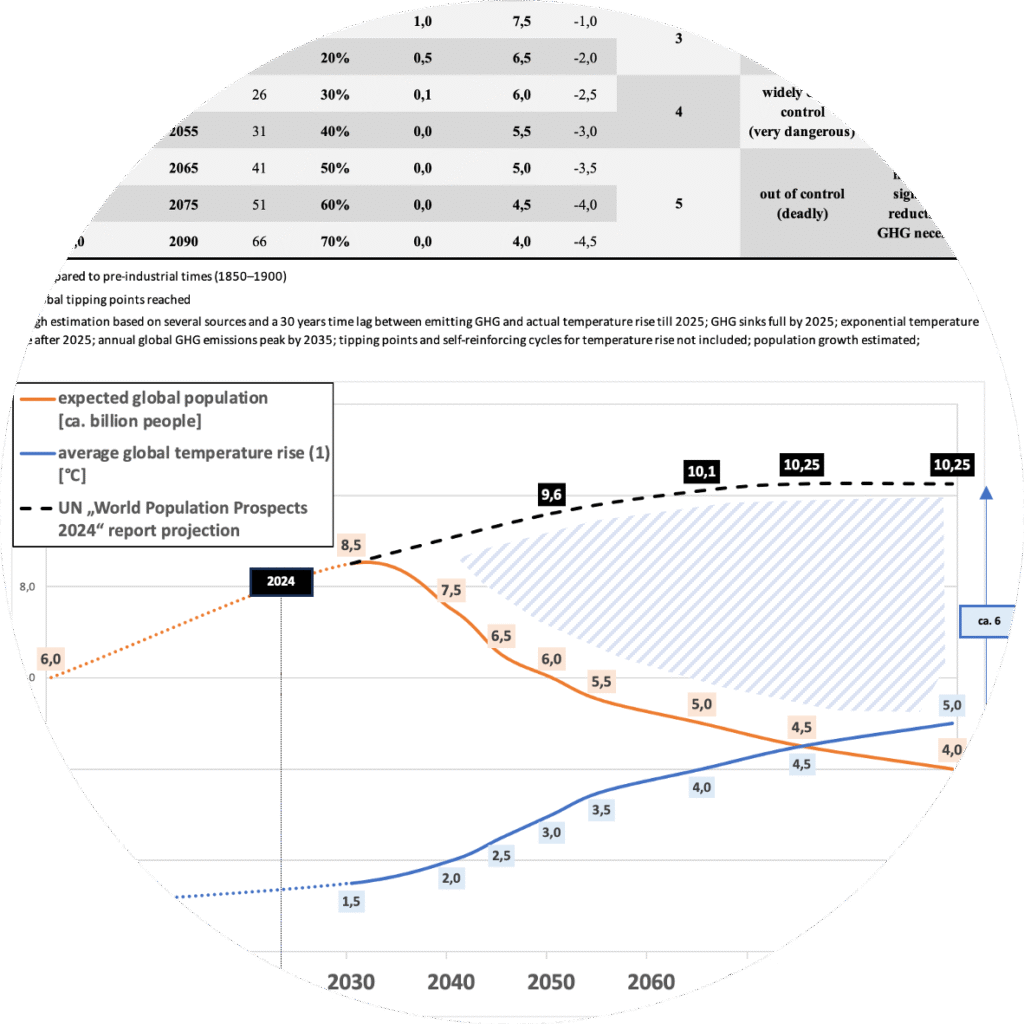
latest research papers: