

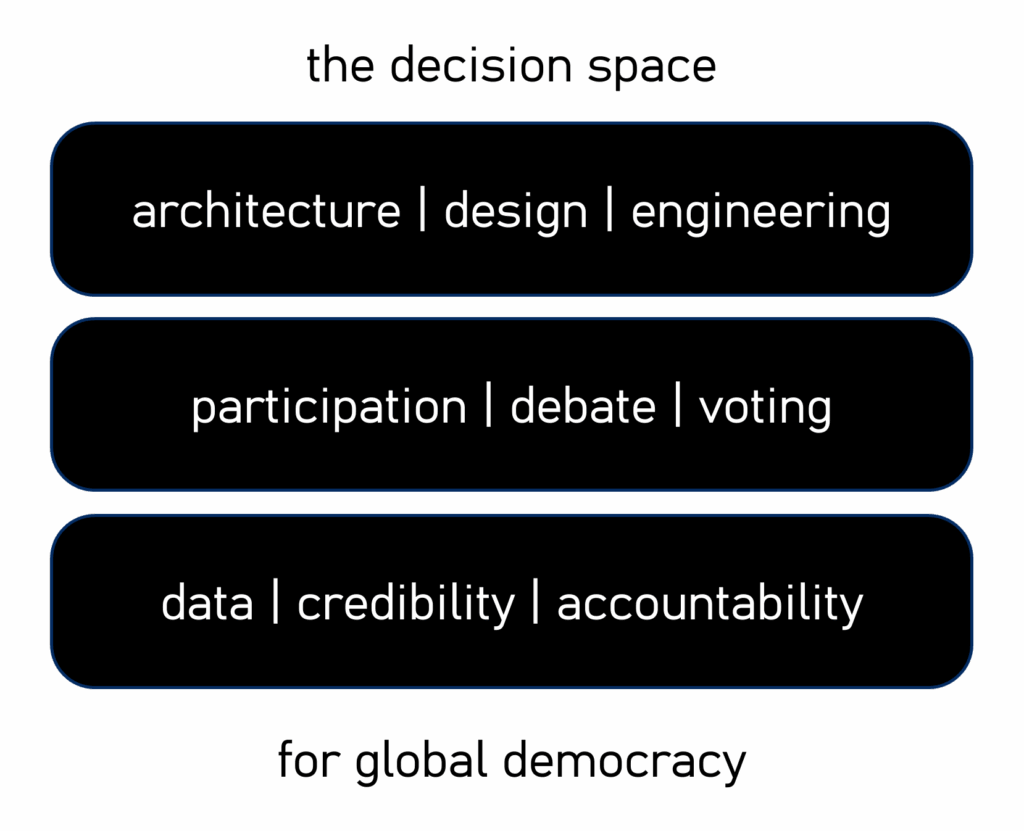
architecture | design | engineering


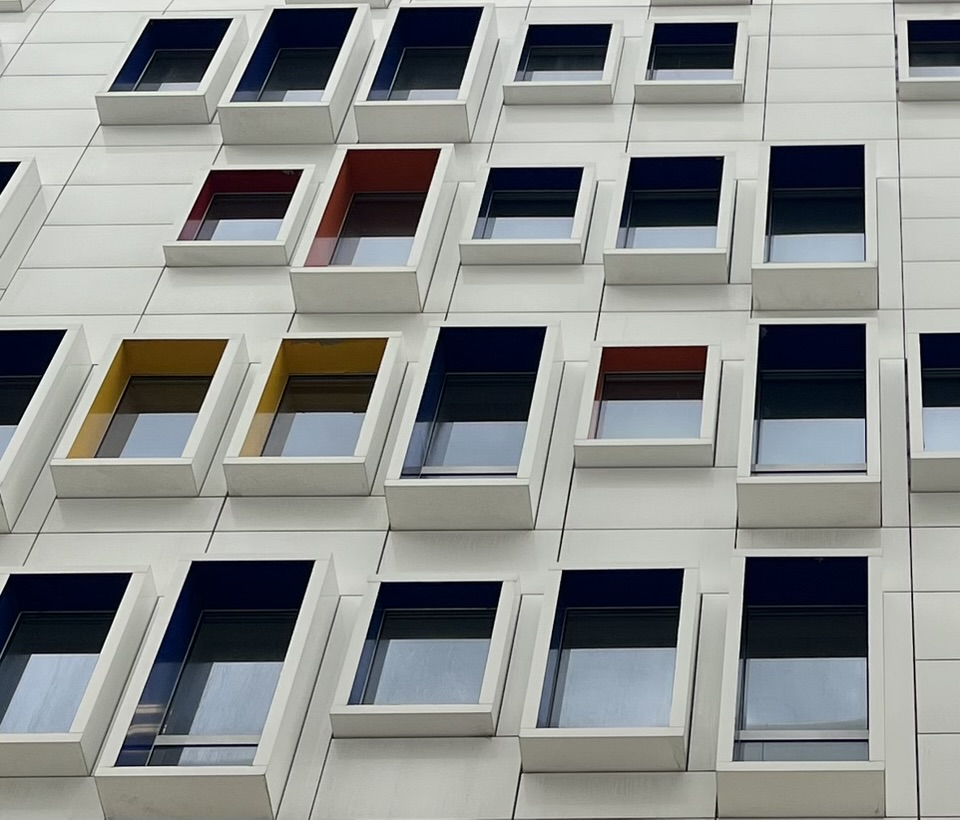
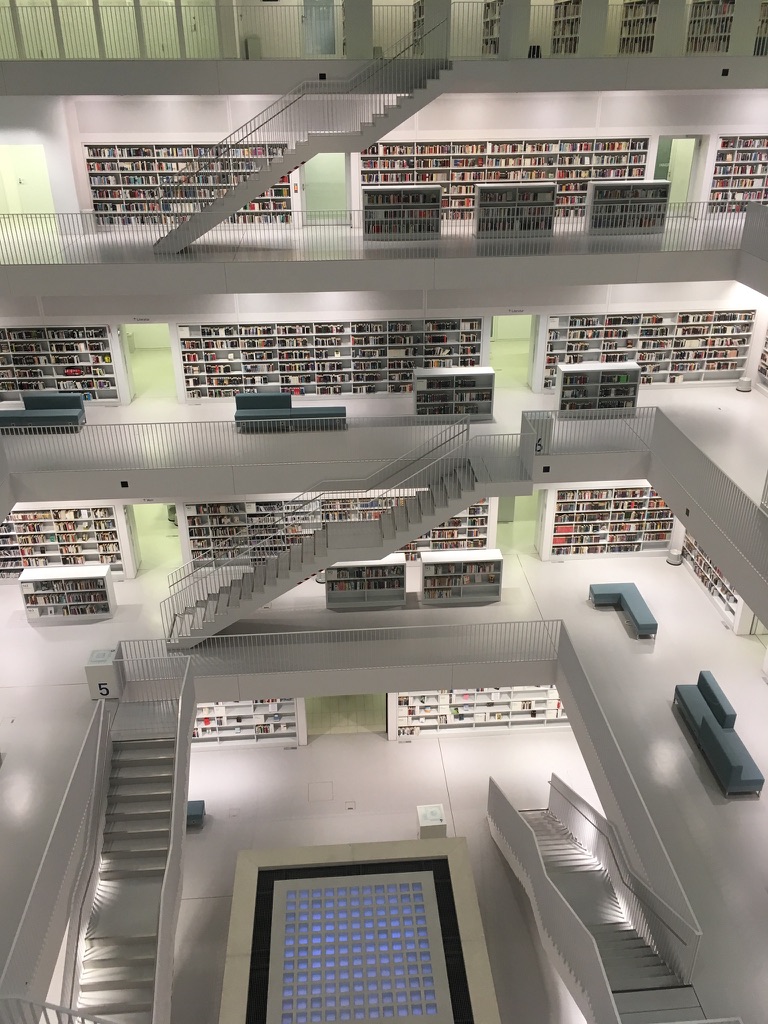
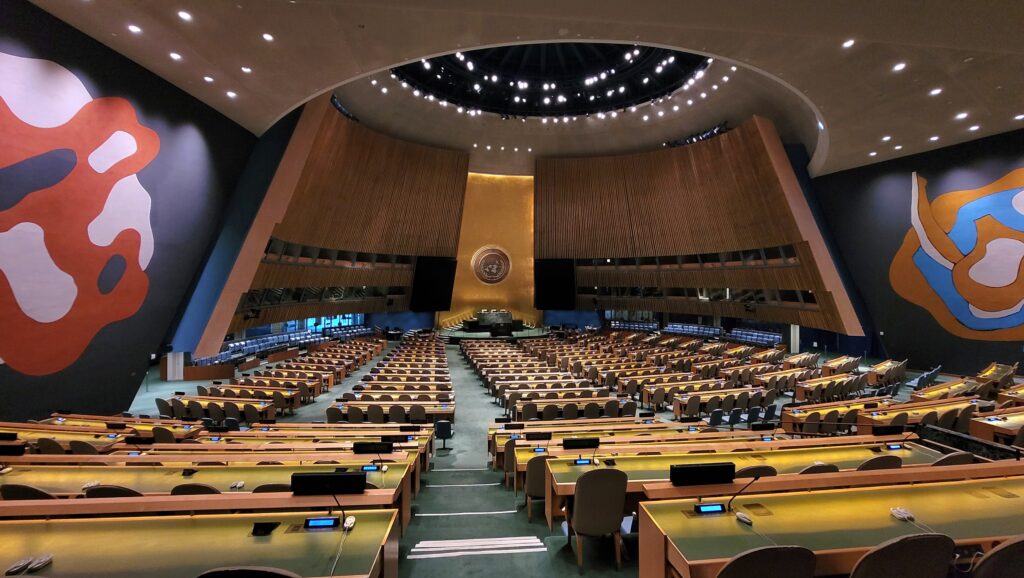
There is a certain tradition when it comes to democracy and architecture. No matter where you might look, the architecture is organised around a “plenary room” (cf. e.g. the following picture from the “United Nations General Assembly” hall in the UN Headquarters, New York City, February 2024).
Also older versions show the same basic pattern of such rooms for democratic decision-making (cf. e.g. “European Council” in Strasbourg, January 1967).
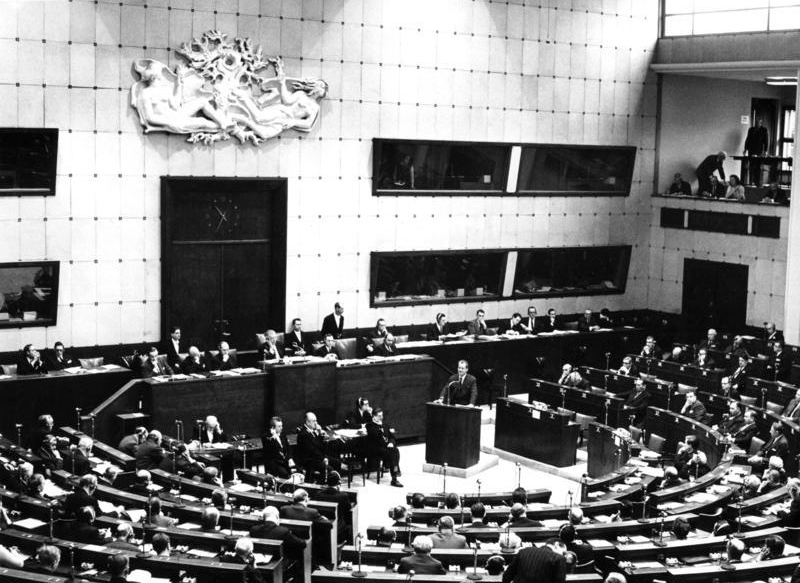
We think, global democracy demands also state-of-the-art architecture aligned with latest communication technology, to serve as a role model for the “Sustainable Development Goals” (SDGs) and also for architecture and design according to the “Planetary Boundaries“.
Global democracy seeks to be both deeply personal and highly decentralised, demanding spaces for dialogue, participation, and decision-making. Where vibrant democracy thrives, social debate flourishes — and these spaces require rooms for interaction, gathering, and face-to-face encounters.
While we have e.g. “churches” as spaces for spirituality (“place of worship”) all over the world with different architecture depending on the according religion (cathedrals, mosques, monasteries, temple, stupa, pagoda, synagogue, etc.), there are currently no decentralised spaces for democratic decision making or global & local citizen assemblies.
While a “crowd” is a more or less random assembly of people, democracy demands a social system of interaction. So, the “crowd” develops into a “social system” which interacting people using “good communication”. While such “places of interaction” or “places of democratic decision-making” used to be public places like e.g. the village square or the market place or a coffee house, this might have shifted more into “virtual spaces” (e.g. “social media” rooms), mostly dominated by impersonality and/or anonymity. This development jeopardises the fundamentals of democratic decision-making as a process of active, personal, open, and transparent participation within a collaborative decision-making process. Democracy, a it core, means the personal responsibility of every person in the community. Global democracy means this for the “global community”.
Apart from an architecture for the “global government”, the “global parliament” and “global justice”, global democracy aims to be as personal and as direct as possible to be experienced as vivid, fruitful, and progressive.
New forms of architecture and design can, in our view, significantly support these very specific and demanding requirements.
Regular global direct democratic decision-making creates the need, purpose, and the reason to gather together. Global democracy revolves around one and the same question all over the planet Earth, no matter what nationality. It unites all people from our mother planet Earth around very specific questions (e.g. “Do you want stronger ‘climate action’?” – “Yes” or “No”). And global democracy has the potential to show all the variety and plurality from all the different cultures while being united by these specific global questions.
Places about our future
While e.g. “Museums” are places for the global heritage (cf. e.g. “International Council of Museums“), “the decision spaces” for (global) democracy are rooms for the development of the future. They aim to bring together all historical heritage (from museums, art, culture, and research institutions) as wisdom for healthy decisions that lead to prosperous future generations.
While e.g. “Universities” used to be vivid places for political debates – core of every democracy – they have, due to commercialisation and resource efficiency programs, closed e.g. their lecture rooms for the public and significantly lost their direct connection to society and their role within democratic decision-making – “the decision space” is open and for free.
While e.g. “Libraries” used to be places for political discussions, they are now largely digitalised. So, we see the strong demand for new forms of spaces, rooms, and architecture, to enable democratic debate – “the decision space” connects with libraries while providing a physical space for interaction.
Places for democratic debate
Furthermore, national democracy lacks the ability to unite and decide on global level. Undoubtedly, global democracy and a “Global Democratic Republic” demand federalist structures to deal with all the complexity and plurality within our societies. Core of global democracy is to unite and enable global decision-making processes.
Places with and for innovation
With “the decision space” project, we aim to bring together the best architects, designers, communication experts, sociologists, psychologists, historians, and political scientists to explore, create, and develop the architecture for global democracy. At its core, we want spaces for healthy global decision-making, decentralised all over our mother planet Earth. People all over the globe connected and interacting together.
According to our core value of love, the architecture supports dialogue, debate, and the battle for the better arguments on a peaceful and guided bases. It supports easing the paradox between social interaction and vulnerability. There is no healthy social interaction without vulnerability. It demands good leadership with a good culture of speech, a good culture of honesty, a good culture of forgiveness, and a good culture of the acceptance of majorities.
According to our mission of developing a healthy and thus sustainable global society, the architecture aims to connect or even re-connect the people to nature as our basic source for health (e.g. nothing is more relaxing than a walk in the forest).
Places to support healthy global democratic decision-making
So, “the decision space” is a room to support prudent decision-making on an individual level and debate on the collective level. It includes state-of-the-art forms of digital support while stimulating personal interaction. The global network of physical spaces is the core differentiation of the new “World Wide Decision Spaces Network” (WWDSN) in comparison to the virtual “World Wide Web” (WWW).
“The decision space” is a place of active participation, a place that gives purpose, and a place that delivers on healthy global democratic decision-making.
see “key benchmarks“:
- churches globally:
(Cathedrals, Basilicas, Parish Churches, Synagogue, Temple, Mosque, et al.)
ca. 41 million
- libraries globally:
ca. 350 thousand
- museums globally:
ca. 55 thousand
- universities globally:
ca. 25 thousand
see basic concept:
our actions focus:

global democracy
A first official global vote on “climate action” now!
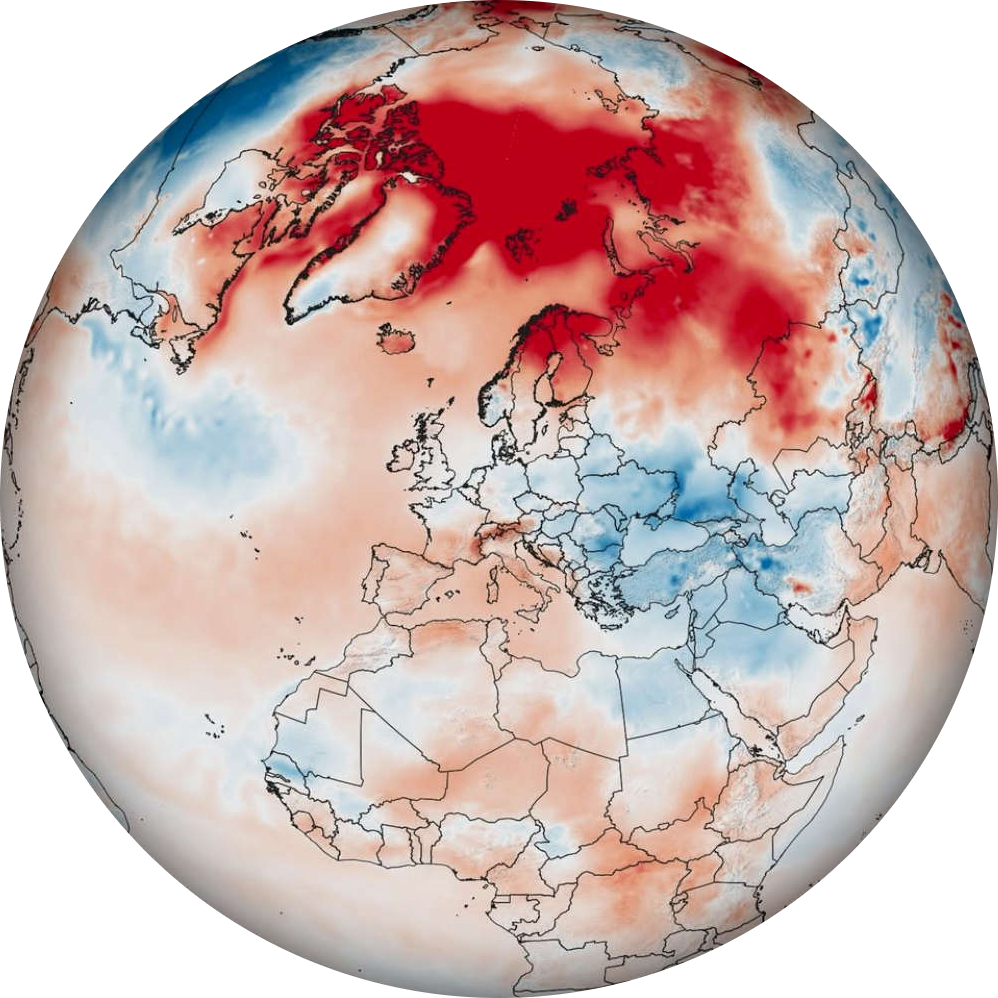
global governance
A first global binding market for “greenhouse gas” emissions now!

global collaboration
Global Democracy Forum
(GDF)

conference
Supranational Democracy Dialogue
(SDD)

webinars
GLOBAL DEMOCRATIC FUTURES

documentary
Our new world with global democracy

movie
the library

concert
the crystal

architecture
decision spaces